Lesen LCAL2005
Engineering labs (ultraconcurrent)
Akses jarak jauh kepada 16 makmal disertakan:
Peralatannya sentiasa sebenar, bukan simulasi. Akses sekarang. Tidak perlu menunggu peralatan dihantar.
Makmal yang disertakan dalam lesen ini
 3D Printer
 Luxometer
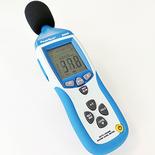 Sonometer
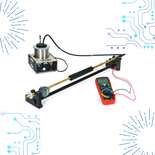 Thermal Expansion
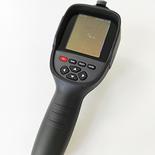 Thermographic Camera
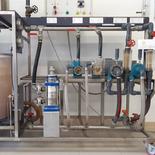 Centrifugal Pump
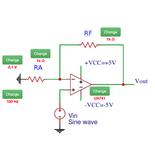 Common circuits
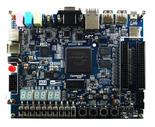 Digital Trainer
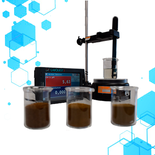 Exchangeable Acidity of Soils
 Flowloop
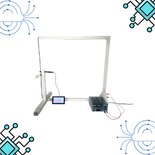 Magnetic Field
 Magnetic Field (with plot)
 Materials
 Pelton Turbine
 Spectroscopy
 Texture Analyzer
Bagaimanakah LabsLand berfungsi?
LabsLand ialah rangkaian global makmal sebenar yang tersedia dalam talian. Pelajar (di sekolah, universiti dan platform pembelajaran sepanjang hayat) boleh mengakses makmal sebenar melalui Internet, menggunakan komputer riba, tablet atau telefon mereka.
Dalam setiap kes, makmal itu sentiasa sebenar (bukan simulasi) dan tersedia melalui Web (anda tidak perlu memperoleh sebarang perkakasan, mengurus penghantaran, dan sebagainya).
Lesen pukal
Jika anda akan membeli beberapa lesen (contohnya, untuk sebuah kelas atau kumpulan pengguna, atau lesen institusi), hubungi kami untuk mendapatkan diskaun.
Anda boleh membeli lesen LabsLand sebagai individu melalui pautan di bawah, atau untuk institusi anda. Jika anda membeli lesen untuk institusi anda, anda perlu menghubungi kami supaya kami boleh menyediakan ruang untuk institusi anda tempat anda boleh menjejaki penggunaan oleh pengguna dan memperoleh alat lain yang tertumpu kepada institusi.
3D Printer
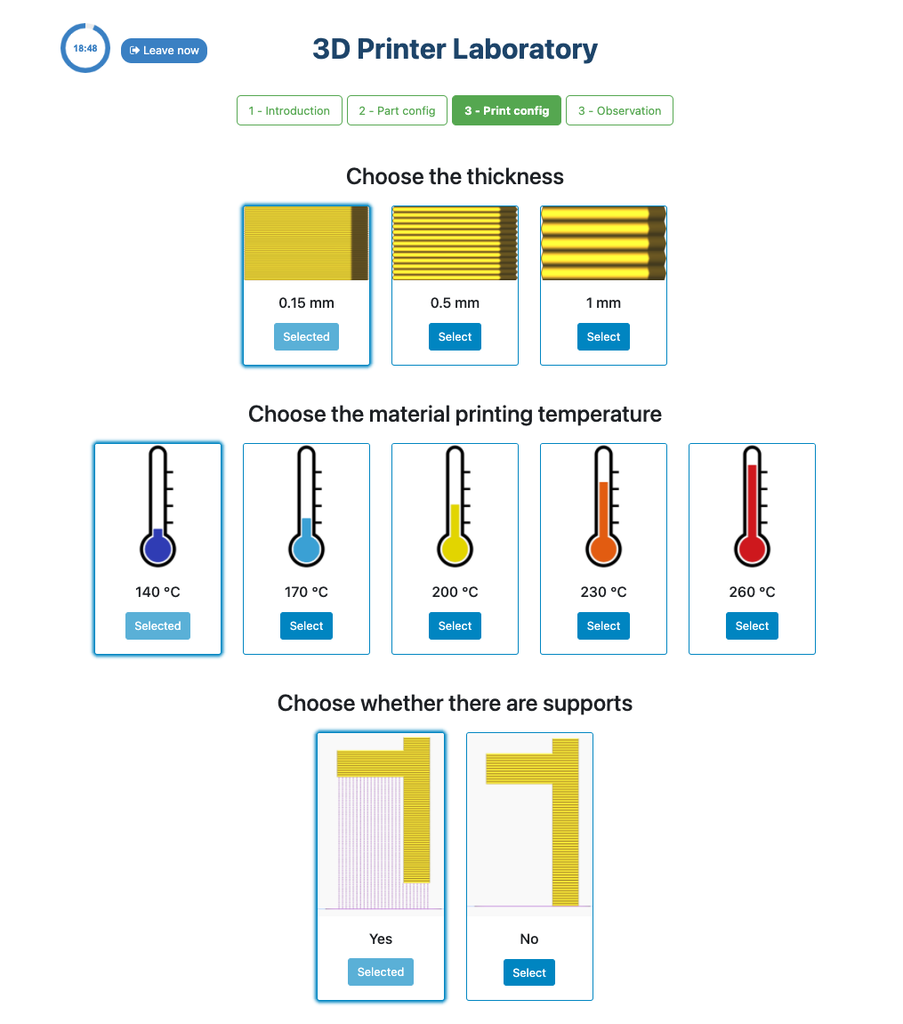
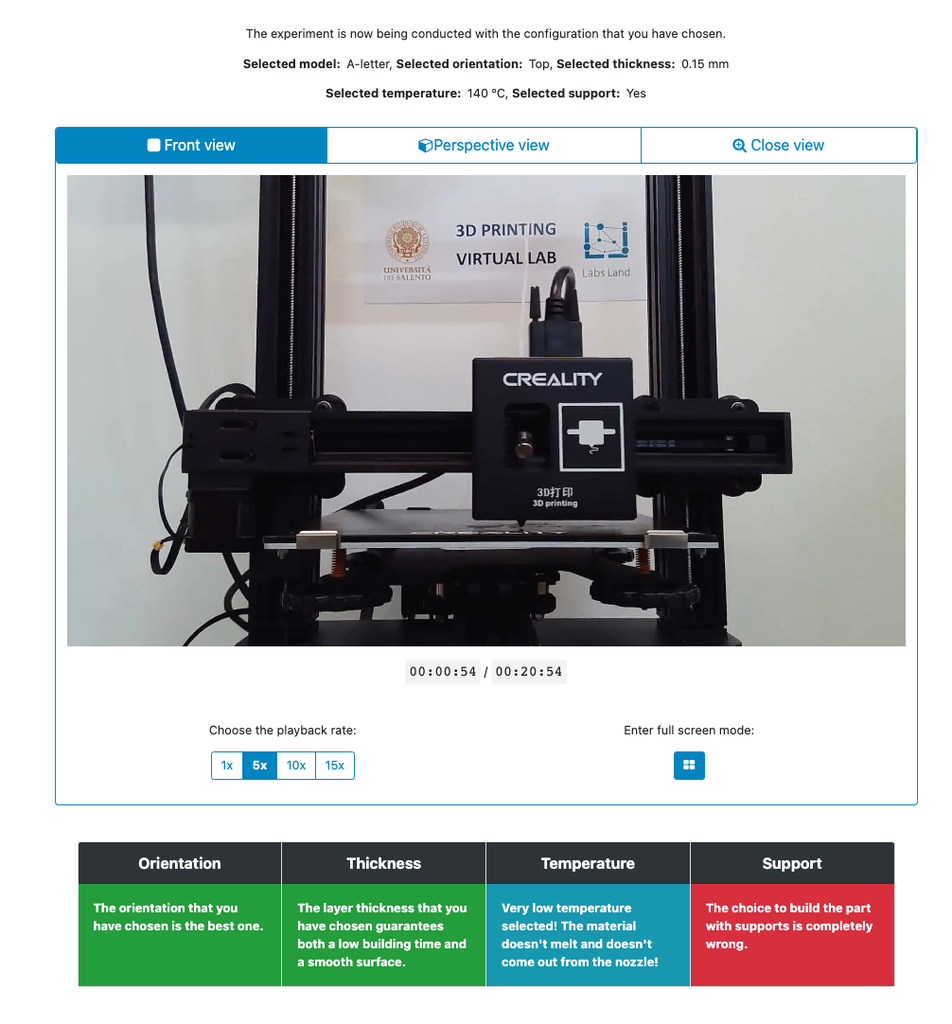
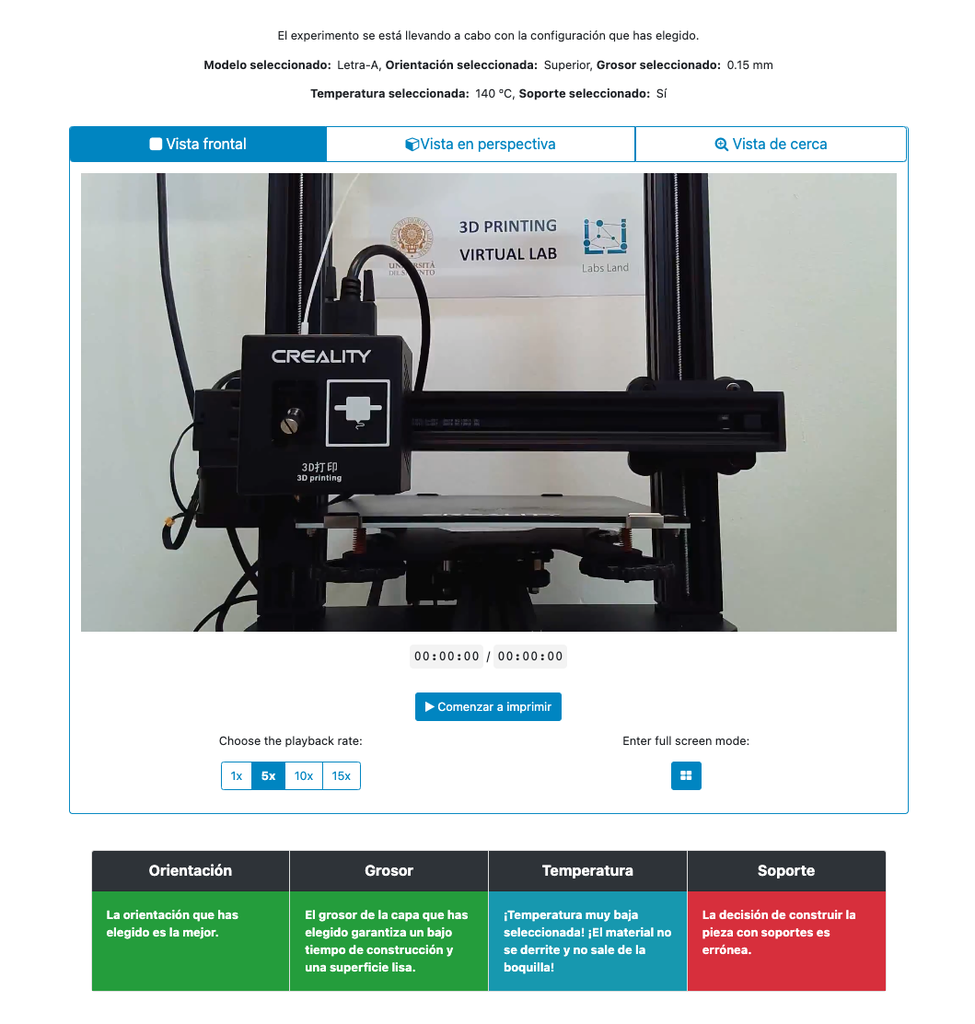
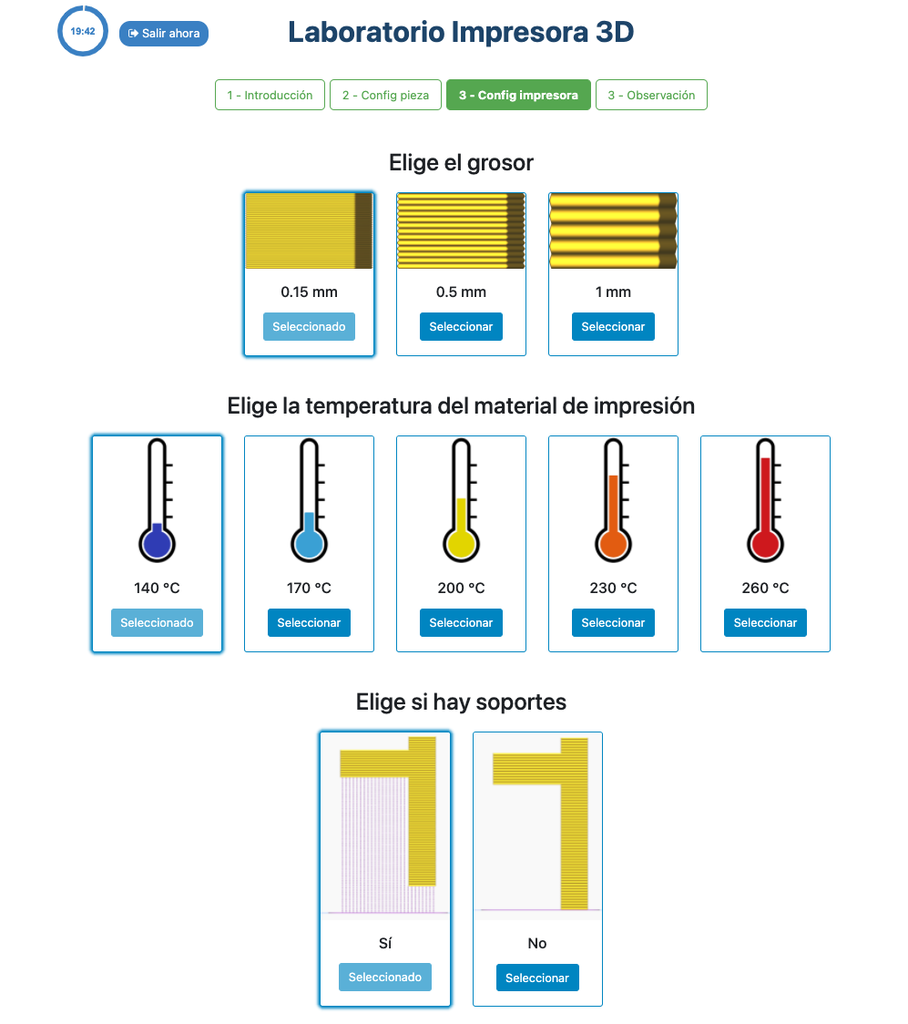
In the 3D Printer Laboratory you will be able to choose among several different 3D printing settings, such as temperature and orientation, and observe the printing process and the results from different angles. You will be able to control the playback speed so as to be able to experiment faster than you would hands-on, and you can download the Ultimaker Cura project file to experiment further.
Thermal Expansion
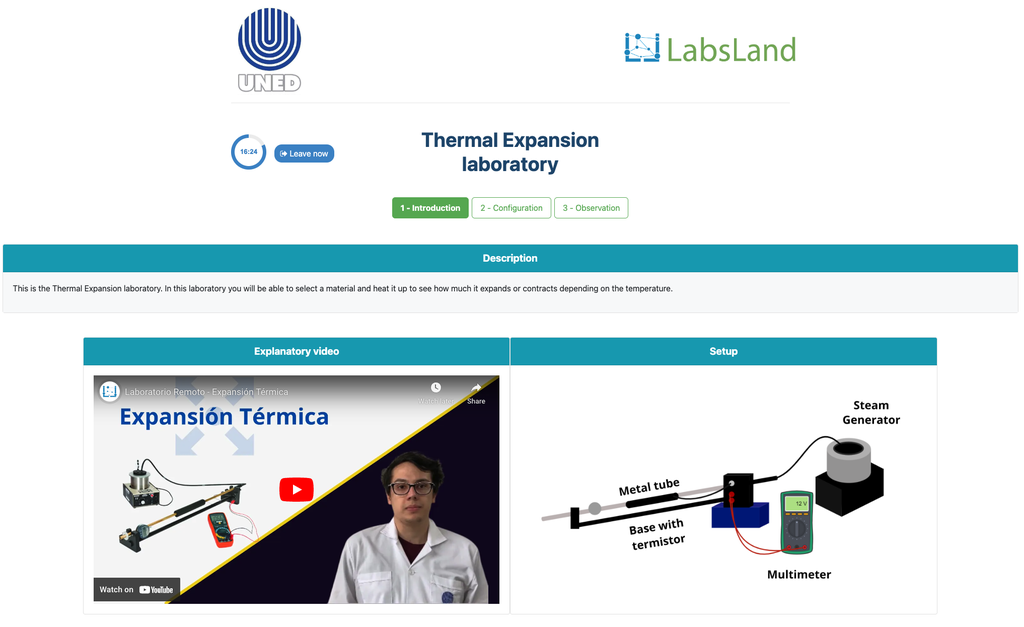
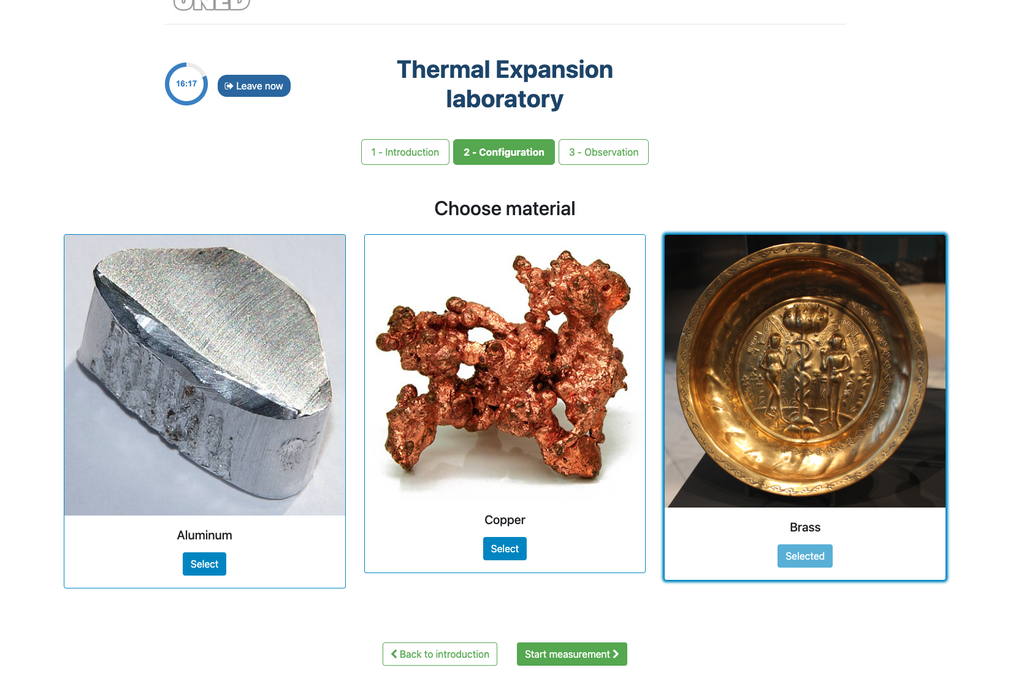
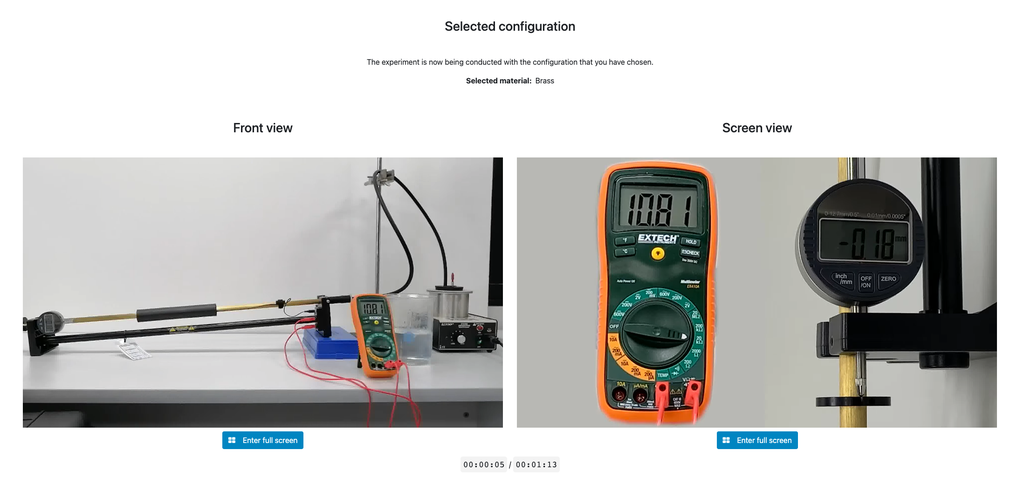
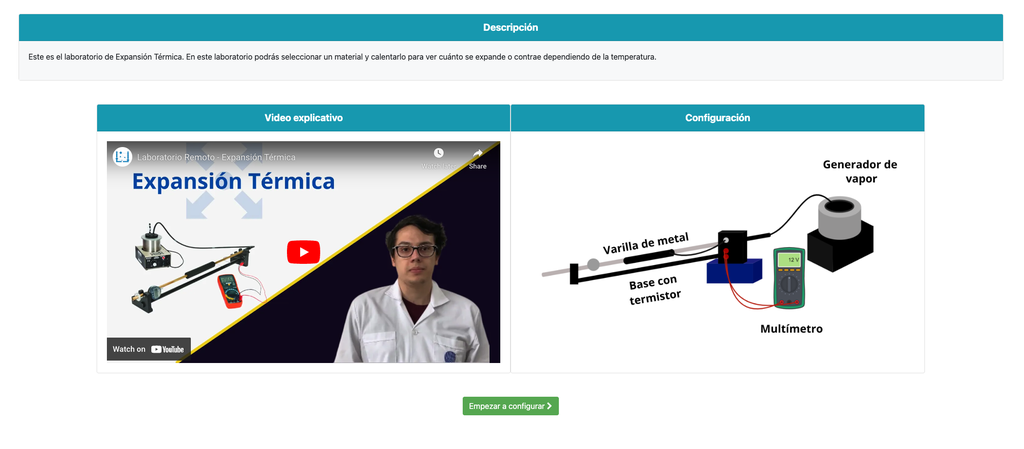
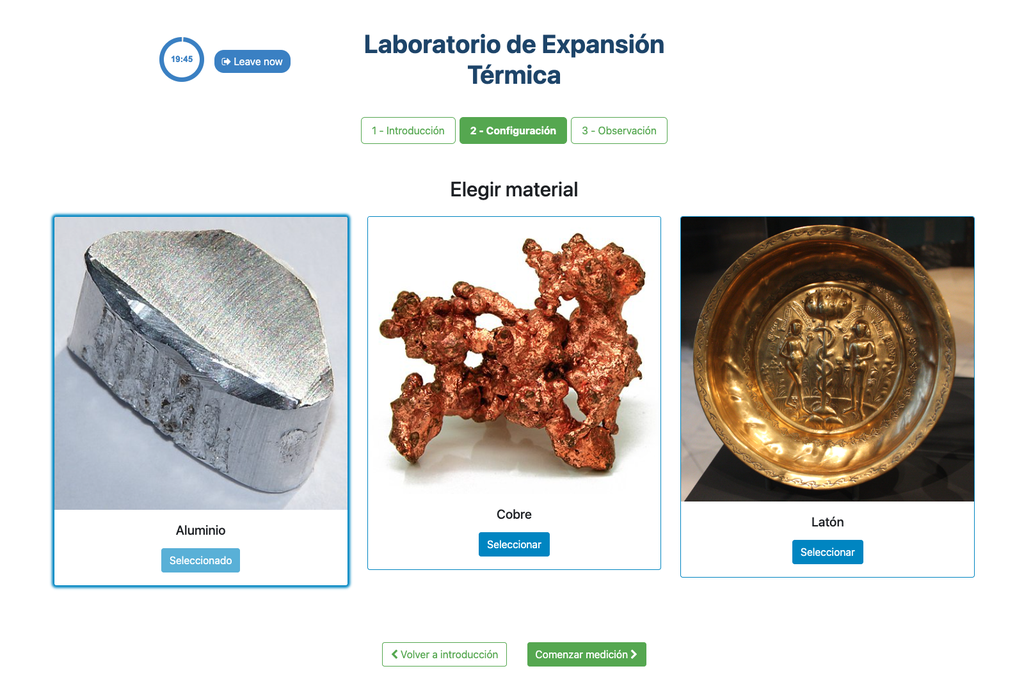
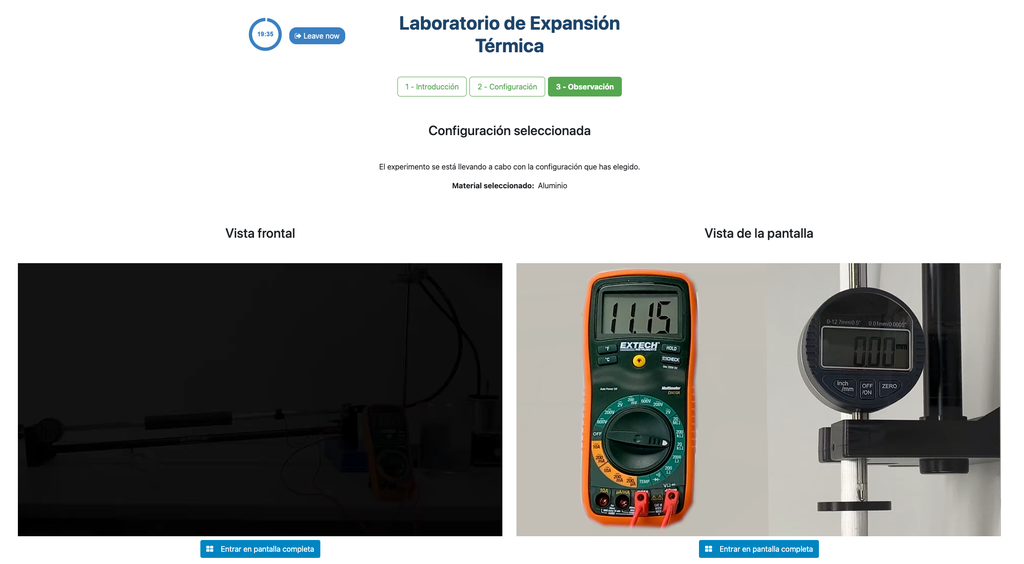
In this remote lab, students can select from three different materials—copper, brass, or aluminum. They can then apply heat to their chosen material and observe the resulting thermal expansion. This interactive lab allows students to explore the principles of thermal expansion in real-time, enhancing their understanding of how different materials react to heat. With precise control and detailed measurements, this lab provides a hands-on learning experience, accessible from anywhere, fostering deeper insights into material science and thermodynamics.
Centrifugal Pump
Centrifugal Pumps are used throughout many areas to transport fluids. Its rotational energy typically comes from an engine or an electric motor.
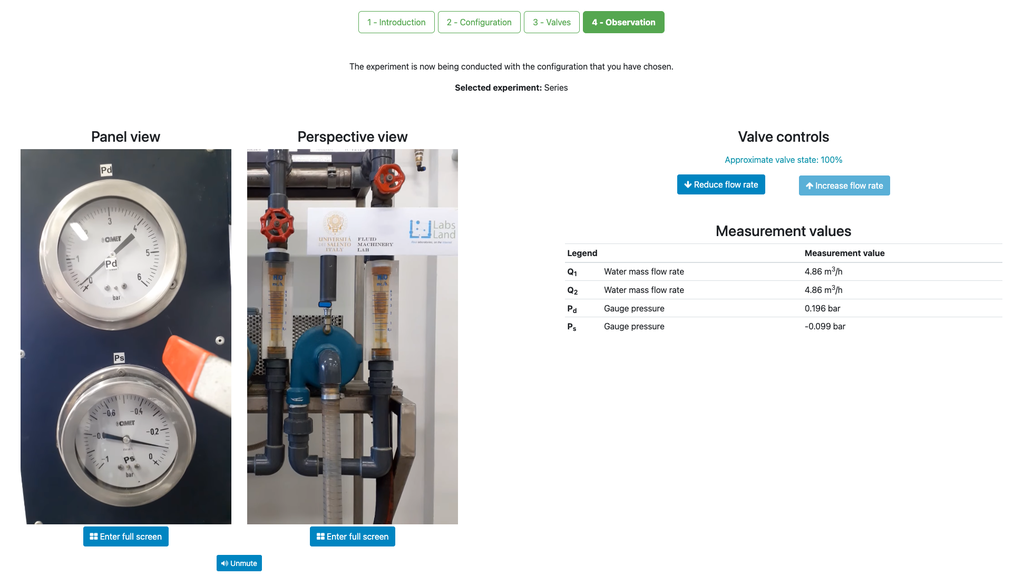
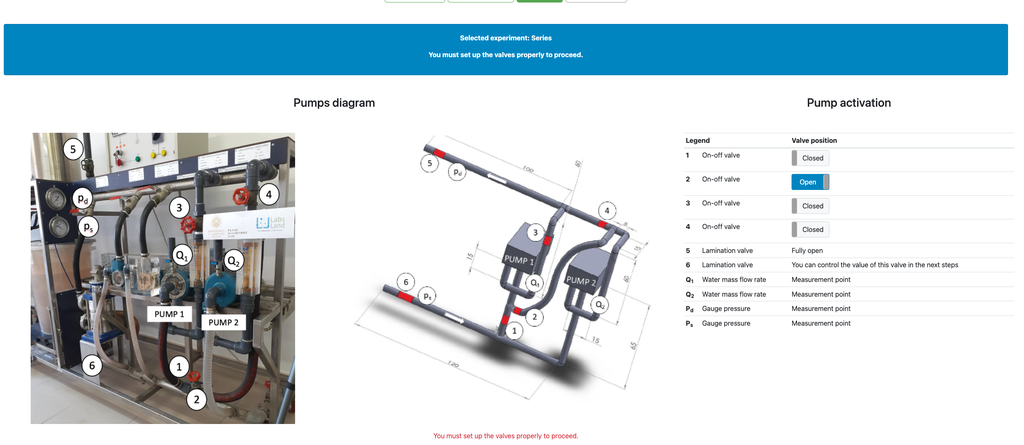
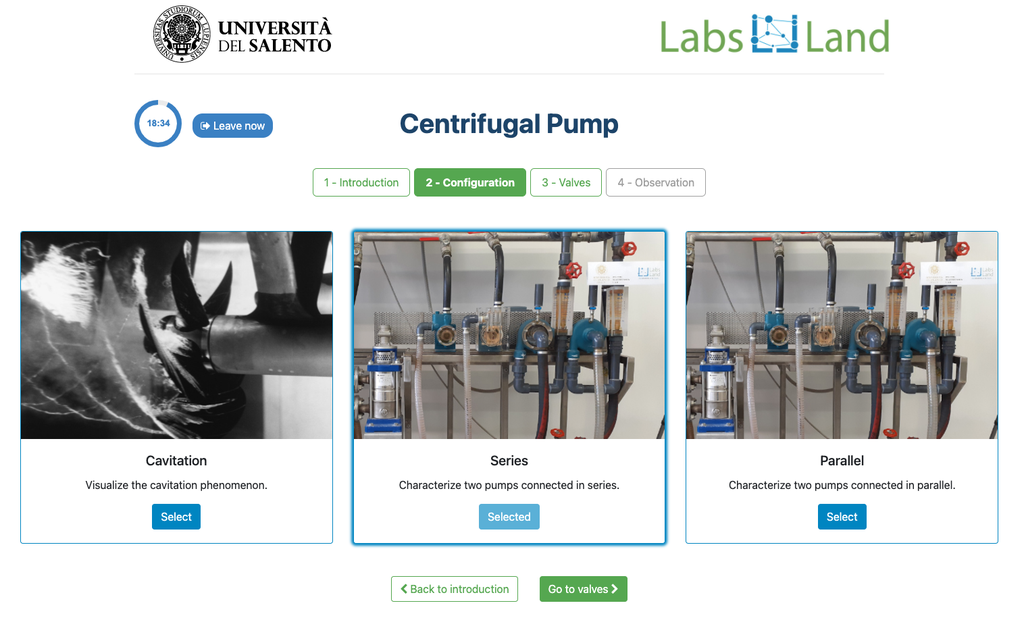
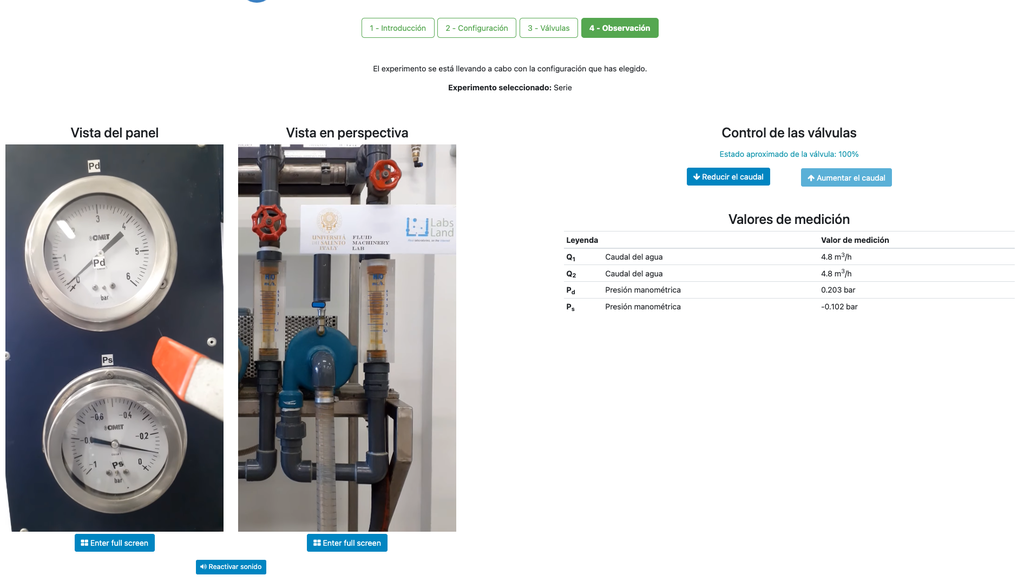
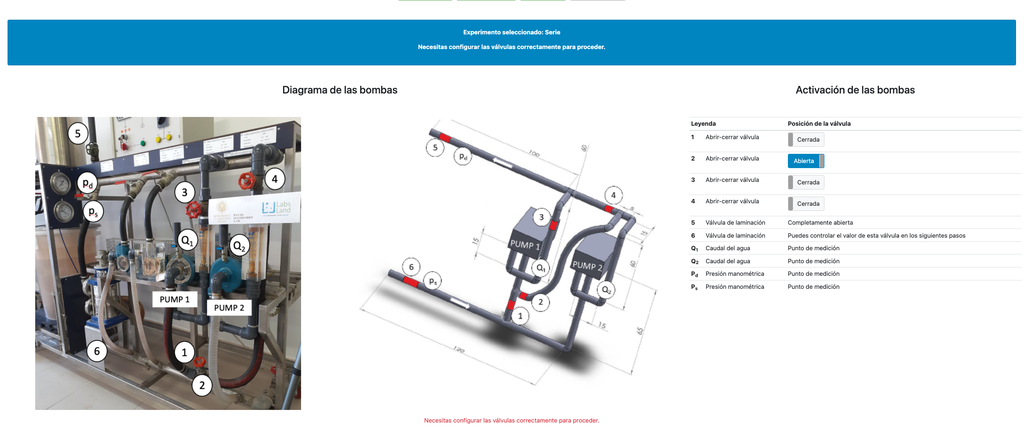
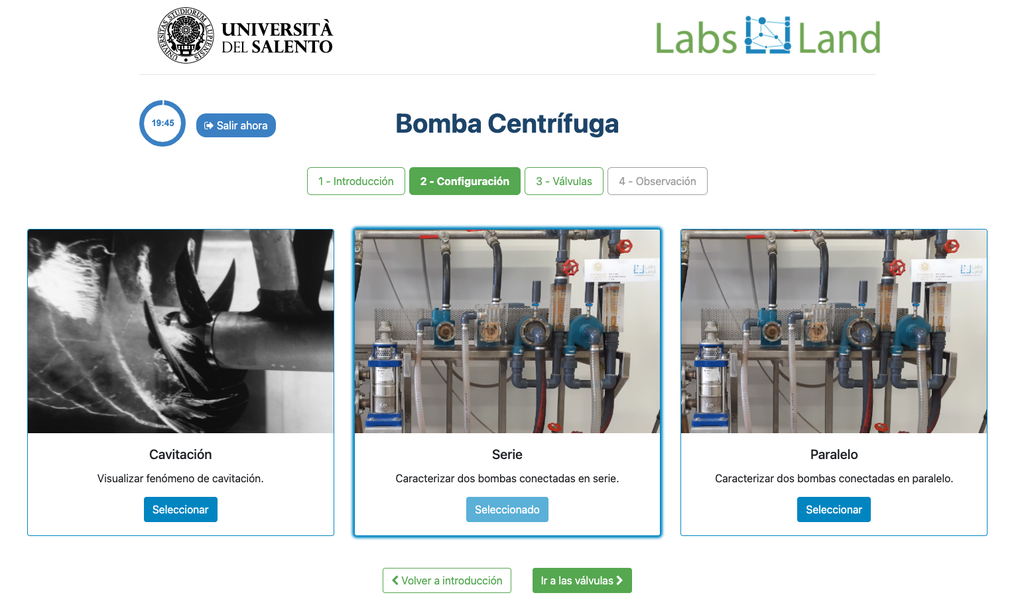
In this laboratory you will be able to access and control such a pump, which is set up in a circuit that can be configured through several valves. The valves can configure it in a series or in a parallel configuration. It is also possible, under certain configurations, to observe the effects of cavitation.
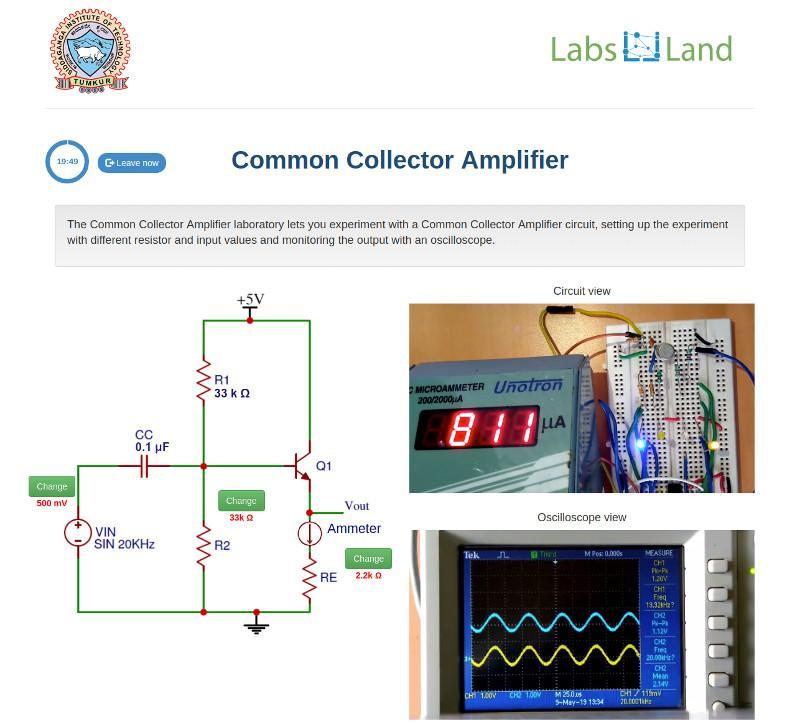
Common circuits
Digital Trainer
Summary
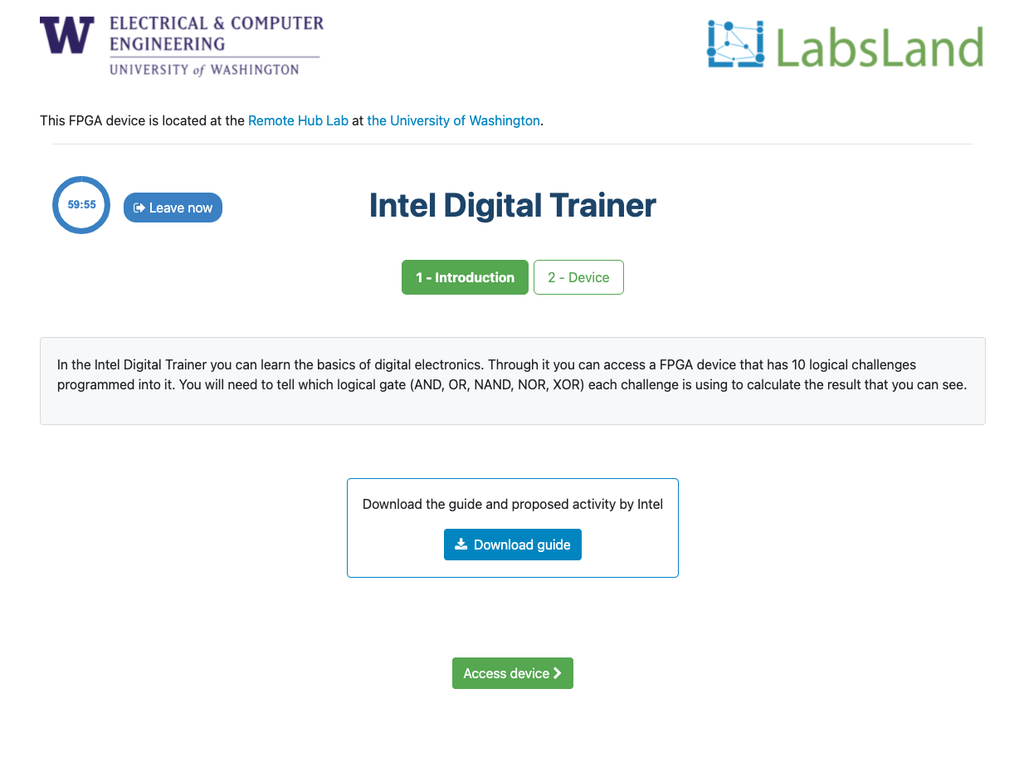
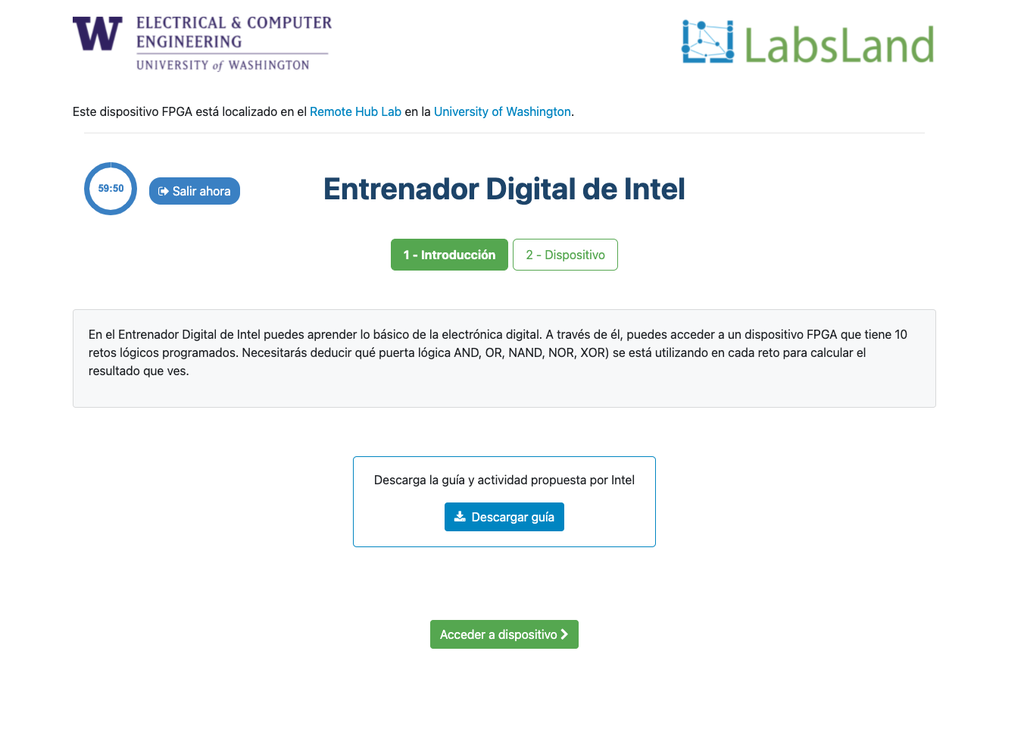
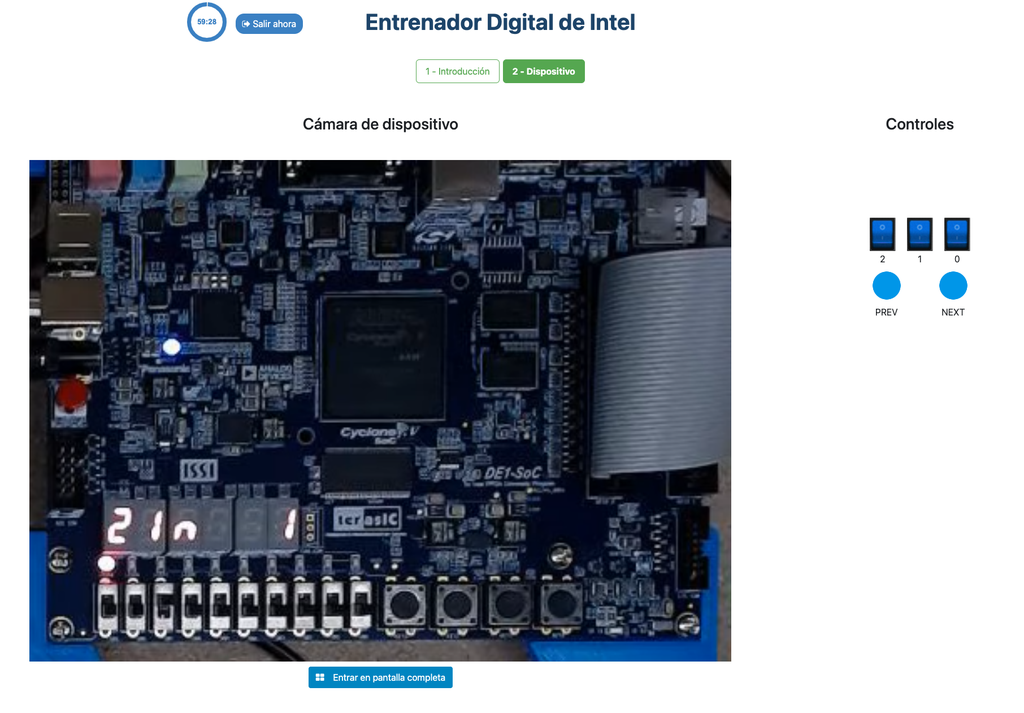
The Digital Trainer laboratory is designed towards students that are starting with digital logic, truth tables and Boole's Algebra.
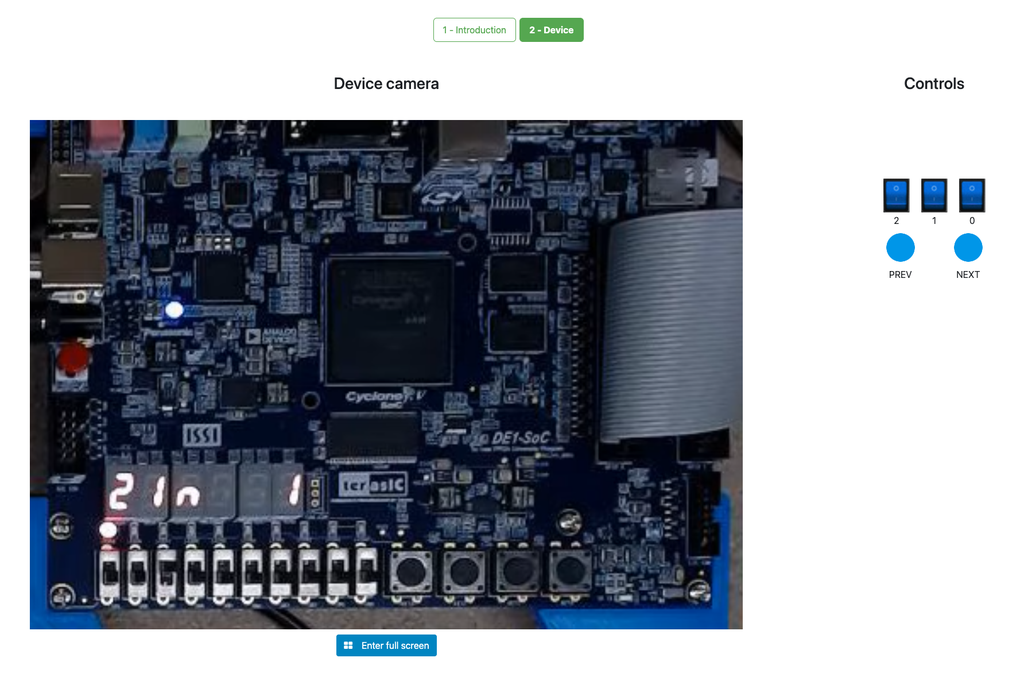
During the activity, the student sees an Intel FPGA that implements a series of simple truth tables. The student can interact with the FPGA devices to vary the inputs to the system through switches, and observe the outputs through LEDs. The challenge is to determine which logical operator the FPGA implements in each case (e.g. AND, NAND...).
Further details
The activity is designed to be relatively simple and straightforward, but at the same time to be engaging for the students. It is designed in a game-like style, and it is based in real hardware (FPGAs). That way, it is not only useful to introduce and obtain familiarity with digital logic, but also it allows students to start seeing the future uses of that knowledge, interacting in a superficial way with FPGA devices, of the same kind that are used in industry.
Interaction with the FPGA devices does not add complexity, since students don't need to program them; they already implement a black box logic (which is precisely the point of the activity).
The laboratory is originally based in an activity that Intel Corporation frequently conducts in its seminars, both hands-on and remote, using their Intel DE1-SoC, Intel DE2-115, or other types of FPGAs.
Exchangeable Acidity of Soils
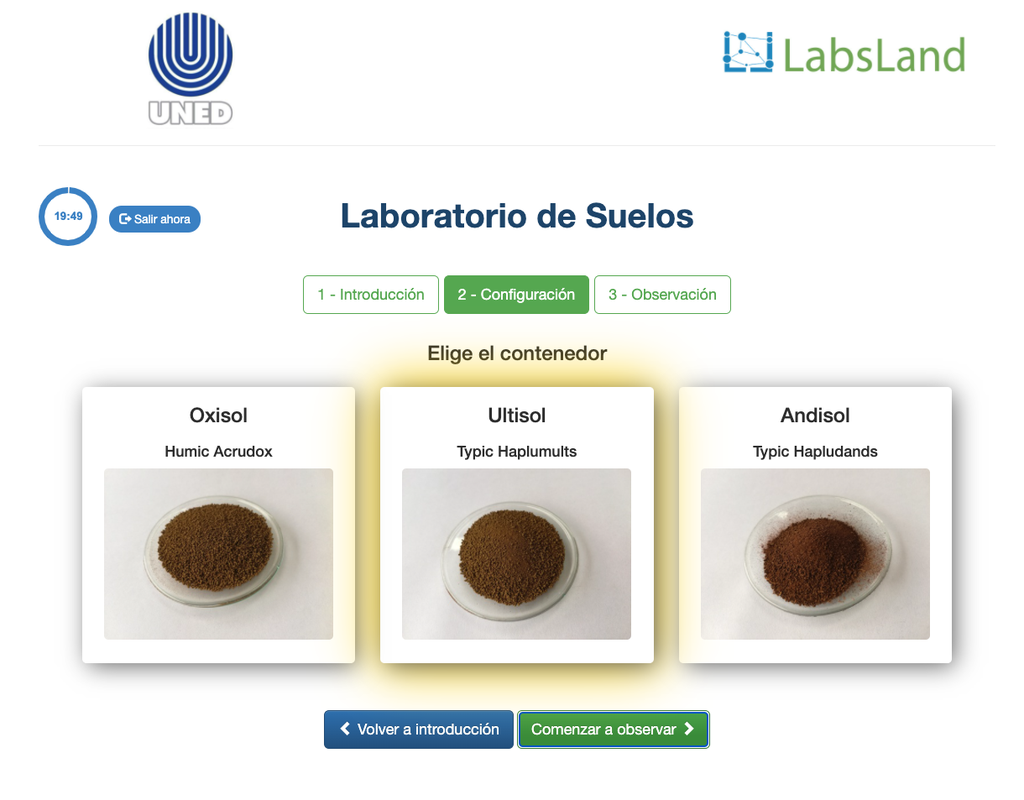
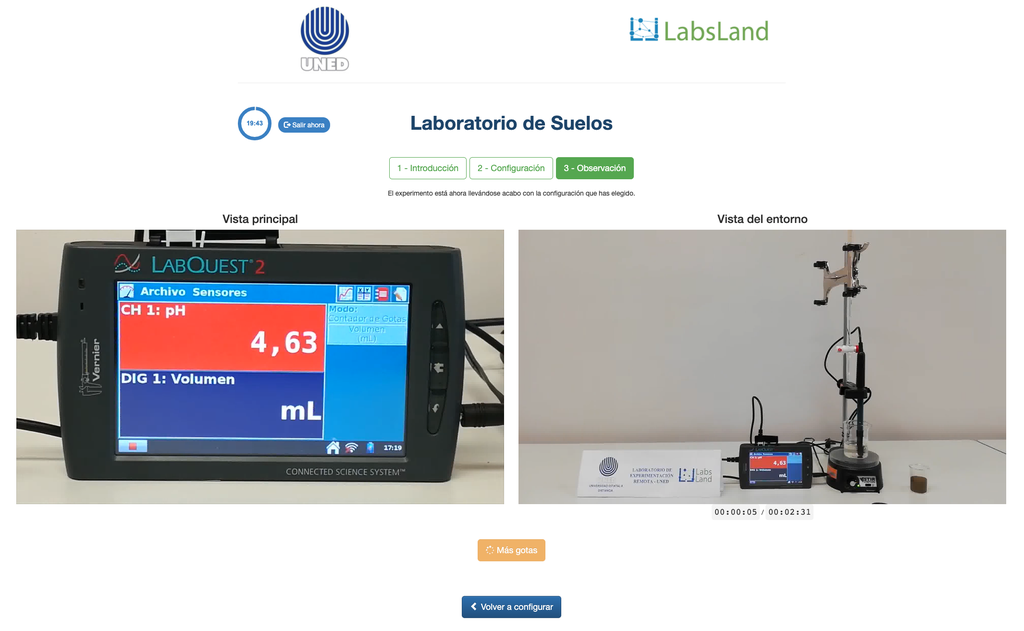
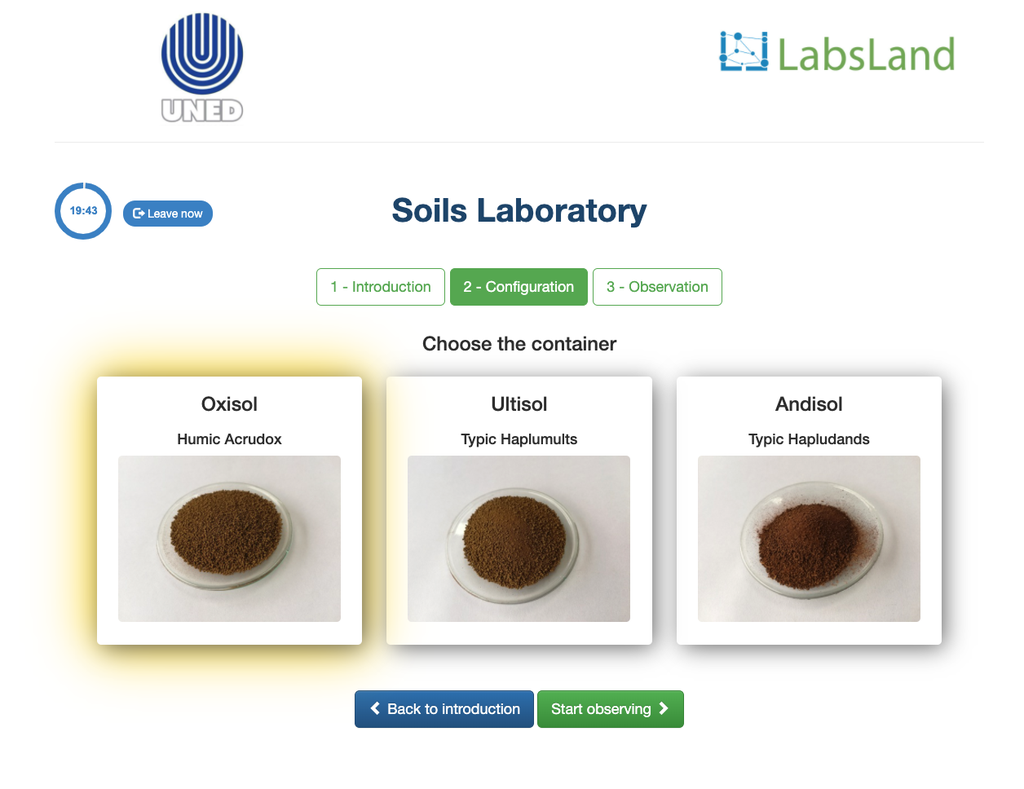
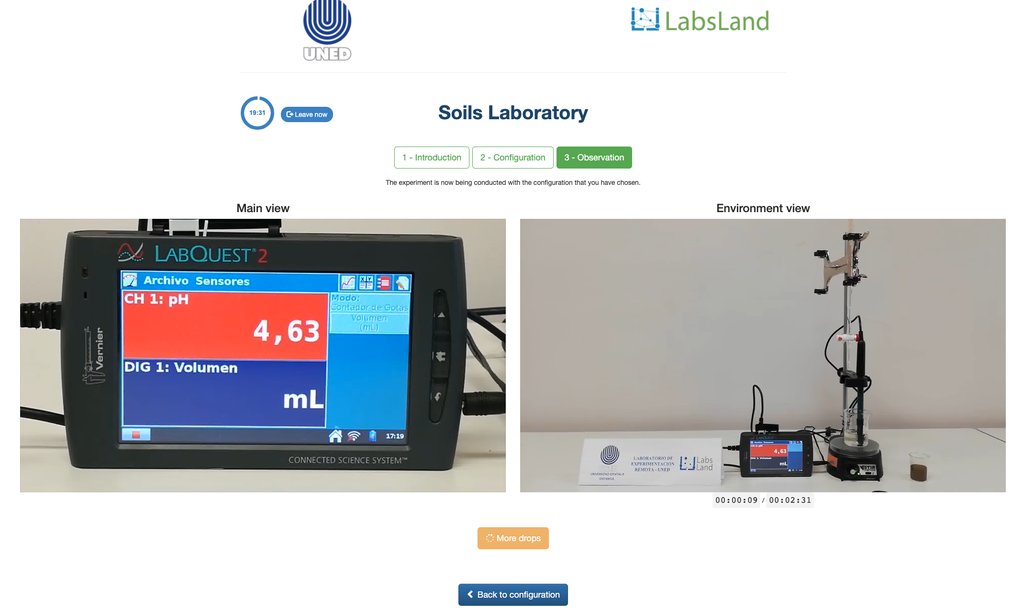
The acidity of soils can occur due to various processes that promote a pH reduction. These processes occur naturally or by human action. The main sources of soil acidity are associated to hydrogen ions (H+) and aluminum ions (Al+3) in the soil's solution. Exchangeable acidity is determined through the use of neutral salts solutions such as potassium chloride (KCl). The acid ions (aluminum and hydronium) that are held in the colloidal fraction of the soil, that in the presence of a displacing ion (K+), makes those enter the soil solution. Afterward, that solution is titrated with a sodium hydroxide solution of the exact concentration to reach the last point of the neutralization reaction using phenolphthalein as an indicator.
Flowloop
Summary
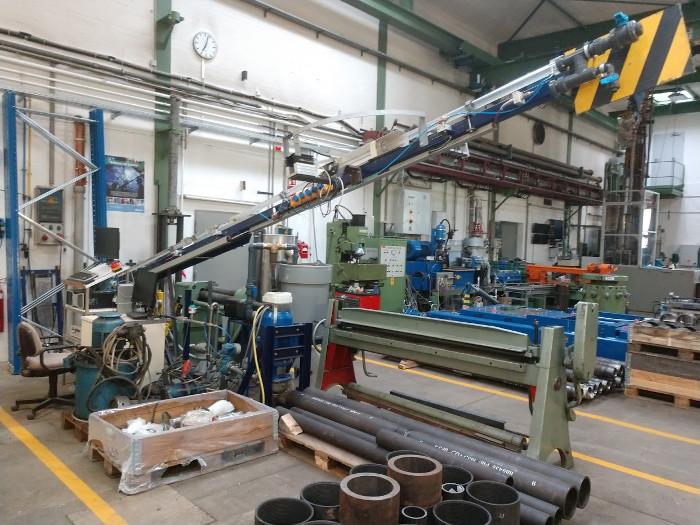
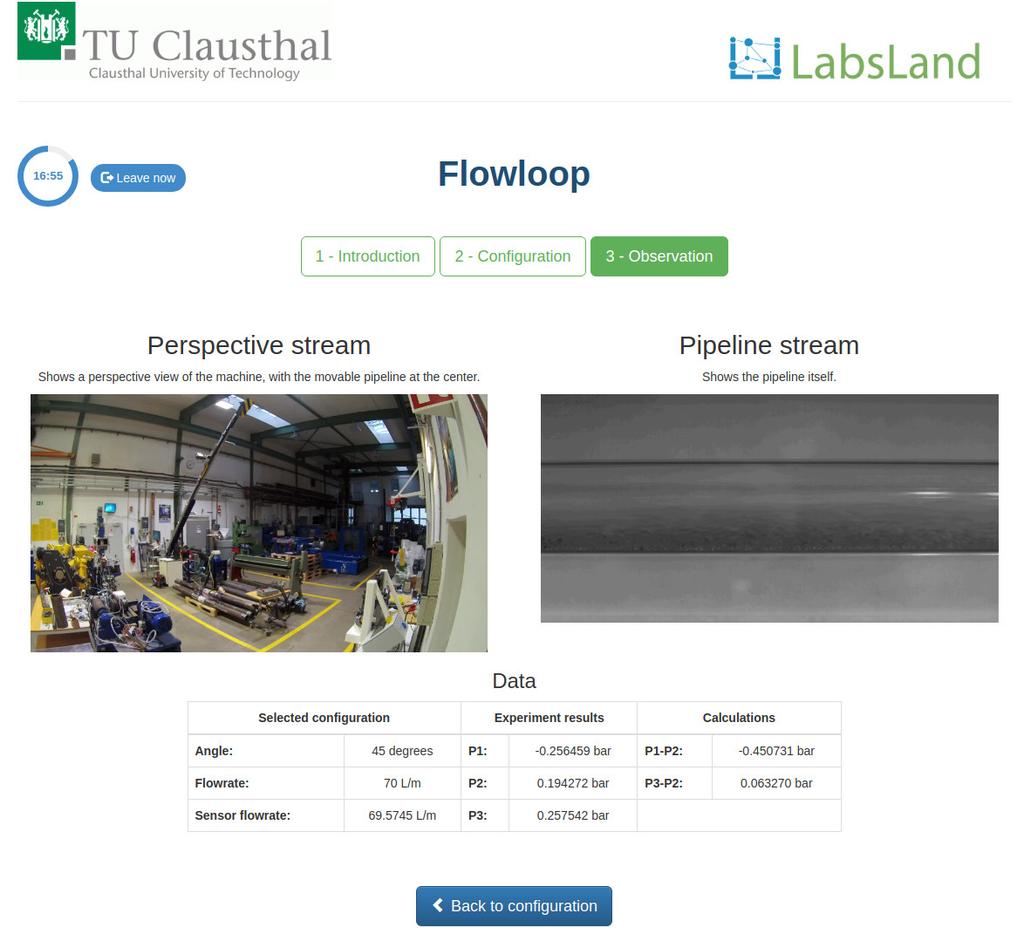
The Multi-Phase Flowloop laboratory lets you carry out experiments to visualize flow patterns of multi-phase systems that develop in production tubing in possible real-life scenarios. Through variation of the water flowrate and the angle of the tubing itself, you can appreciate the forming of different flow patterns or “cuttings” depending on the chosen values.
Further details
Multi-phase systems are found in various industrial scenarios, not being an exception the oil and gas industry. The prediction and determination of the flow pattern in the production tubing is of great importance since this is directly involved with the optimization of the production itself.
Mixtures of hydrocarbons, water, sediments and gases found in reservoirs manifest different behaviors during their transportation to the ground’s surface. Predicting such behaviors enable a better understanding for adequate choice of pumping machinery and pipeline setups for a successful transport to their final processing facility. The Multi-Phase Flowloop test unit helps achieving a better predictiveness of how multi-phase systems behave in real life for further investigation. This enables the user a better comprehension and visualization of how multi-phase transportations react under variable production rates and mixture proportions.
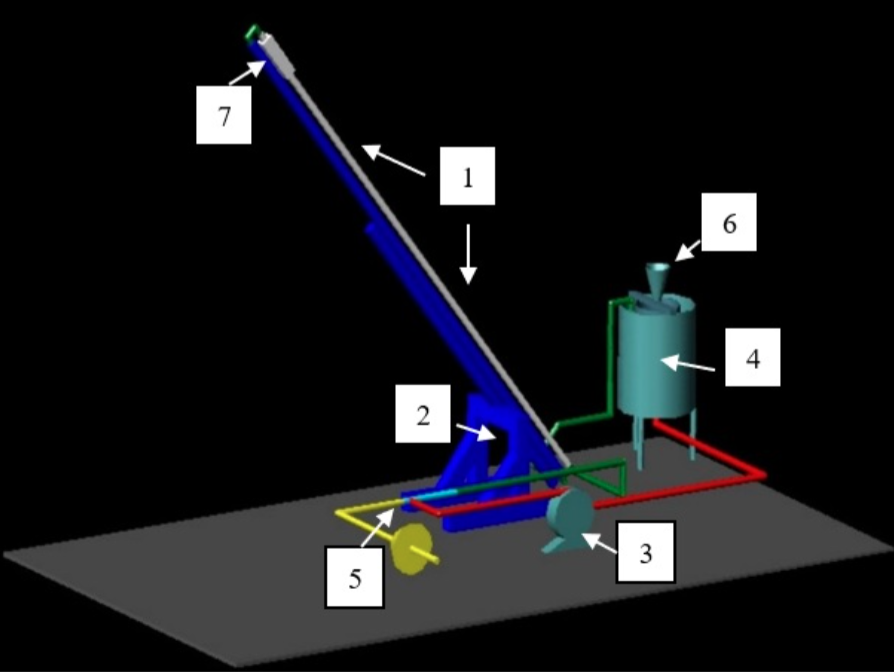
- The test section is a transparent 0.04m internal diameter straight Plexiglas pipeline (1) with a length of 6m.
- This pipe is supported by a hydraulic screw-jack (2) and a carbon steel beam, the system can be inclined up to an angle of 90 degrees from its horizontal ground level.
- A stainless-steel centrifugal pump (3) connected to the main tank (4) provides water to the system. Equipped with an electromagnetic induction flow meter and by the rotational speed of the pump, the rate of the water flow can be adjusted to the desired values.
- In order to develop various phase-flow patterns, air can be injected into the water stream via an air-water mixer (5).
- A hopper (6) fitted to the top of the water tank serves to feed another phase, representing the solid sediment
- A high-speed camera (7) mounted at the Plexiglas pipeline records the flow.
The Multi-Phase Flowloop laboratory lets you carry out experiments to visualize flow patterns of multi-phase systems that develop in production tubing in possible real-life scenarios. Through variation of the water flowrate and the angle of the tubing itself, you can appreciate the forming of different flow-patterns or “cuttings” depending on the chosen values.
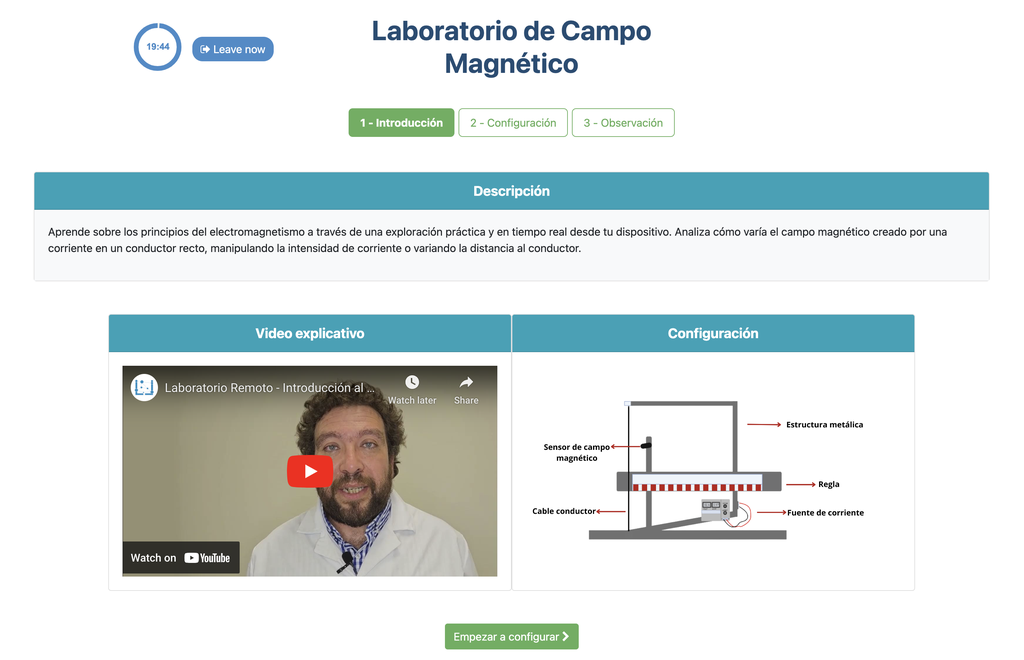
Magnetic Field
Summary
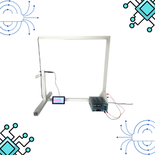
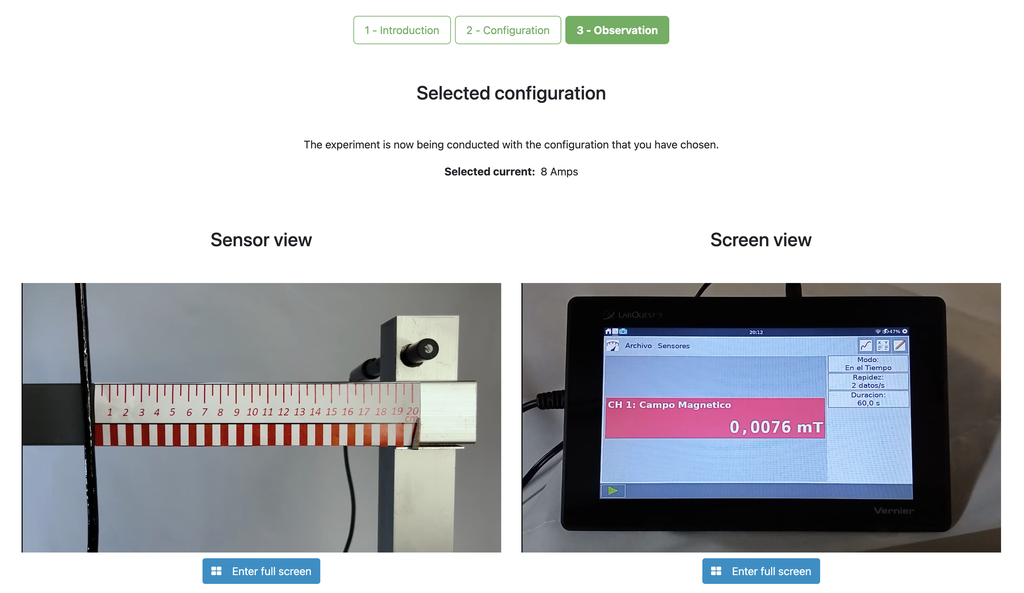
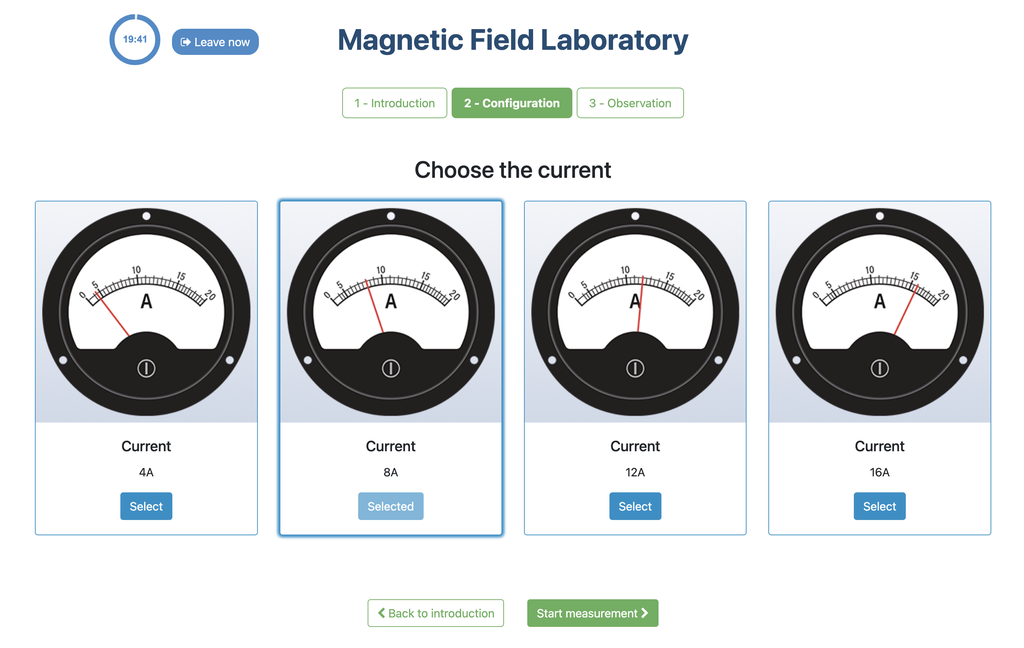
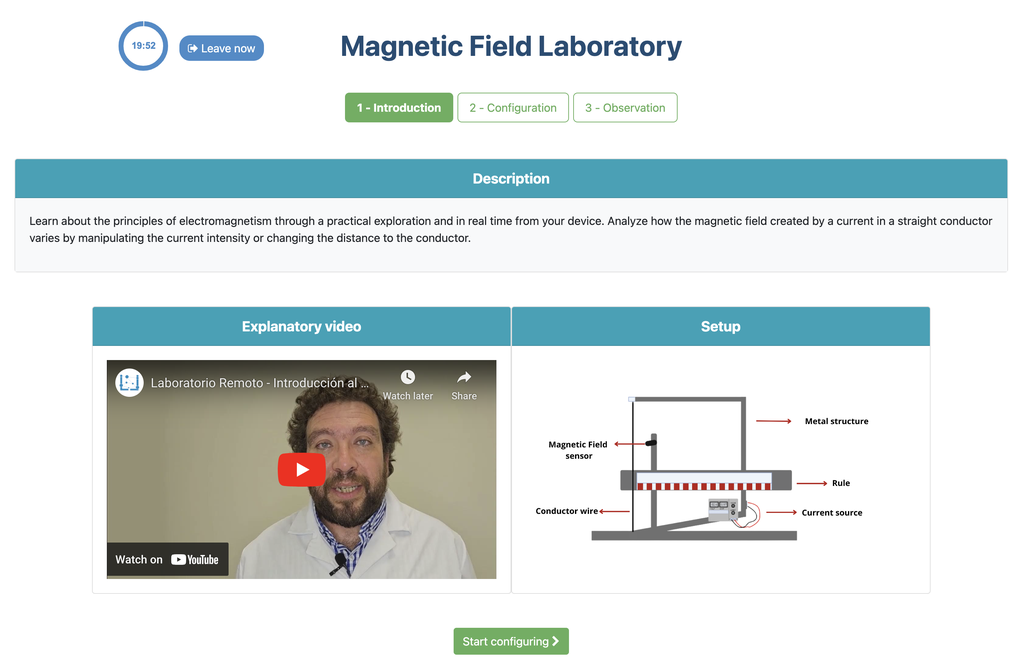
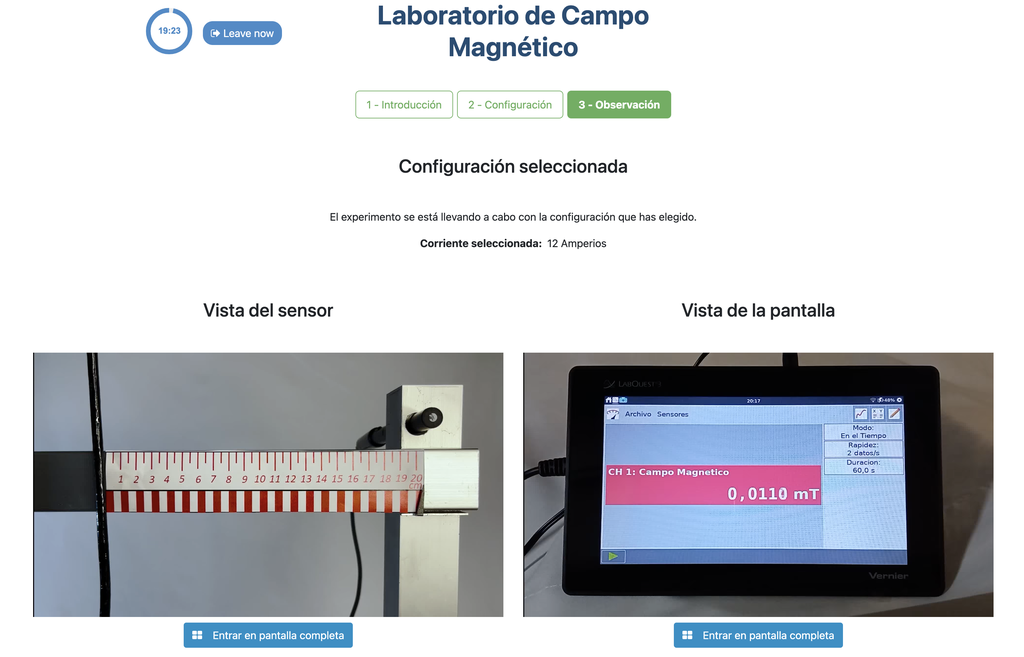
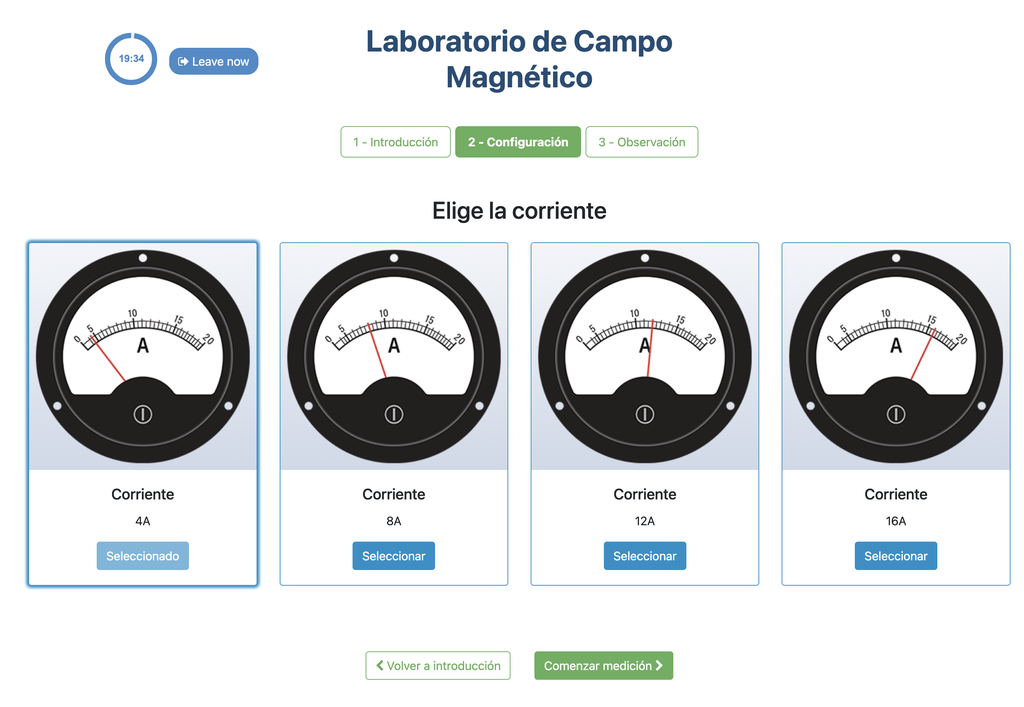
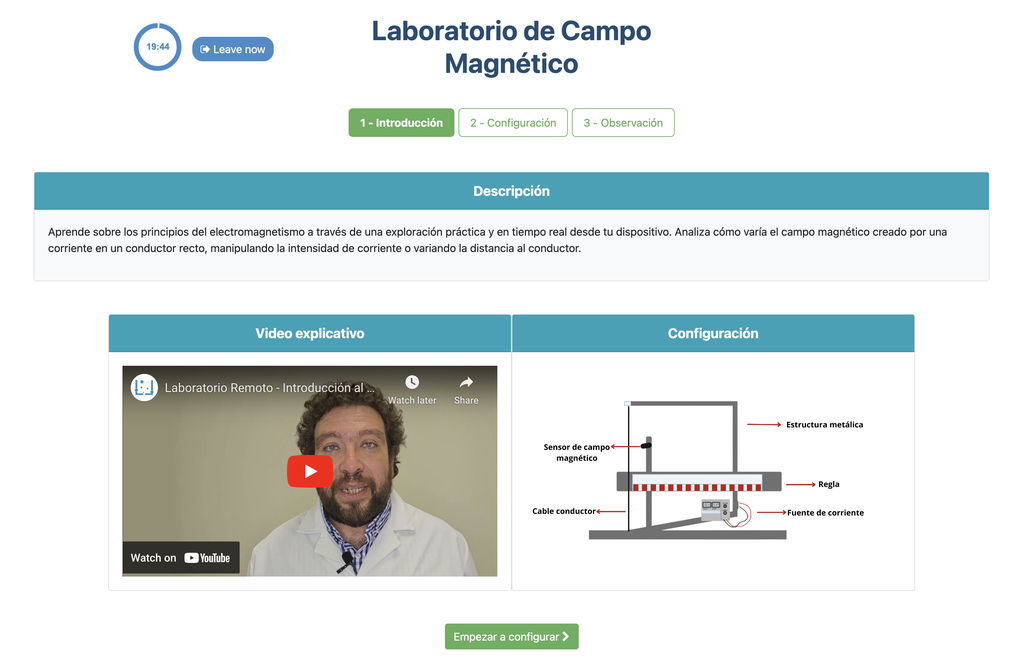
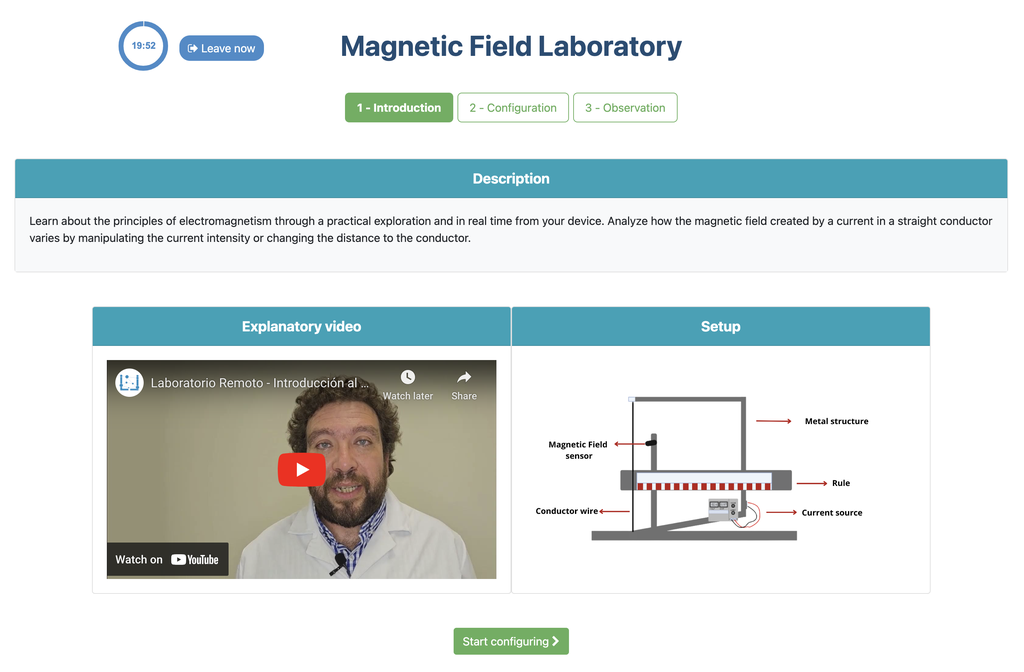
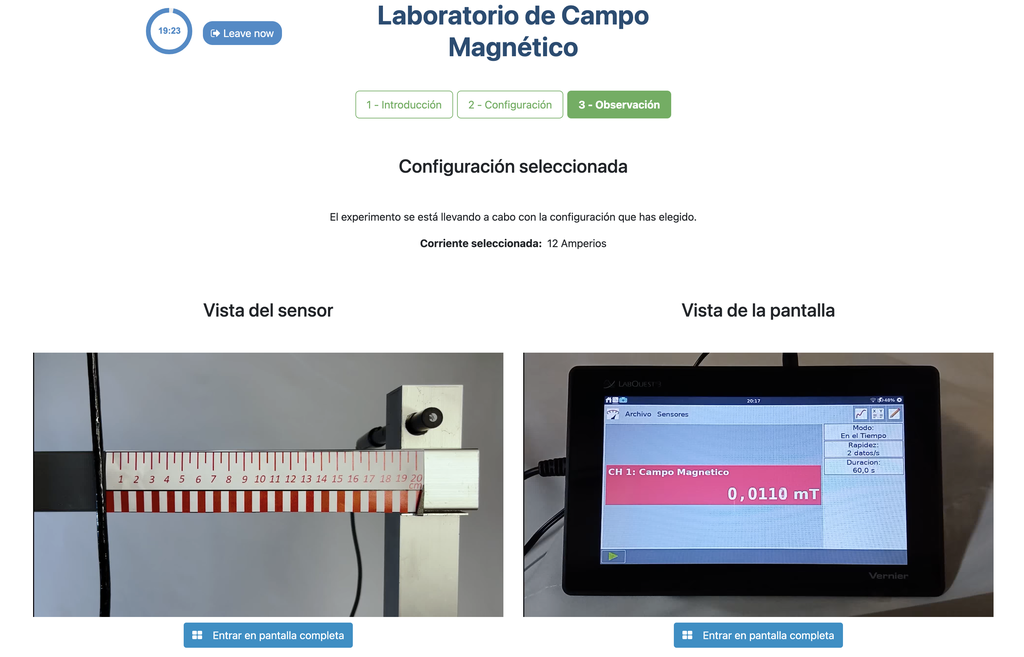
This lab facilitates magnetic field experiments with a steady current in a straight conductor, whose intensity can be adjusted. A movable Hall sensor measures the field's magnitude at various distances. In this version of the lab students manually record the data.
Versions of the lab
In this version of the lab, graphs are not included and data download by the student is not permitted. Instead, the student must collect the data from the sensor readings and the distance to the conductor, similar to a traditional practical experiment. This allows them to construct their own graphs and create custom spreadsheets for data analysis and conclusion drawing.
There is an alternative version of the lab (Magnetic Field with Graph) in which a graph is provided at the end of each experiment and students are allowed to download the data onto a spreadsheet. This version may be especially useful for those students who prefer more direct access to the data collected during the experiment.
Magnetic Field
Moving charged particles have the ability to create a magnetic field around them, which can interact with other moving charged particles. In this context, a conductor through which an electric current flows generates a magnetic field in its surroundings. This physical phenomenon is fundamental in numerous technological advances that we find in our daily lives, such as electric motors and various electronic devices.
Potential Experiments
Numerous experiments can be performed with our lab setup. Users can observe how the strength of the magnetic field varies with the current that generates it. They can explore the fundamental principles of electromagnetic induction, visualizing the link between a changing magnetic field and the induced electric current. By adjusting the probe's distance from the field, they can experimentally verify the inverse square law of magnetism, delving into the intricate relationship between field strength and distance.
Learning Objectives
The lab may cover the following learning objectives:
-
Understand the concept of a magnetic field and how it can be generated and measured.
-
Recognize the relationship between magnetic field strength and the current that generates it.
-
Grasp the principle of electromagnetic induction.
-
Comprehend and verify the inverse square law for magnetic fields.
-
Develop skills in data collection, analysis, and interpretation in a physics context.
-
Enhance their understanding of physical principles and their real-world applications.
Magnetic Field (with plot)
Summary
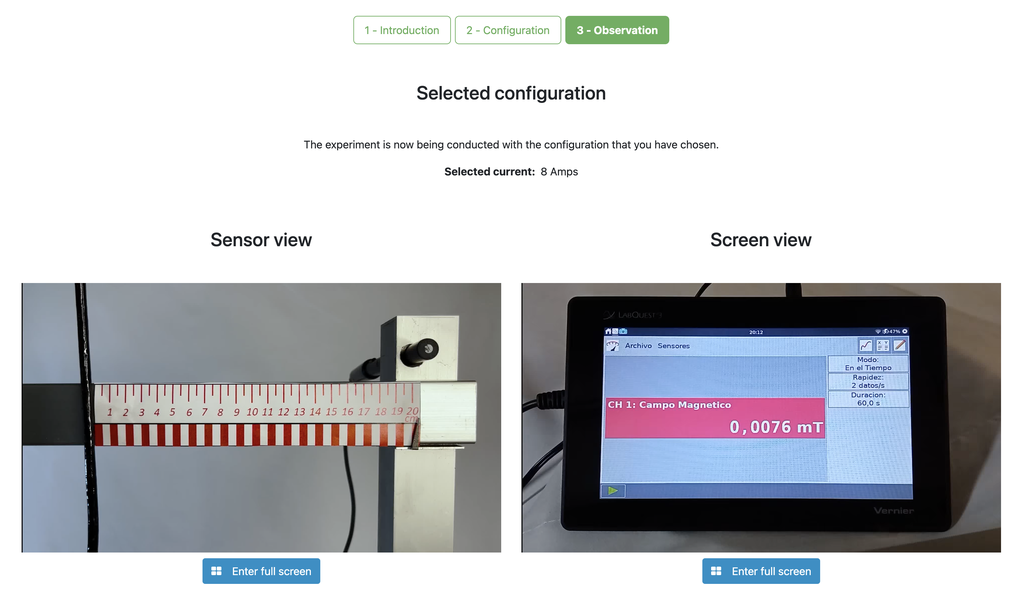
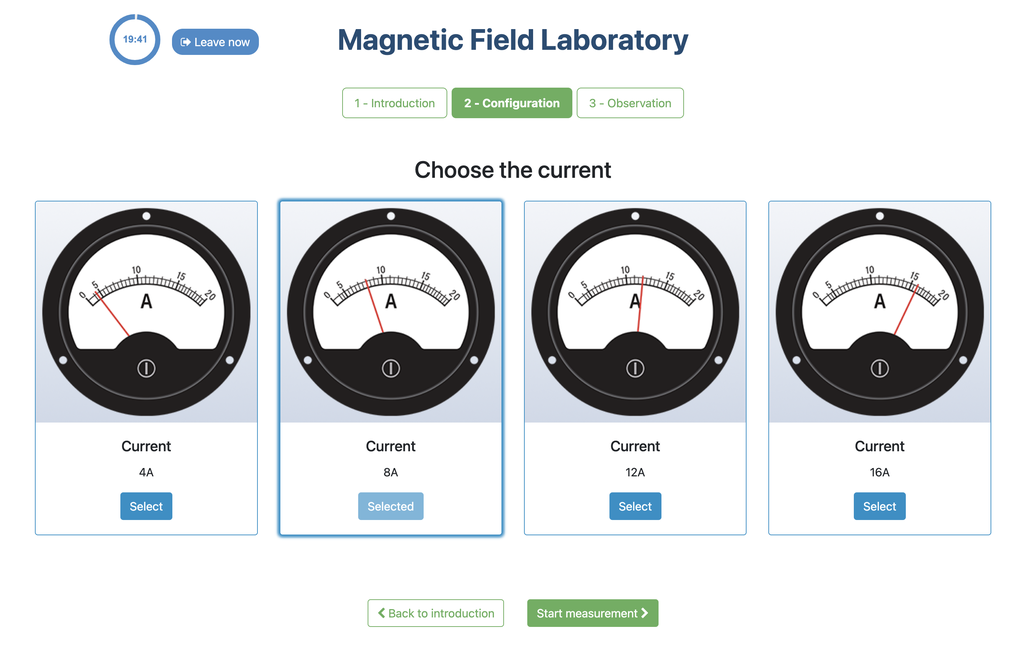
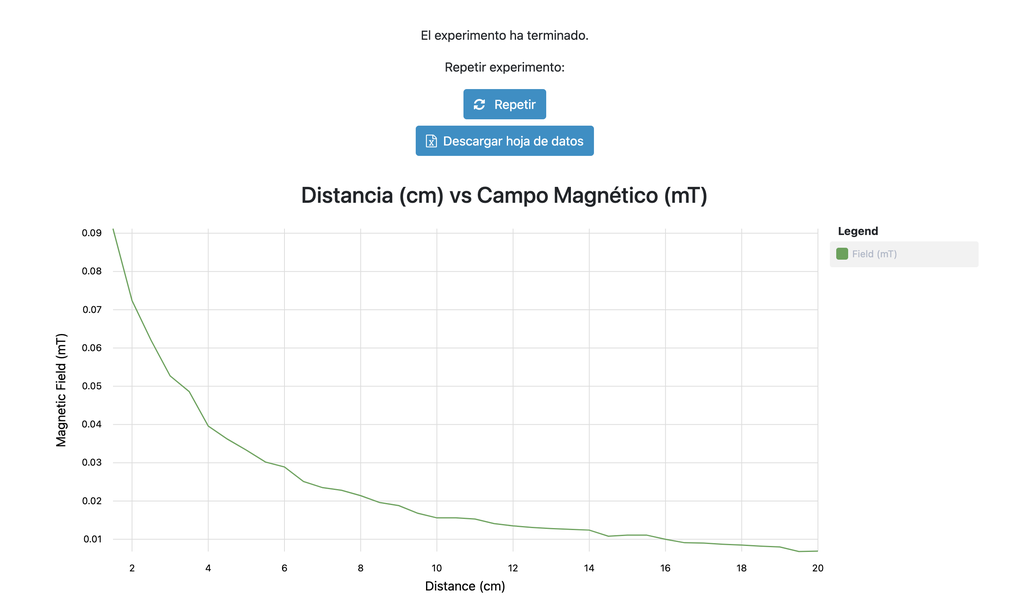
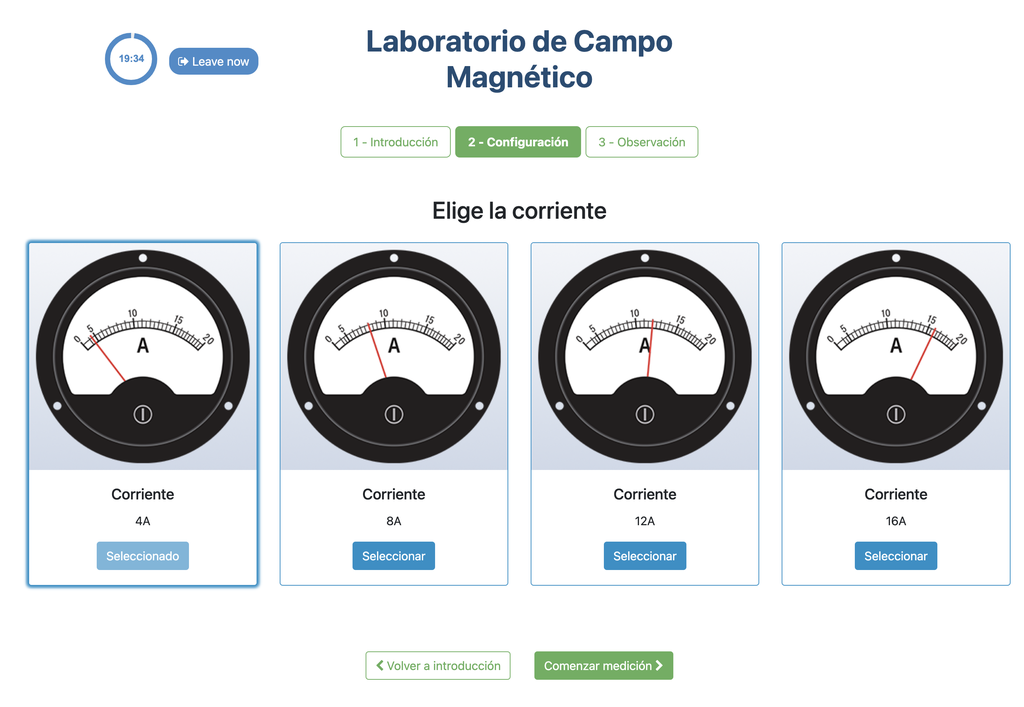
This lab facilitates magnetic field experiments with a steady current in a straight conductor, whose intensity can be adjusted. A movable Hall sensor measures the field's magnitude at various distances. In this version of the labs students are shown a plot with the data and may download it for further processing.
Versions of the lab
This version of the laboratory displays a plot at the end of each experiment and allows students to download the data in a spreadsheet. This allows students to analyze the results without needing to gather and plot the data themselves.
An alterantive version of the lab exists (Magnetic Field) in which the plot and the data are not available. That way, in order to analyse the results and reach proper conclusions, students need to gather and plot the data themselves from the discrete sensor readings, similarly to how they would do so in a traditional hands-on lab.
Magnetic Field
Moving charged particles have the ability to create a magnetic field around them, which can interact with other moving charged particles. In this context, a conductor through which an electric current flows generates a magnetic field in its surroundings. This physical phenomenon is fundamental in numerous technological advances that we find in our daily lives, such as electric motors and various electronic devices.
Potential Experiments
Numerous experiments can be performed with our lab setup. Users can observe how the strength of the magnetic field varies with the current that generates it. They can explore the fundamental principles of electromagnetic induction, visualizing the link between a changing magnetic field and the induced electric current. By adjusting the probe's distance from the field, they can experimentally verify the inverse square law of magnetism, delving into the intricate relationship between field strength and distance.
Learning Objectives
The lab may cover the following learning objectives:
-
Understand some processes of scientific endeavor through the development of a controlled experiment and the collection and interpretation of data associated with a physical phenomenon.
-
Recognize electric current as a source of magnetic field.
-
Find the relationship between the value of the magnetic field in a given direction and the current intensity through a straight conductor.
-
Find the relationship between the value of the magnetic field in a given direction and the distance to the conductor.

Materials
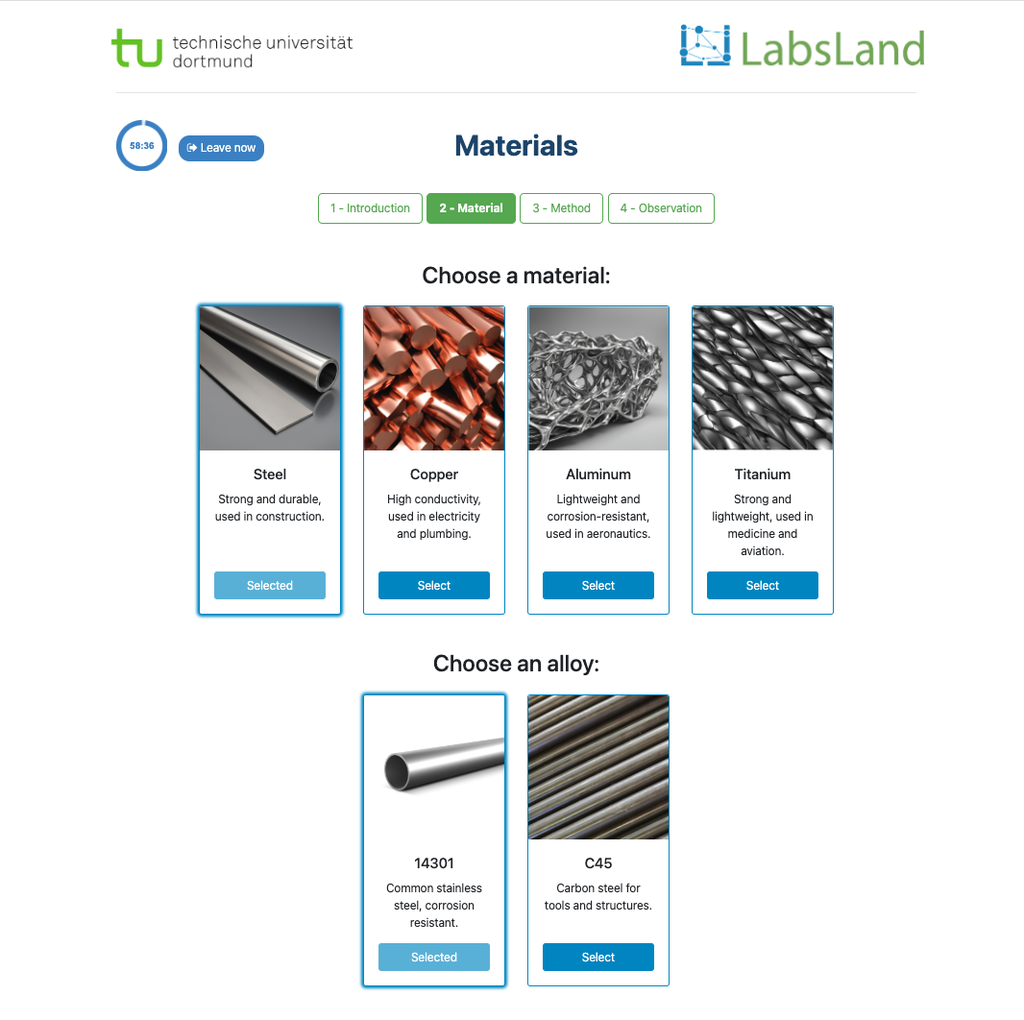
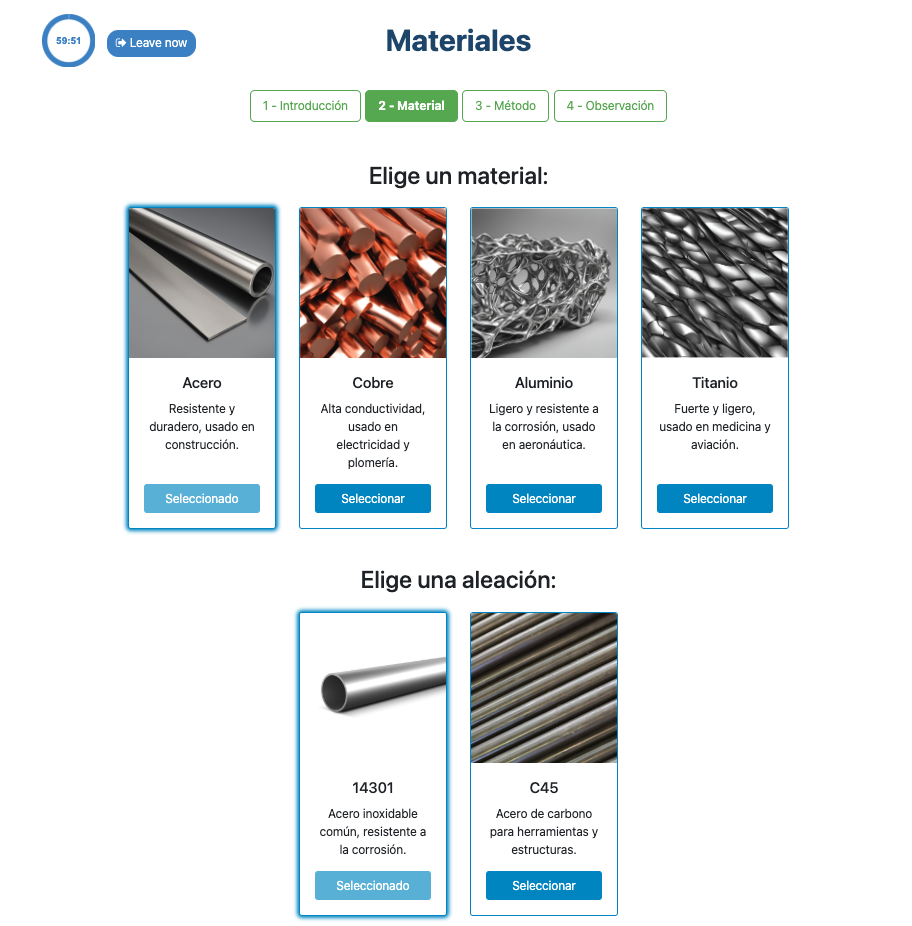
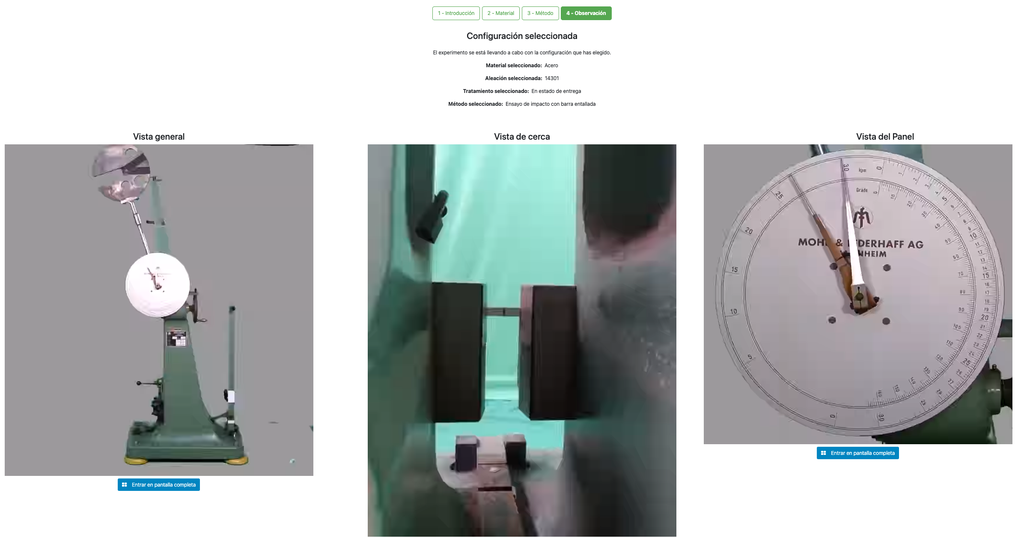
The Materials remote laboratory offers students the opportunity to explore the behavior and properties of different materials under various treatments and testing conditions—all from anywhere in the world. This lab is designed to provide hands-on experience with real materials and advanced testing equipment, enabling deep learning of material science concepts.
Materials and Treatments
Students can select from a range of materials, including:
- Steel
- Aluminum
- Copper
- Titanium
Each material supports multiple treatments, allowing students to experiment with heat treatment, surface finishing, and other processes to study how treatments affect material properties.
Testing Capabilities
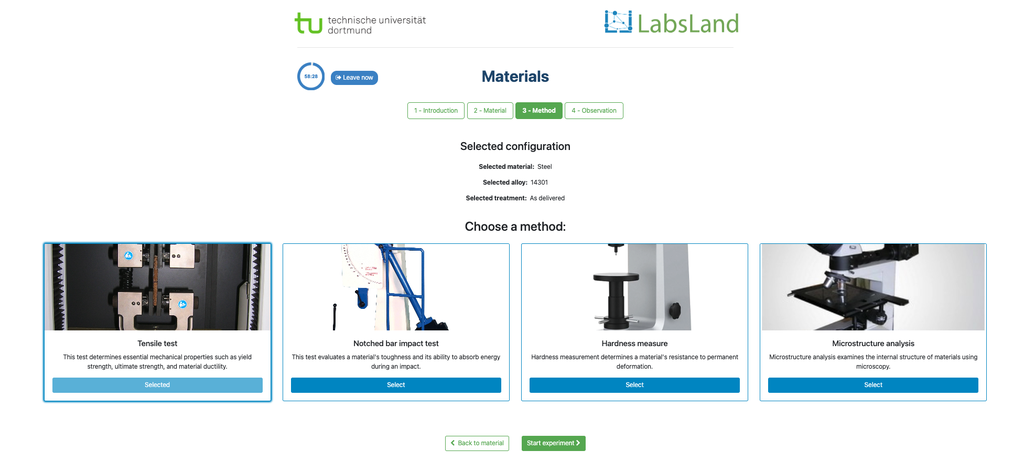
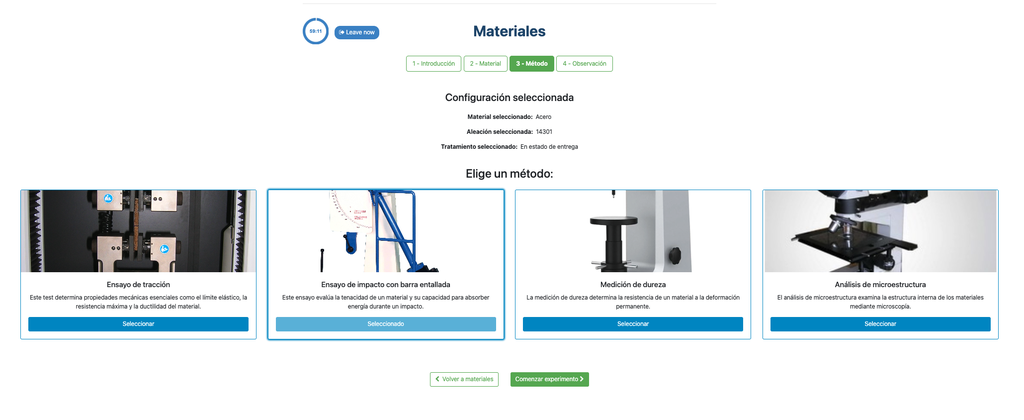
Once materials and treatments are selected, students can perform a variety of industry-standard tests:
- Tensile Test: Evaluate the material's strength and ductility under tension.
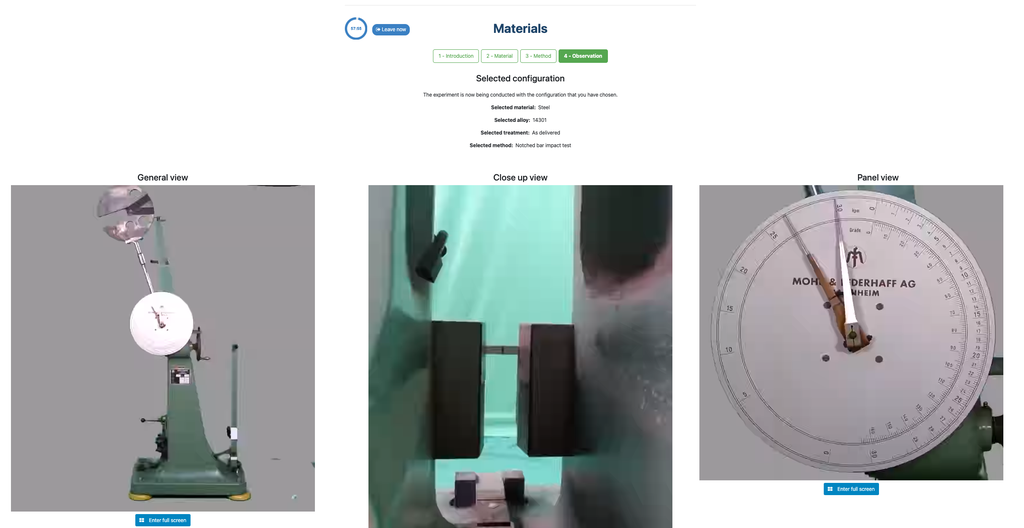
- Notched Bar Impact Test: Measure material toughness and resistance to impact.
- Hardness Measurement: Determine the material's resistance to deformation or scratching.
- Microstructure Analysis: Analyze the internal structure of the material to understand grain size, phase distribution, and more.
Educational Benefits
This lab provides an ultraconcurrent experience, enabling multiple students to perform experiments simultaneously without compromising access or results. It integrates seamlessly into material science and engineering courses, offering hands-on experimentation that enhances theoretical learning.
With its advanced features and broad material selection, the Materials remote laboratory equips students with the skills and knowledge needed for modern materials engineering.
Pelton Turbine
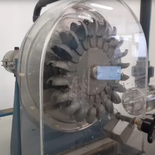
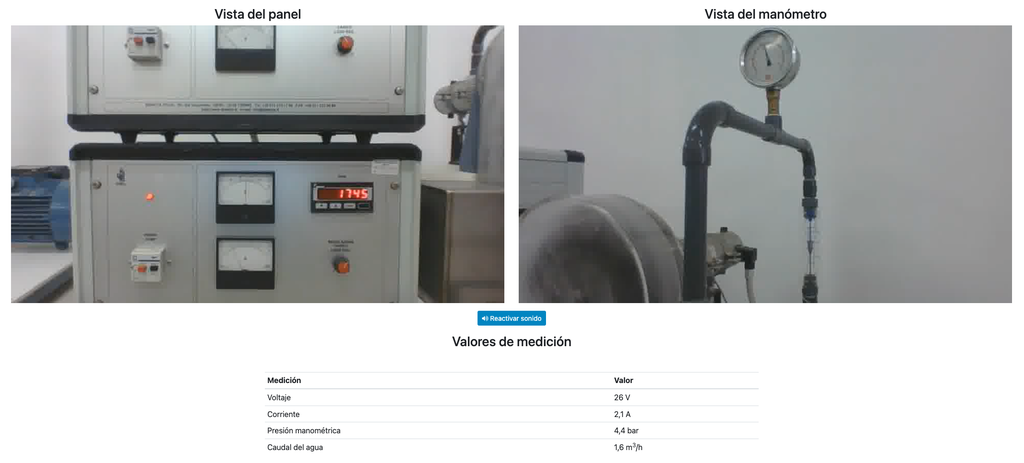
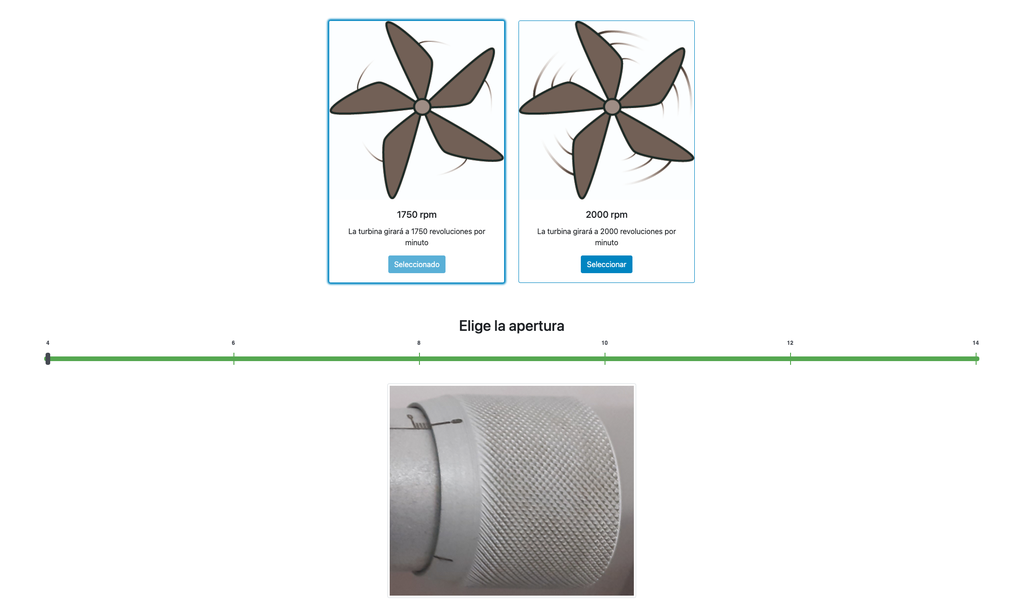
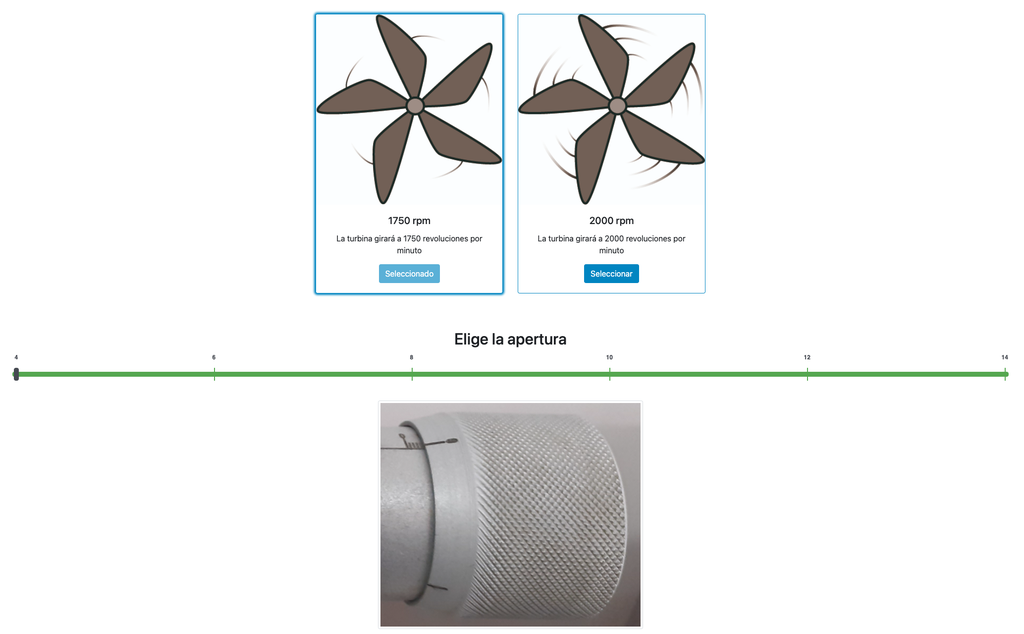
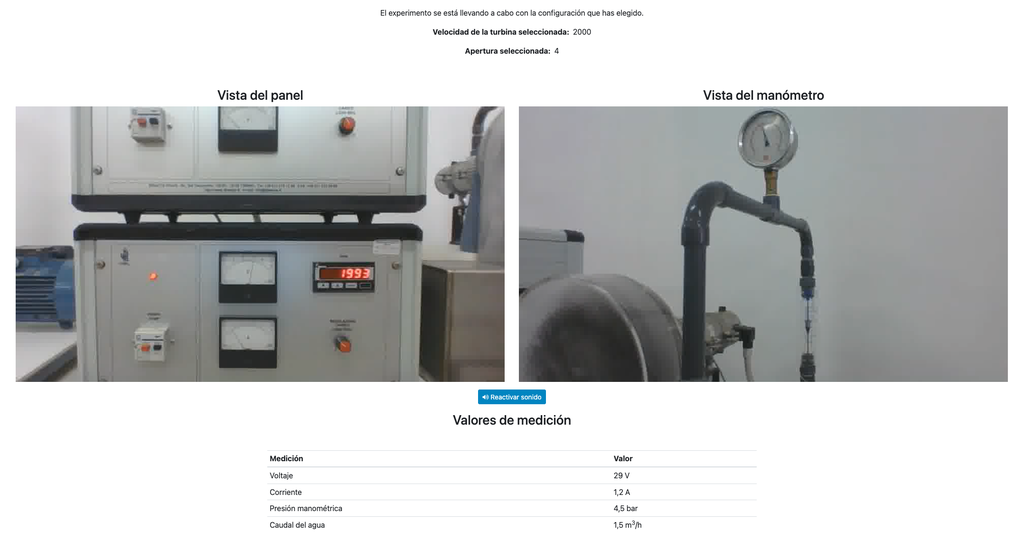
Experiment with it by varying basic parameters such as the opening and the RPM and observe the output, generating electricity and measuring it.
Texture Analyzer
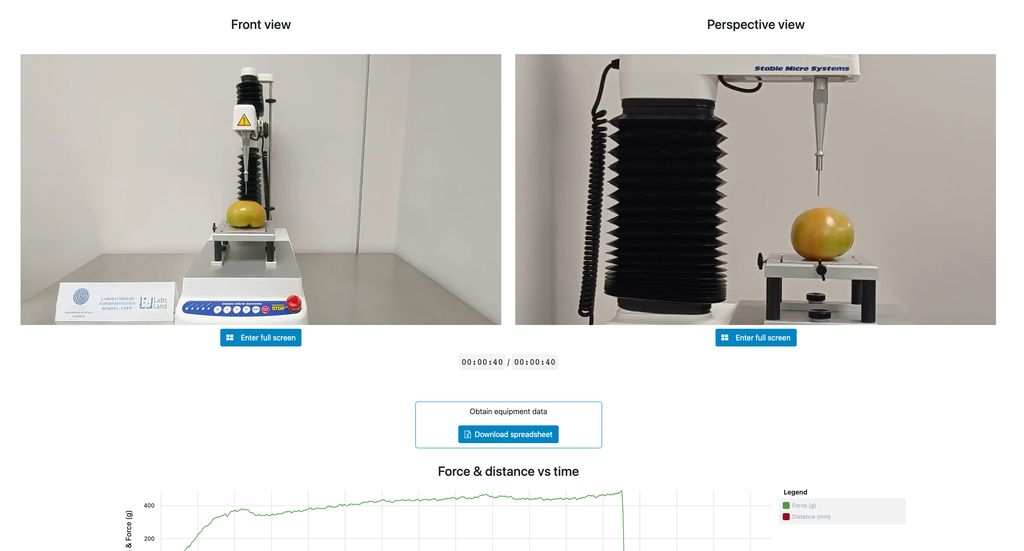
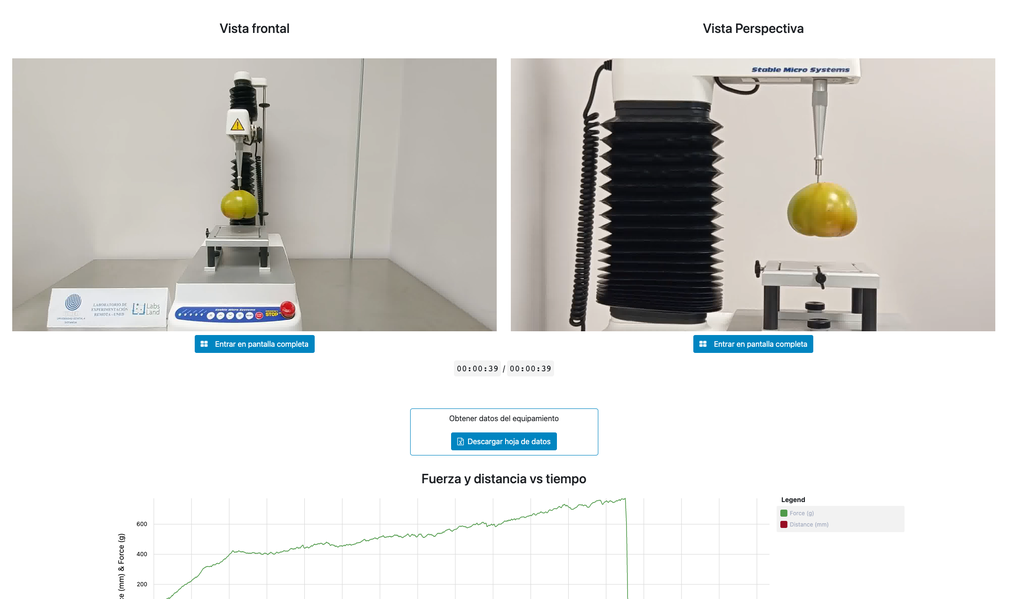
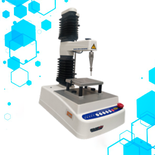
In this laboratory you will be able to work with a texture analyzer (a texturometer) to determine the rheological characteristics associated to the maturation process of fruits and vegetables. You will be able to use this laboratory instruments to analyse the texture of fresh and processed foods and of industrial products. It allows the measurement of various physical parameters.
The texture profile analysis (TPA) is based on sensorial evaluations to detect and eliminate defects. Furthermore, it is used as a research method and for the learning of science, technology and foods.
A robotic arm of the texture analyzer applies the force necessary for the analysis. The robotic arm is coupled with a puncture or compression probe, depending on the required analysis. A platform holds the sample and supports the interaction of the probe with the selected fruit or vegetable. That way, the analytical signal is obtained. The signal is expressed as a force dependant on the time. That way, it is possible to correlate the graphics with various maturation states, and to conclude about the chemical transformations that affect the fruit or vegetable after the harvest.