Tahap II · Years 4–6
Accessible investigations for upper-primary Science, including forces, floating and living things.
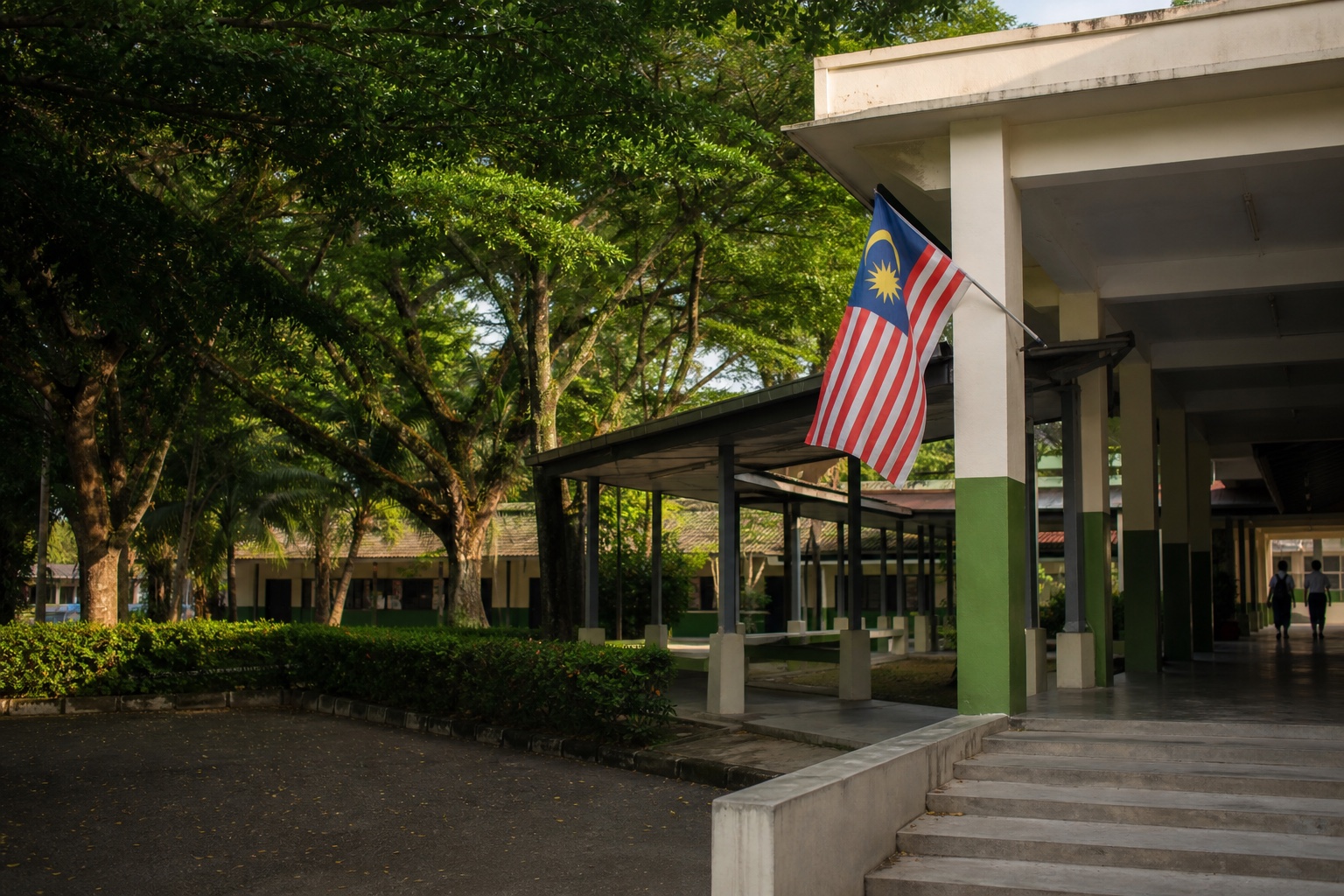
 For science and technology educators in Malaysia
Choose a lesson, share a class code, and let students investigate real equipment from their browser. Teach brings the instructions, measurements and student evidence together—without installing software or building a worksheet from scratch.
Leading a school, science department or STEM programme? See the school route
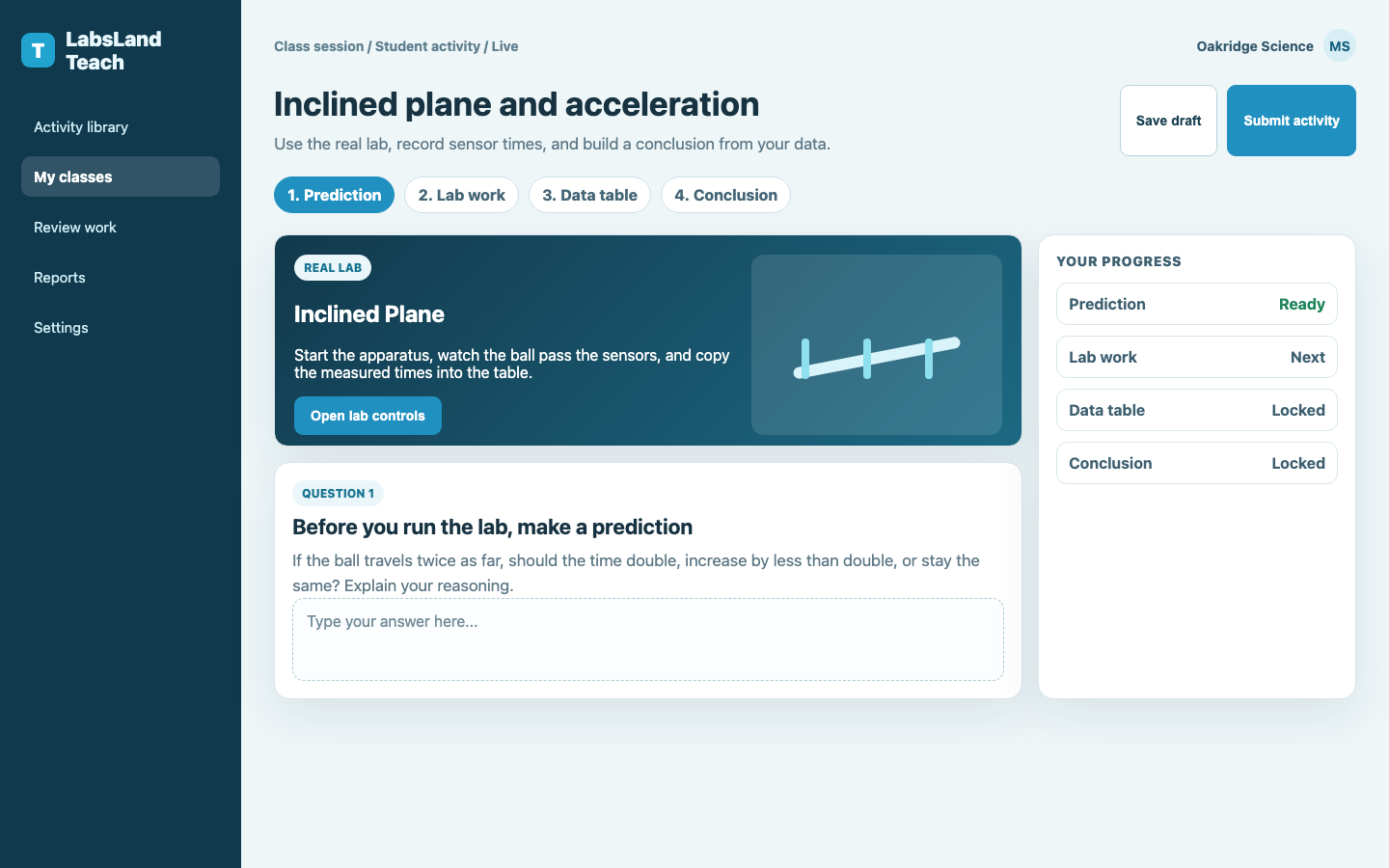
Real experiment Students predict, measure and explain from one guided activity.
Curriculum-aware, teacher-led
The guide uses current KSSR and KSSM structures as a navigation aid. It connects lesson topics to Science, upper-secondary Physics, Chemistry and Biology, and Reka Bentuk dan Teknologi (RBT) or technical pathways. These topic bridges help teachers choose lessons; they are not official Ministry of Education mappings.
Accessible investigations for upper-primary Science, including forces, floating and living things.
Integrated KSSM Science and lower-secondary RBT themes, with measurement and evidence at the centre.
Subject-specific routes for Physics, Chemistry and Biology, plus selected technology and technical work.
Useful for national schools; private and international schools should map topics to their own syllabus and sequence.
The activities linked here are in English. National schools generally teach through Bahasa Melayu; approved Dual Language Programme settings may use English for Science and Mathematics, while SJK(C), SJK(T), private and international settings differ. Teachers should choose the lesson language and local terminology that fit their learners.
One simple classroom loop
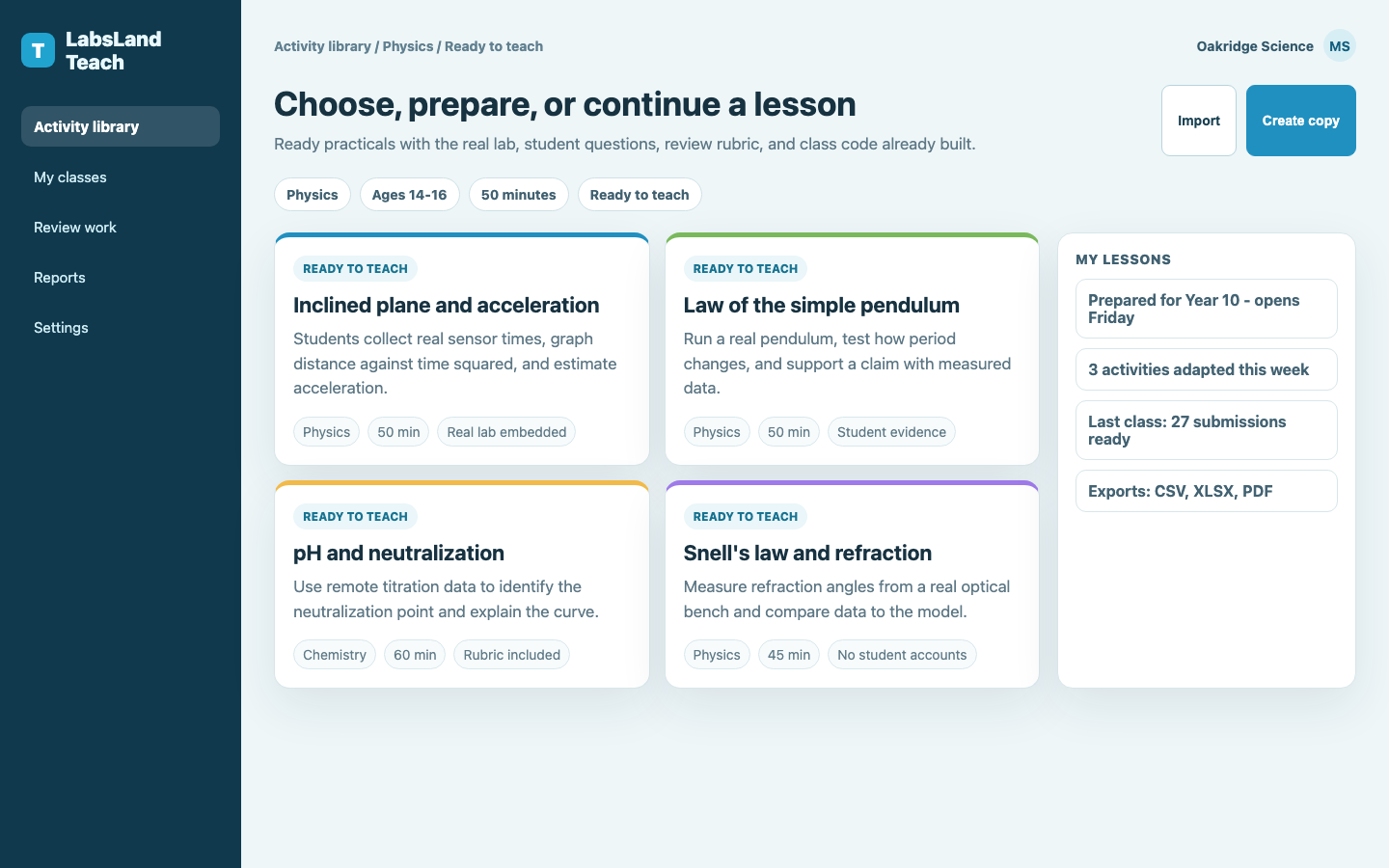
Open the complete student activity before deciding whether it fits your class.
Students join from a browser and work with a real remote laboratory.
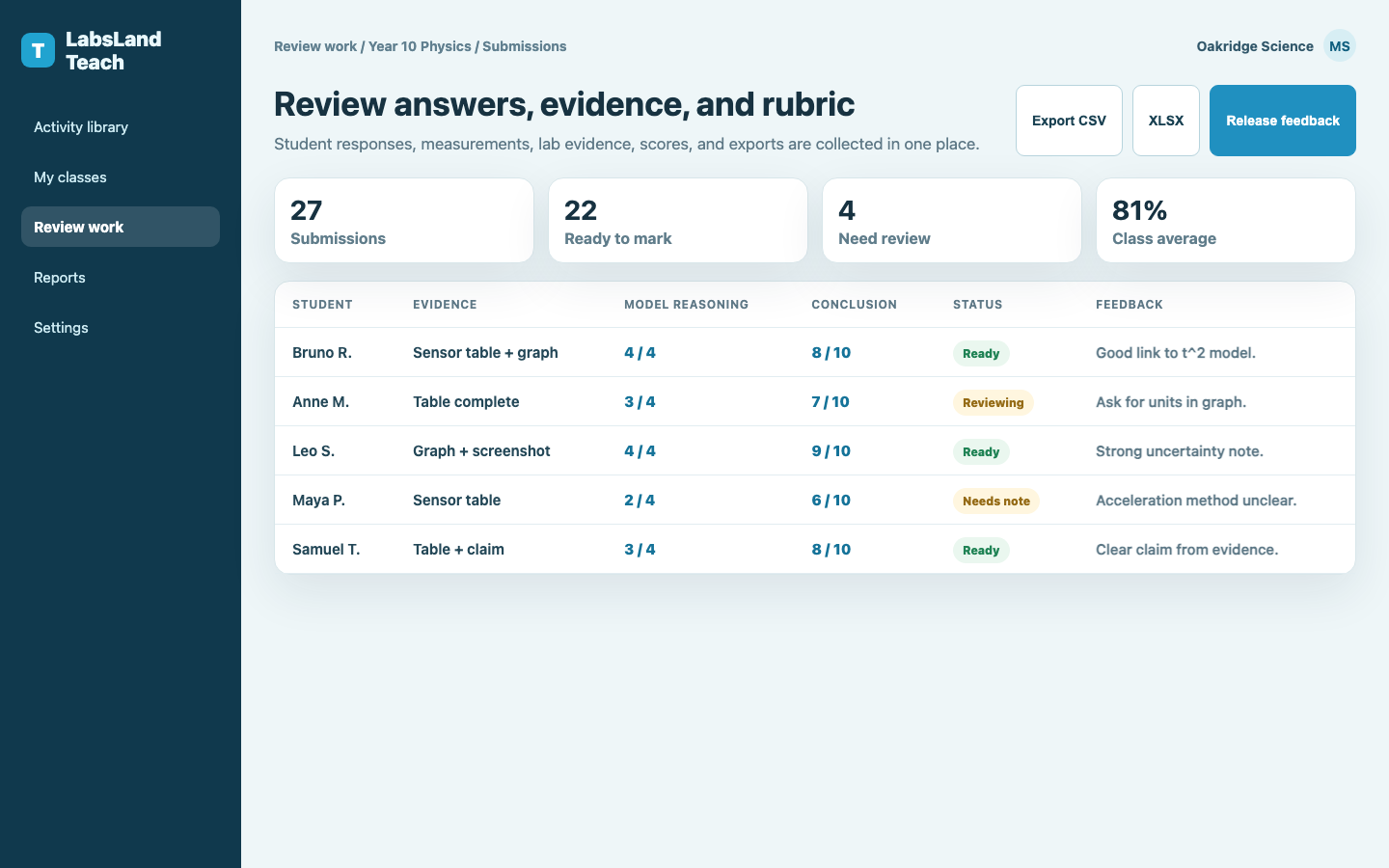
See measurements, answers and conclusions together instead of collecting separate files.
Recommended starting points
Start with a lesson that fits your next topic. The wider guide brings together current English, public-ready lessons across the same school subjects and pathways.
Years 4–6 · Science
Test an everyday claim by observing repeated real drops and comparing evidence.
Form 2 · Science
Measure voltage and current on real hardware and compare the relationship.
Form 1 · Science
Use focus and magnification deliberately, record observations and distinguish evidence from interpretation.
Forms 4–5 · Physics
Estimate gravitational acceleration and separate ideal-model claims from real evidence.
Forms 4–5 · Physics
Measure incidence and refraction angles on real evidence and test a mathematical relationship.
Form 4 · Physics
Interpret real temperature-time evidence and identify phase-change behaviour.
Forms 4–5 · Chemistry
Use pH and volume evidence to estimate concentration and discuss uncertainty.
Forms 4–5 · Biology
Compare CO₂ evidence and explain how activation changes respiration.
Form 5 · Biology
Compare real monocot and dicot stem evidence in Form 5 Biology work on plant tissues.
Forms 1–3 · RBT / Technology
Build and run a first block-based program on a real Arduino.
Suggested levels are practical teaching recommendations based on topic fit and activity demand. They do not imply KPM/MOE approval, endorsement or complete DSKP coverage.
For a school or network
We can help science leaders select a small lesson set, organise access for several teachers, and connect real laboratories to existing schemes of work—without asking the school to replace its curriculum.
We will ask for basic school context and respond with suitable access options and pricing.
Before you open a lesson
They are real laboratories. Some equipment is controlled live; other activities use interactive runs captured from real equipment. Students choose parameters, run the experiment and work with real measurements rather than simulated results.
No. LabsLand Teach is an independent teaching tool and is not affiliated with, approved by or endorsed by Malaysia's Ministry of Education. KSSR, KSSM, DSKP and RBT terms are used only to help teachers navigate relevant topics.
The laboratory activities can be useful across school systems, but this guide is organised around Malaysia's national KSSR/KSSM structure. Private and international schools should map each activity to their own syllabus, sequence and assessment requirements.
No student account is required for the standard class-code route, and nothing needs to be installed. Students join from a modern browser on a computer or tablet.
Teachers can run many activities from a shared or projected device and organise prediction, observation and analysis as a whole-class investigation.
These linked lessons are in English. Teachers should adapt discussion and terminology to their school context, including Bahasa Melayu or the relevant school language, while preserving the scientific meaning.
Ready when your class is