Summary
The Boyle's Law laboratory allows students to determine the relationship between the pressure and volume of a gas at ambient and constant temperature. Students can choose from two different volume syringes and measure the pressure of the gas as they reduce the volume. The experiment is reflected in a graphical analysis in the form of an isotherm. In this way, they can verify Boyle's Law and learn about the behavior of gases in a practical and accessible manner.
Boyle's Law
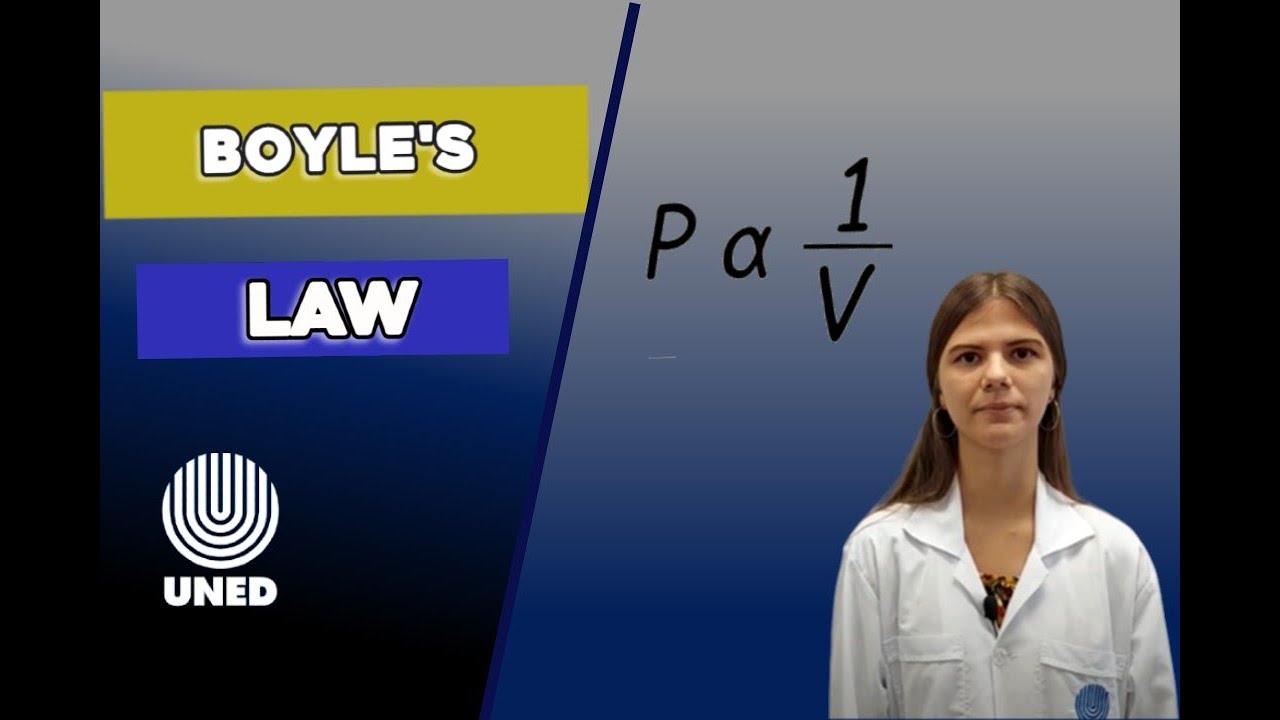
Boyle's Law states that at a constant temperature, the volume of a gas is inversely proportional to its pressure. This means that when the pressure of a gas increases, its volume decreases, and vice versa. Boyle's Law can be mathematically expressed as:
V ∝ 1/P
Where V is the volume of the gas and P is the pressure of the gas.
The Boyle's Law laboratory allows students to put this law into practice and verify it in an experimental context. By measuring the volume and pressure of the gas at different times, they can plot an isotherm graph that shows how the volume of the gas changes based on its pressure. If the isotherm graph fits Boyle's Law, then the students have experimentally verified the law.
Performing experiments like this is an excellent way to learn about the behavior of gases and how different variables are related. In addition, hands-on experiments can be more accessible and memorable for students than simply reading about the law in a textbook. The isotherm graph clearly visualizes the behavior of the gas and verifies if the predictions of Boyle's Law are met.
Application in Secondary and University Education
The Boyle's Law laboratory is typically applied in science courses at the high school level and in chemistry courses at the university level. At the high school level, the laboratory can be applied in a science course where the basic concepts of chemistry and physics, such as the pressure and volume of gases, are studied. At the university, the Boyle's Law laboratory can be applied in a more advanced chemistry course where the study of gases and their behavior is delved into.
Objectives
A Boyle's Law laboratory can have different educational objectives depending on the educational level at which it is applied. Here are some examples of objectives that a Boyle's Law laboratory can have at both high school and university levels:
At the high school level:
- Students understand Boyle's Law and its importance in gas physics.
- Students practice experimental and observational skills.
- Students develop data analysis and representation skills.
- Students understand the relationship between temperature, pressure, and volume of gases.
At the university level:
- Students know Boyle's Law and its importance in gas physics.
- Students demonstrate experimental and observational skills in the laboratory.
- Students apply theoretical concepts of gas physics in practical situations.
- Students develop data analysis and representation skills in a scientific context.
- Students understand how temperature, pressure, and volume of gases relate in different situations.