Opened free emergency access
LabsLand opened free access for affected schools, colleges, and universities so instructors could keep laboratory work present in remote courses.
Archived initiative - 2020
During COVID-19 closures, LabsLand opened access to browser-based real laboratories so schools and universities could keep practical STEM work in their courses.
Historical note
Free emergency access ran in 2020 and expired on August 31, 2020.
This case study looks back at that response and points today's educators toward current LabsLand options for remote laboratory access. It is not a live COVID-19 promotion.
The 2020 response
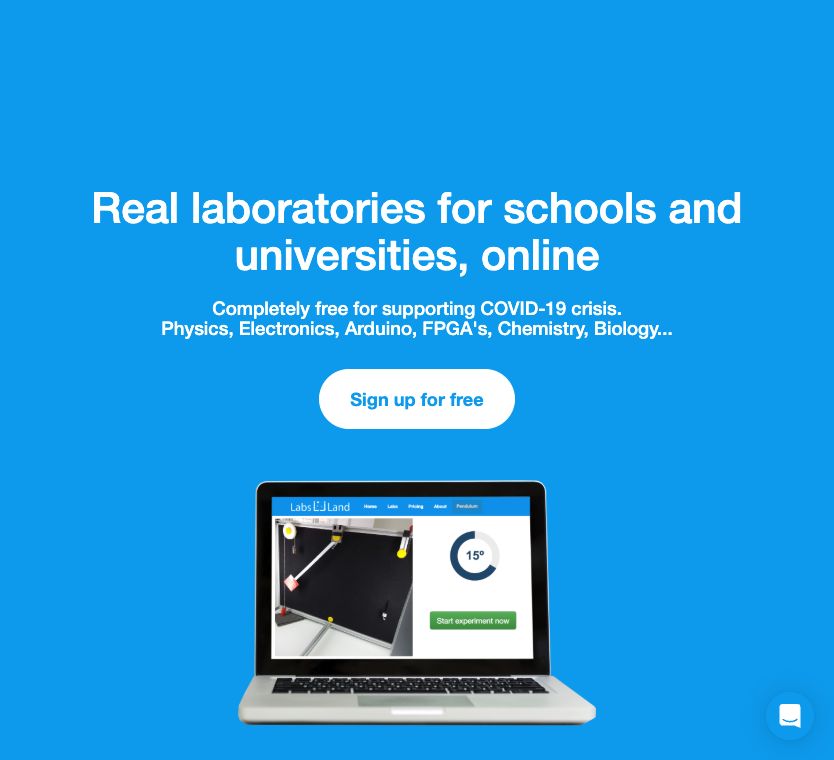
When campuses closed, educators needed practical activities students could complete from home without turning lab courses into simulations. LabsLand made real equipment available through the browser so institutions could keep hands-on work in their STEM courses.
LabsLand opened free access for affected schools, colleges, and universities so instructors could keep laboratory work present in remote courses.
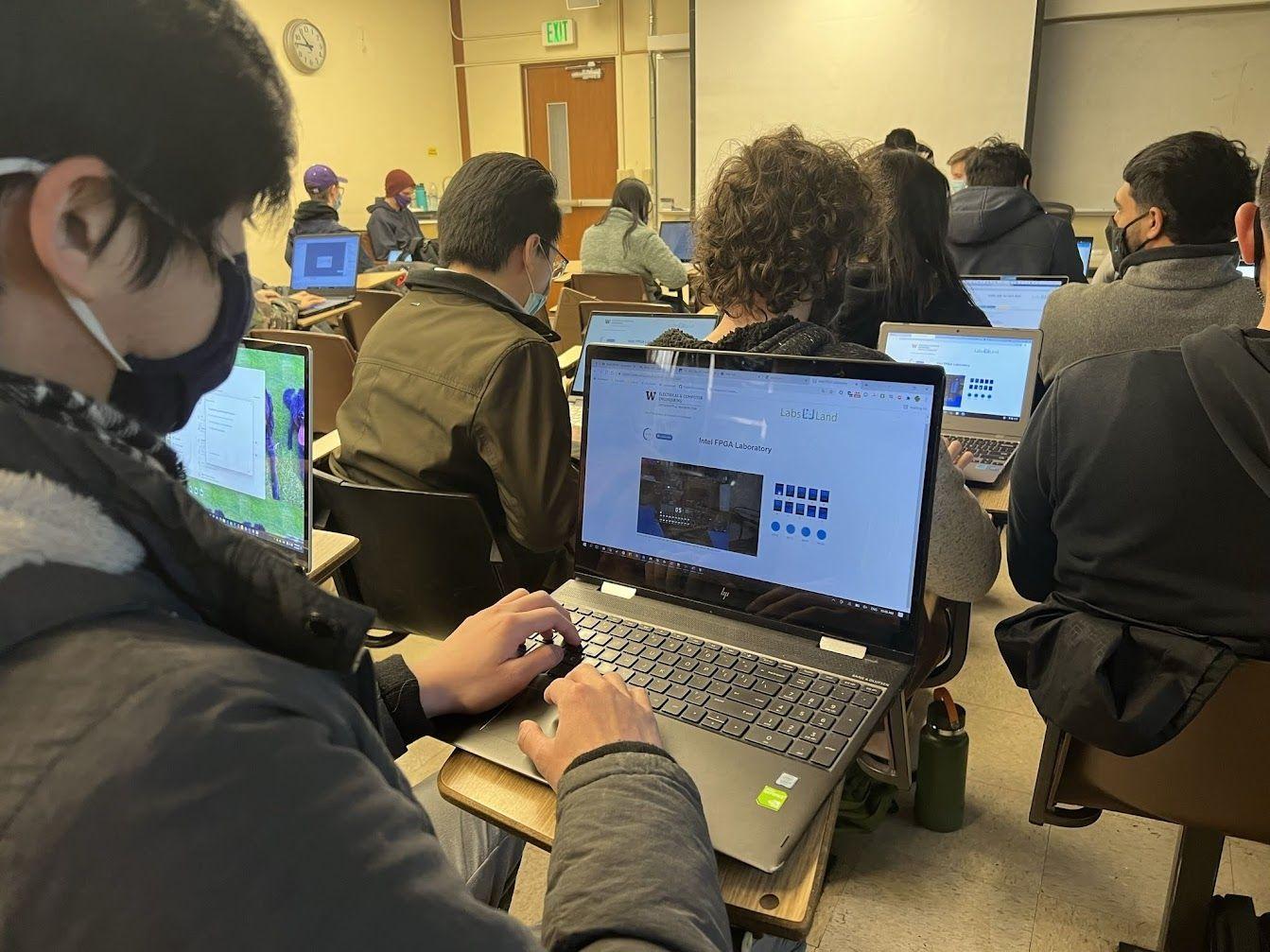
Students could work with real equipment in physics, electronics, Arduino, FPGA, chemistry, and biology from a browser.
Teachers could manage students through a LabsLand space and connect activities through Moodle, Canvas, Sakai, Blackboard, and Google Classroom.
Why it worked
A browser was enough to reach the lab interface, observe the equipment, collect data, and continue practical activities from home.
LabsLand handled the remote equipment, while institutions kept control of classes, groups, access, and the learning context.
The 2020 program brought together remote laboratories co-developed or hosted by institutions across 14 countries, giving educators a shared base of real equipment.
Proof under pressure
LabsLand was already built around browser-based access to real equipment. During the 2020 closures, that existing model gave schools and universities a practical way to keep laboratory work available from home. The same approach continues to support hybrid courses, make-up labs, off-hours practice, and distributed programs.
Everyday value
The 2020 response highlighted a need that exists beyond emergencies: institutions need flexible, repeatable access to real equipment. Browser-based real labs help extend practical STEM work across ordinary courses, online programs, and institutions with limited lab capacity.
Use real experiments in classroom, hybrid, or homework settings without asking every school to maintain specialized hardware rooms.
ContinueExtend practical access for engineering, science, and online programs while keeping real measurements and equipment in the course.
ContinueBrowse the current catalog of physics, electronics, robotics, FPGA, biology, chemistry, and other STEM laboratories.
Continue