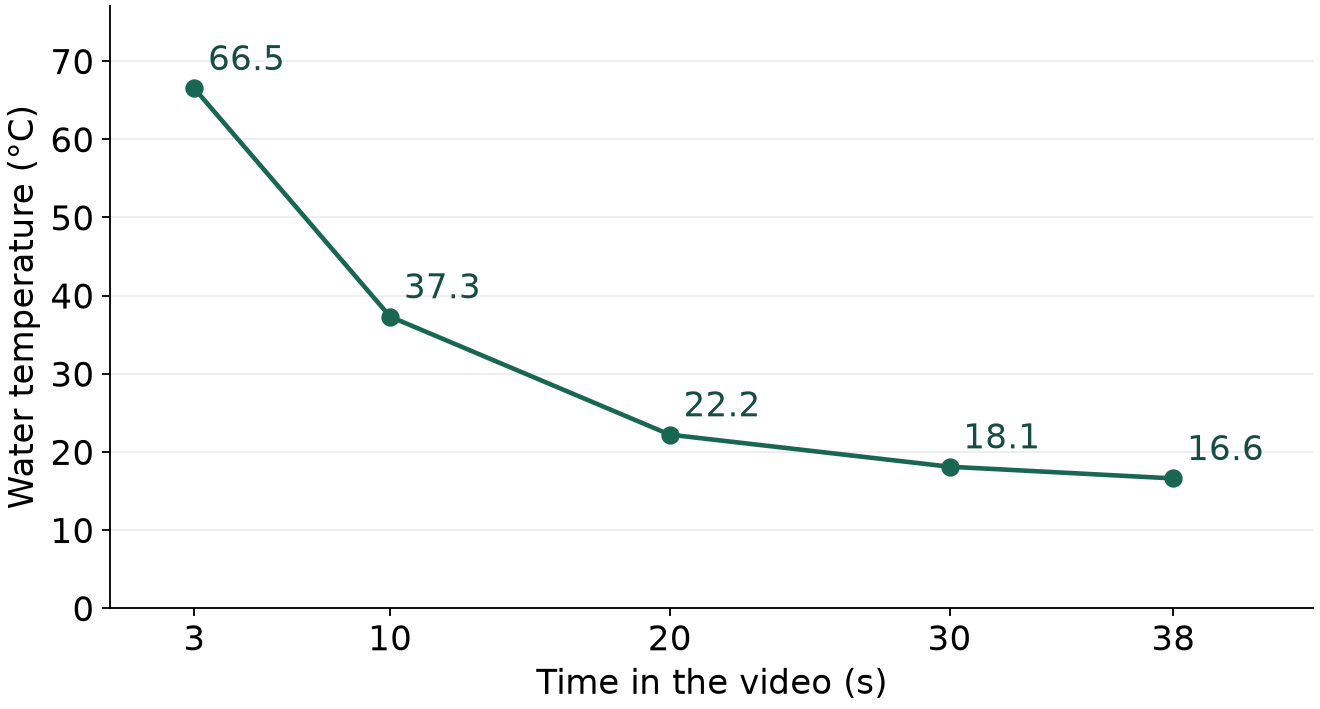
In this experiment, hot water cooled from 66.5°C to 37.3°C in seven seconds of video. Near the end it fell only from 18.1°C to 16.6°C in eight seconds. Water was cooling in both intervals, but the graph is much steeper in the first. Here’s how to use the slope to measure the difference.
Read the cooling curve
The horizontal axis shows the elapsed time in the recording. The vertical axis shows the temperature of the water as it cooled in an ice bath. Each point is a thermometer reading from one video frame.
| Time in the video (s) | Water temperature (°C) |
|---|---|
| 3 | 66.5 |
| 10 | 37.3 |
| 20 | 22.2 |
| 30 | 18.1 |
| 38 | 16.6 |
Calculate the average cooling rate
Subtract the starting temperature from the final temperature, then divide by the elapsed time. The result is the average slope, in degrees Celsius per second.
- From 3 to 10 s: (37.3 − 66.5) ÷ 7 ≈ −4.17°C/s.
- From 30 to 38 s: (16.6 − 18.1) ÷ 8 ≈ −0.19°C/s.
The minus sign means the temperature is falling. In the first interval it fell about 22 times as fast as it did in the last one. Each rate describes an interval, so the temperature may have been changing faster or slower at individual moments within it.
Why does the cooling curve flatten out?
At the start, the temperature difference between the hot water and the ice bath is large. Heat transfers more quickly while that difference is large. As the water cools, the difference shrinks and the temperature changes more slowly.
The last two readings still show cooling, with the water above its freezing point. To find out whether it reached thermal equilibrium, you would need a longer recording and a measurement of the bath temperature. Compare the graph with the melting plateau on a water heating curve, where you can see ice melting during the flatter part of the graph.
Try it with the experiment
Calculate the slope from 10 to 20 s, then from 20 to 30 s. How does the cooling rate change across the four intervals? Explore the Water Heating and Cooling Curves lab or use the recording in the LabsLand Teach inquiry lesson.