
Grade 9 circuits
A direct connection to voltage, current, resistance, Ohm's law and circuit construction.
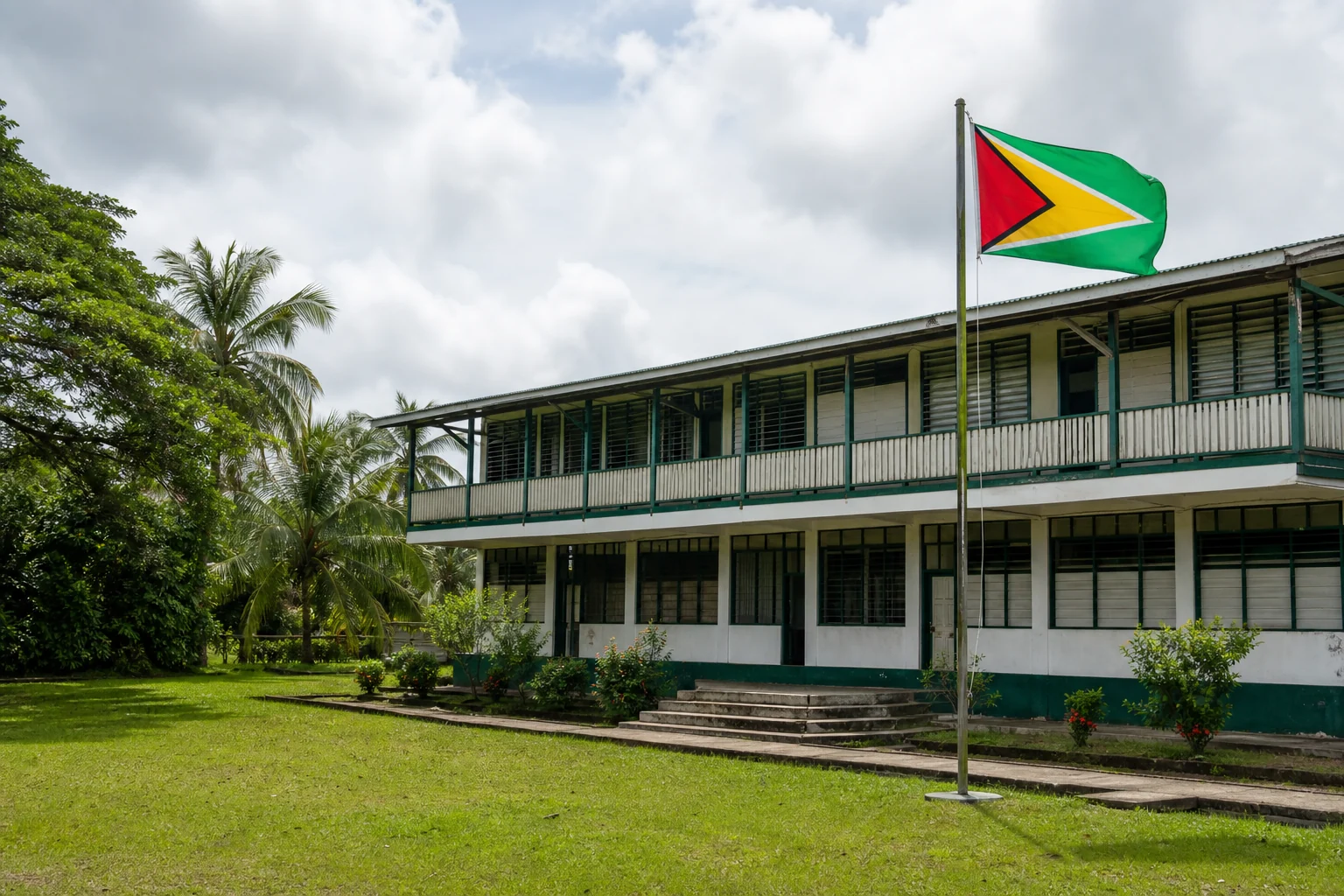
From Grade 9 Integrated Science through CSEC, CAPE and technical programmes, teachers can run guided experiments on real equipment through a browser.
Browse all 18 mapped lessonsIndependent curriculum mapping · English lessons · No student accounts required
A practical first class
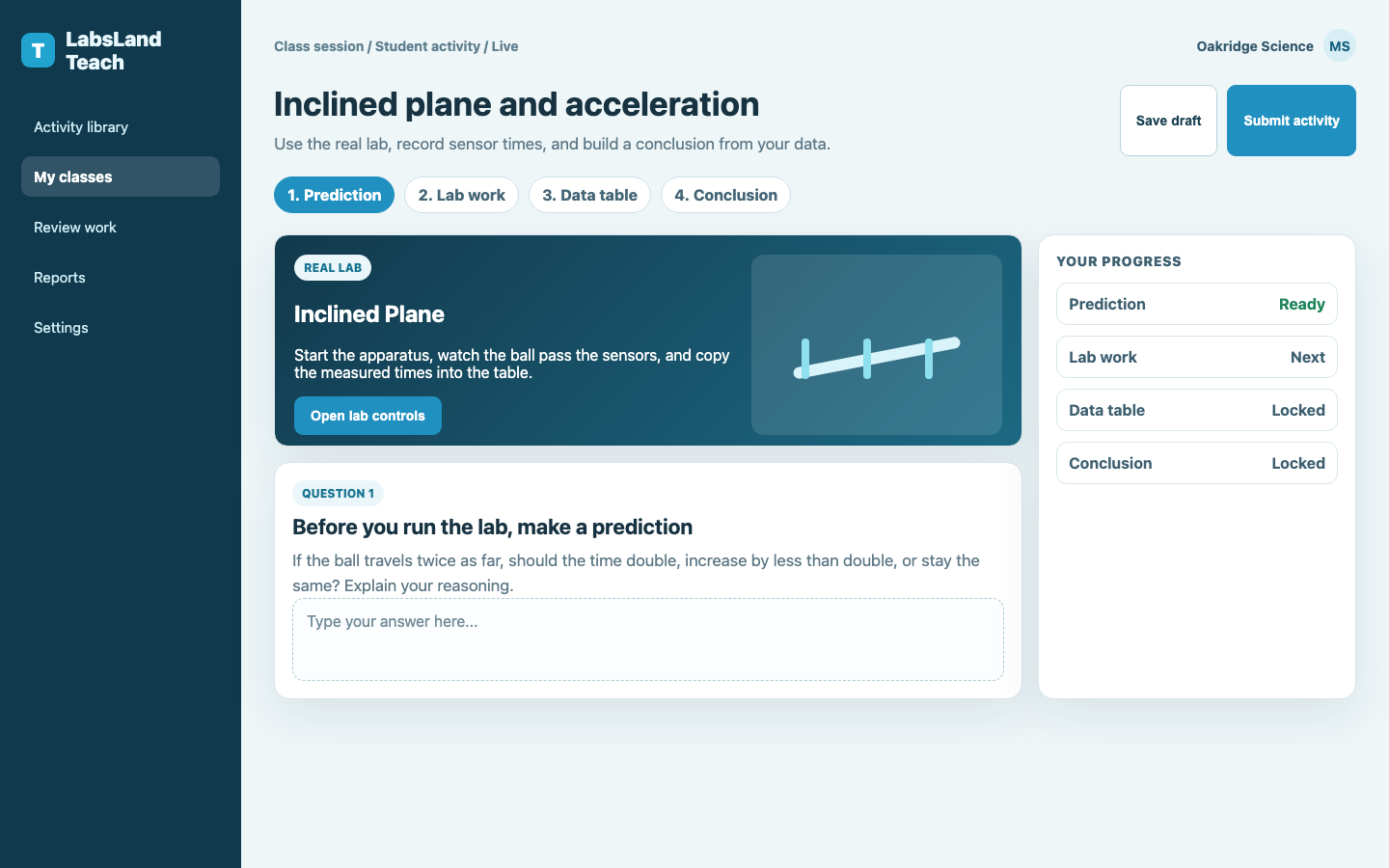
Students predict, operate or observe real apparatus, record evidence and explain what the results show. Teachers can inspect every lesson before using it.
A direct connection to voltage, current, resistance, Ohm's law and circuit construction.
Physics, chemistry and biology ideas used only after the subject and level are confirmed.
Physical computing, robotics and 3D printing for relevant technology, Digital Literacy or TVET contexts.
Students join from a current browser with a code or link; their work stays together for review.
Guyana planning context
The guide separates lower secondary science, upper-secondary CSEC contexts and sixth-form CAPE enrichment. It never assumes that every school offers the same subject pathway.
This is an independent instructional mapping, not a Ministry of Education or CXC list, endorsement or claim of complete syllabus coverage.
Six lessons to start with
The first set covers Grade 9 circuits and optics, upper-secondary physical and life science, and a technical-design investigation.
See all 18 mapped lessonsA direct Grade 9 circuits anchor using real voltage and current measurements. Use when the topic is in the teacher's current science sequence; the guide does not assume a school-specific offering or timetable.
A direct Grade 9 refraction anchor using measured incidence and refraction angles. Use when the topic is in the teacher's current science sequence; the guide does not assume a school-specific offering or timetable.
Supports an upper-secondary motion investigation using real cart evidence. Use when the topic is in the teacher's current science sequence; the guide does not assume a school-specific offering or timetable.
Supports investigation of pressure and volume when gas laws are in the current sequence.
Supports a biology investigation through measurement, comparison and evidence-based explanation.
Supports controlled testing and evidence-based design improvement in a relevant technical subject.
For Guyana schools
Tell us the grade, subject and available class time. We can help narrow the guide without assuming the school's programme, equipment or purchasing process.
We will ask only for the school and teaching context needed to recommend a suitable first step.
Before choosing a lesson
They are real laboratories. Some equipment is controlled live; other lessons use interactive runs and evidence captured from real apparatus.
No individual student account or installation is required. Students join from a current browser using the class code or link the teacher shares.
No. LabsLand Teach is independent and is not affiliated with, approved by or endorsed by the Ministry of Education or CXC.
No. Level and subject labels are planning aids. Teachers should confirm their current sequence and the subjects their school offers.
They are different subject and level contexts. CAPE examples are shown only for confirmed sixth-form settings; no CAPE offering is assumed.
Yes. Open a lesson to review the activity and decide whether it fits your class before creating a session.
Start with the six selected lessons or filter the full Guyana guide by level and subject context.