
Prepared sequence
A classroom-ready flow from prediction to evidence-based conclusion.
Choose a prepared science or technology lesson, share one class code, and let students investigate real equipment from a browser. Their data, responses, and conclusions stay together for review.
Browse the complete Philippines guideIndependent curriculum mapping · English lessons · No student accounts required


A practical first class
Students make a prediction, operate or observe real equipment, record evidence, and explain what the results show. You can inspect each lesson before choosing it for your class.
A classroom-ready flow from prediction to evidence-based conclusion.
Interactive measurements come from physical laboratory apparatus, not a simulation.
Students join from a browser with a code or link; no individual account is required.
Responses, data, and conclusions stay together for teacher feedback.
Philippine planning context
DepEd's Revised K to 10 Curriculum—the rollout introduced as MATATAG—is in Phase 3 for Grades 6, 9, and 10 in SY 2026–2027. Senior High follows a separate transition: all Grade 11 learners use Strengthened SHS, while Grade 12 remains split between pilot SSHS cohorts and the existing curriculum.
This is an independent instructional mapping, not an official DepEd list, endorsement, or claim of complete curriculum coverage. Schools should confirm grade, quarter, and elective availability locally.
10 lessons to start with
This short set spans physical science, life science, electronics, and making. The full guide includes all 69 English lessons selected for this Philippines classroom guide.
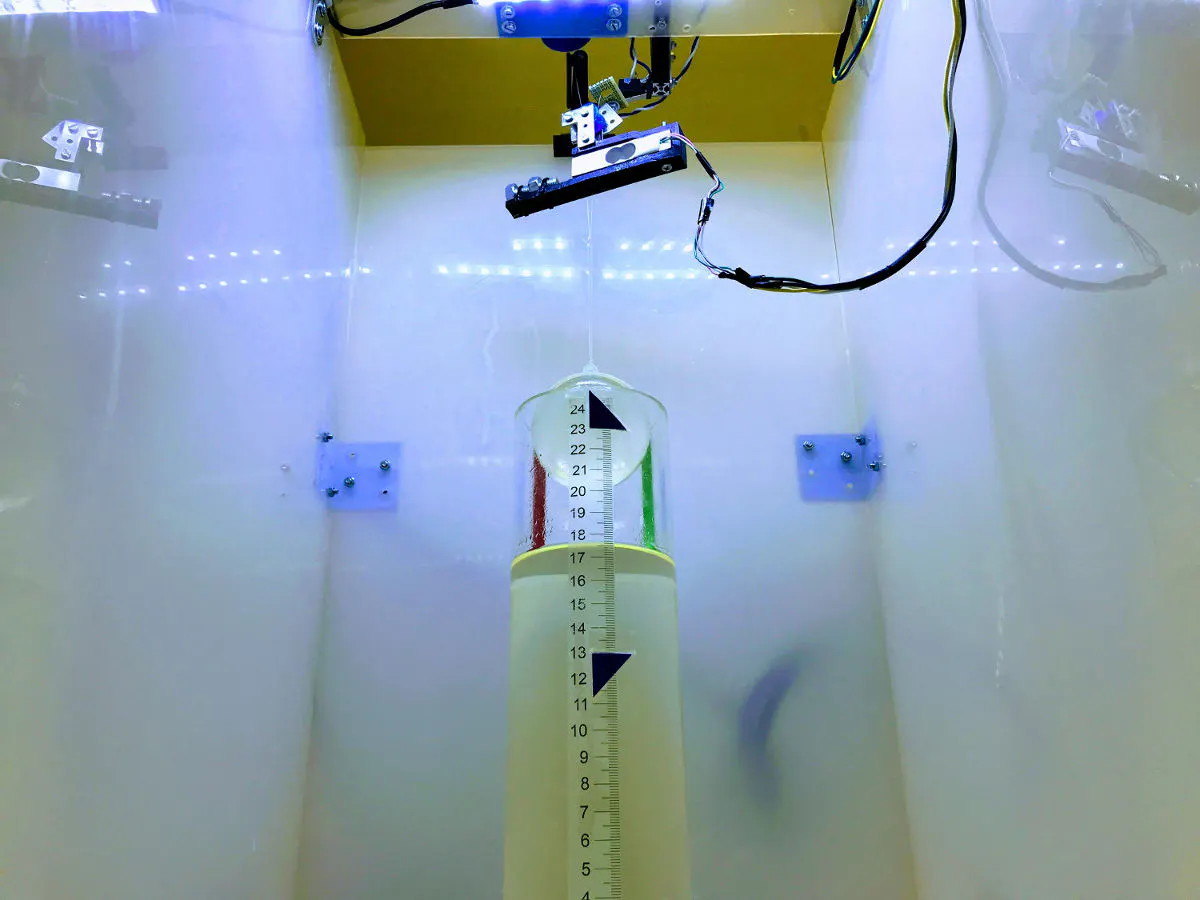
See all mapped lessonsSupports secondary science and Physics 1 investigation using real measurements; teachers choose the grade and depth for their current sequence.
Supports secondary science and Physics 1 investigation using real measurements; teachers choose the grade and depth for their current sequence.
Supports circuit investigation through real voltage and current measurement when Ohm's law is in the science or electronics sequence.
Supports a secondary light investigation using measured incidence and refraction angles.
Supports investigation of heat and phase change using real observations and quantitative evidence.
Supports an SHS chemistry investigation using measured volume, endpoint evidence, and data interpretation when titration is in the current sequence.
Supports secondary cell biology through observation and interpretation of real microscope evidence.
Supports secondary biology investigation of cellular respiration through measurement, comparison, and evidence-based explanation.
Supports controlled testing of a 3D-printing variable, evaluation of product quality, and evidence-based design improvement.
Supports accessible physical computing through programming, testing, and iteration in a relevant TLE, ICT, or TechPro pathway where offered.
For Philippine schools
The guide can support planning in public and private schools, including Philippine Science High School System campuses when the subject fit is right. That audience context does not imply adoption, approval, or endorsement by DepEd, PSHS, or any school system.
We will ask only for the basic school and teaching context needed to recommend an option.
Before you choose a lesson
They are real laboratories. Some equipment is controlled live; other lessons use interactive runs and evidence captured from real apparatus. The measurements do not come from a simulated model.
No individual student account or installation is required. Students join from a current browser using the class code or link you share.
No. LabsLand Teach is independent and is not affiliated with, approved by, or endorsed by DepEd or the Philippine Science High School System.
No. The level and pathway labels are planning aids. Teachers should confirm the current curriculum, quarter, local sequence, available elective, and the depth appropriate for their learners.
They are separate curriculum contexts. In SY 2026–2027, Revised K to 10 Phase 3 covers Grades 6, 9, and 10. All Grade 11 learners use Strengthened SHS, while Grade 12 remains split between pilot SSHS cohorts and the existing curriculum. The guide keeps K–10 and SHS labels separate.
Yes. Open a lesson to inspect the activity and decide whether it fits your class. Your first class session is available without cost; institutional options are available for broader use.
Start with the ten selected lessons, or filter the complete Philippines guide by level and pathway.