License LCAL2004
Biology labs (ultraconcurrent)
Remote access to 8 laboratories included:
The equipment is always real, not a simulation. Access now. No need to wait for an equipment to be shipped.
Laboratories included in this license
 Cellular Respiration
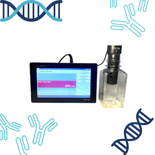 Cellular Respiration (with plot)
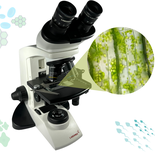 Microscope (Direct)
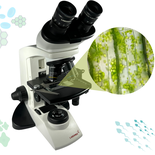 Microscope (Prep)
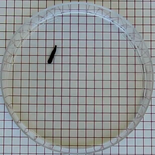 Planarians
 Planarians (automatic)
 Planarians (guess)
 Tree Leaves
How does LabsLand work?
LabsLand is a global network of real laboratories available online. Students (in schools, universities and life-long learning platforms) can access the real laboratories through the Internet, using their laptop, tablet or phone.
In every case, the laboratory is always real (not simulated), and available through the Web (you do not need to obtain any hardware, deal with shipping, etc.).
Bulk licenses
If you are going to buy multiple licenses (e.g., for a classroom or group of users, or institutional license), contact us for discounts.
You buy LabsLand licenses as an individual in the links below, or for your institution. If you buy licenses for your institution, you have to reach out so we can provide you with a space for your institution where you can keep track of the usage by users and obtain other institution-focused tools.
Cellular Respiration
Summary
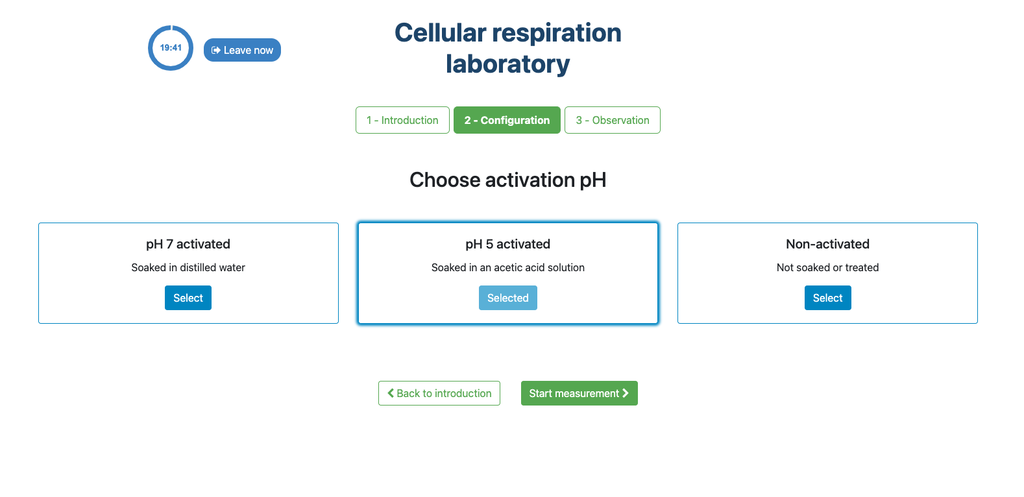
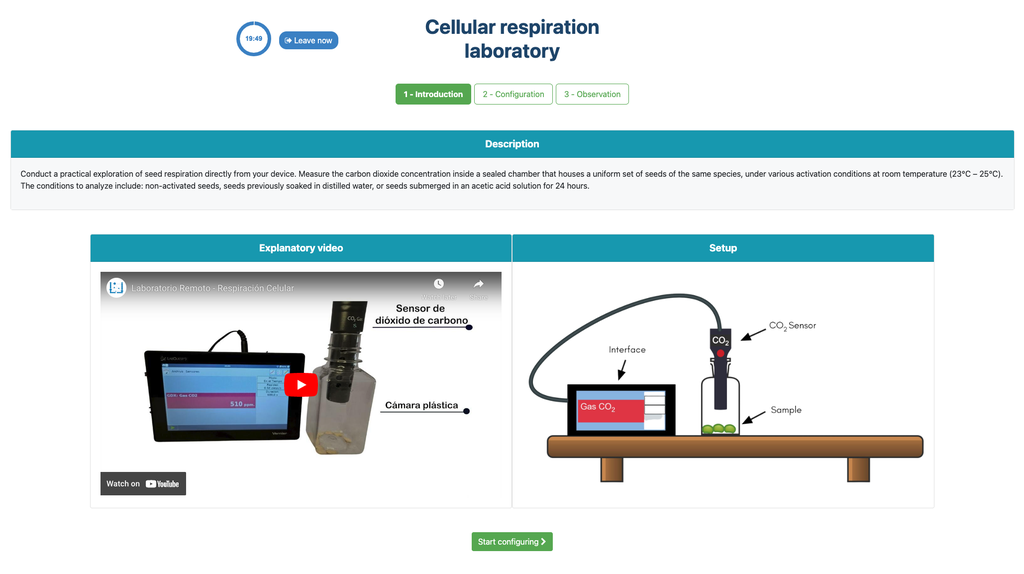
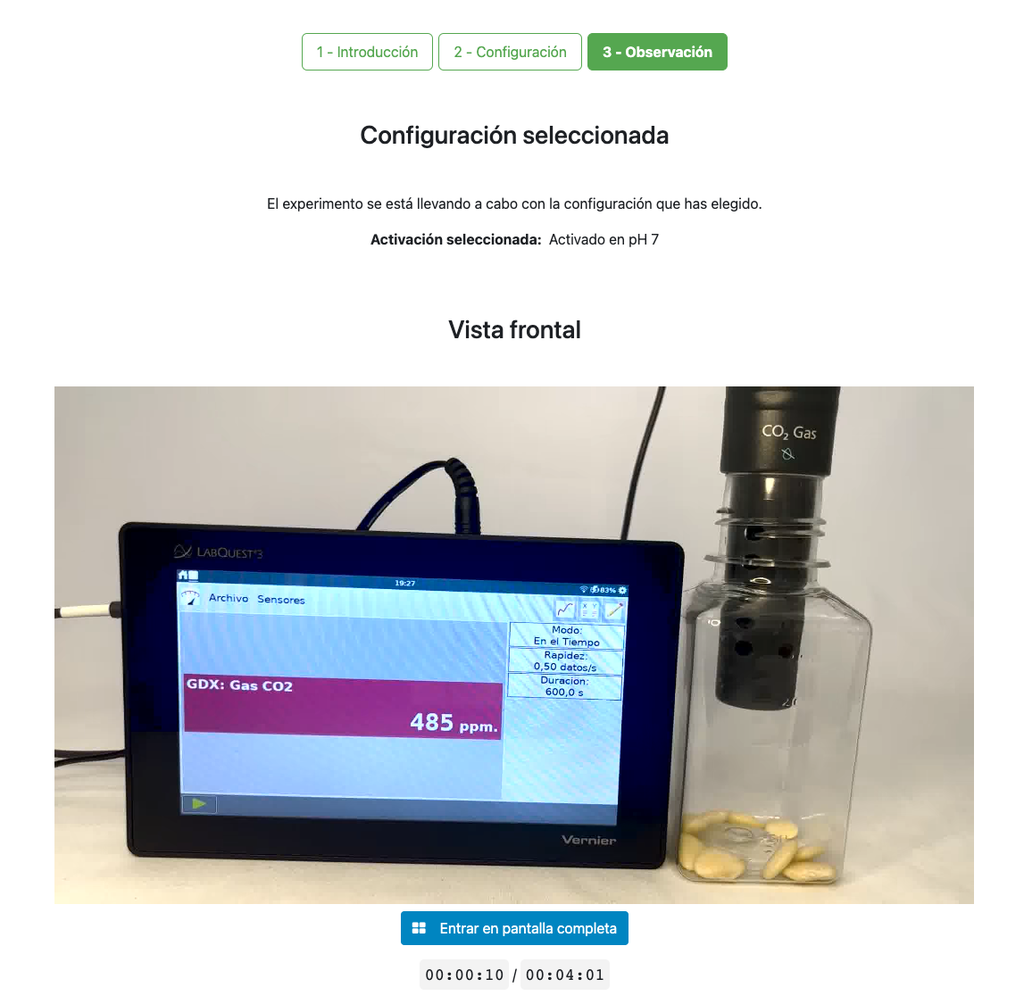
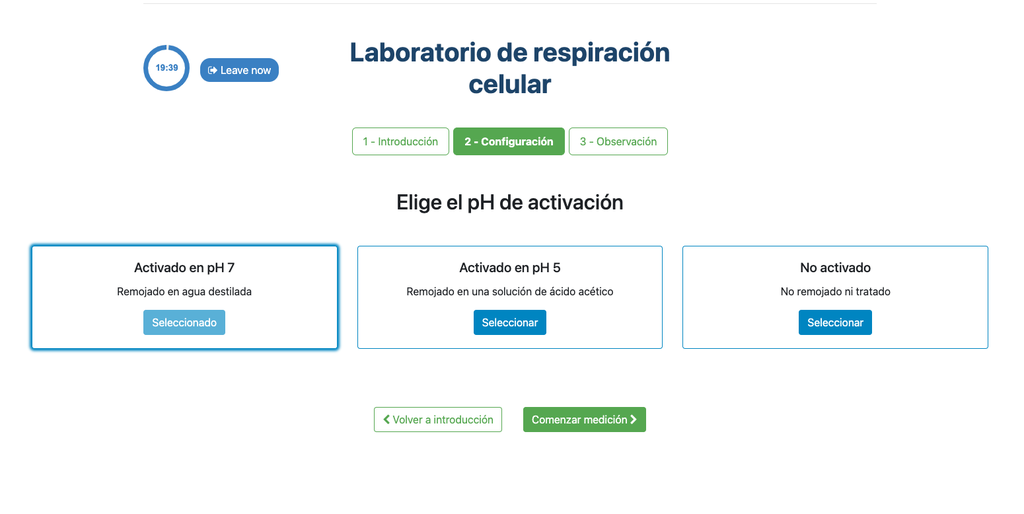
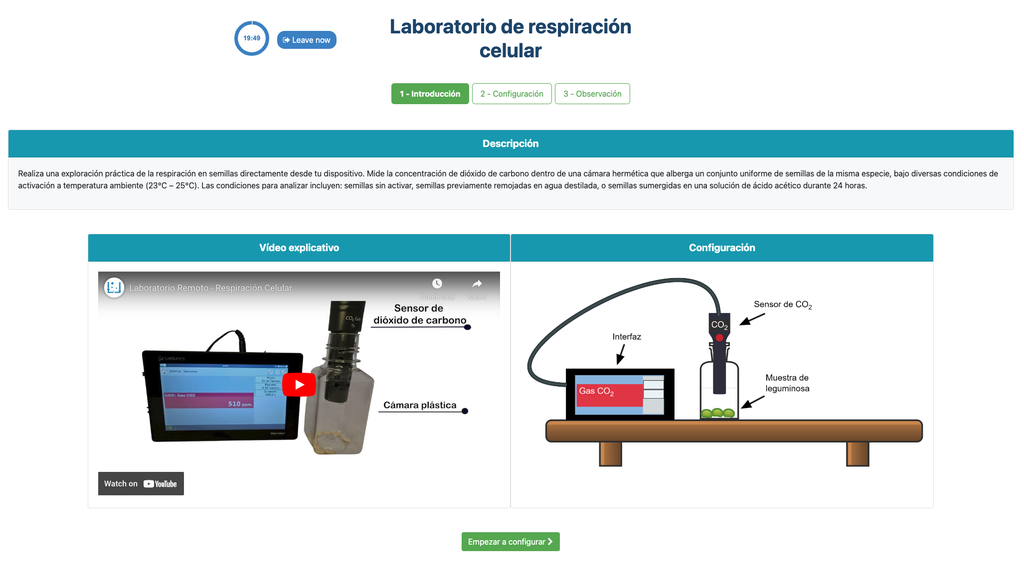
This laboratory setup allows students to measure the concentration of carbon dioxide inside a sealed chamber containing seeds of similar size to each other. Students can choose between different experimental conditions: seeds previously soaked in distilled water or in an acetic acid solution at room temperature (24 ± 1)°C, or unsoaked seeds (not activated).
Versions of this laboratory
In this version of the laboratory, students, in a manner similar to a traditional hands-on experiment, will need to collect data from the sensor readings and draw their own plots or create their own spreadsheets to analyze and draw conclusions, as it does not include any plots nor allows students to download data.
There is an alternative version of the laboratory (Cellular Respiration with Plot) in which a plot is displayed at the end of each experiment and students can download the data onto a spreadsheet.
Carbon dioxide release in plant respiration
Cellular respiration is one of the vital functions carried out by all cells, through which various organic compounds are broken down and the energy needed for other processes is released.
The exchange of gases at a macroscopic level is evidence of the energy transformation processes that occur in cells. In the presence of oxygen, carbon dioxide is released as a byproduct of cellular respiration. This emission of carbon dioxide is essential for understanding the metabolism of living beings and its consequences in ecosystems.
Seed Activation
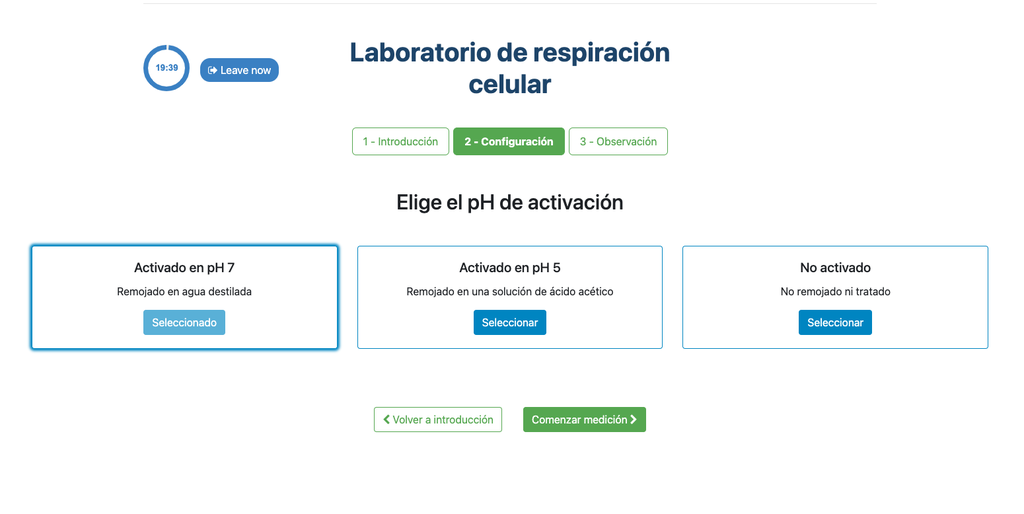
The imbibition or absorption of water by seeds is an essential process for activating their metabolism and for breaking dormancy, thus preparing the seed for germination. This phenomenon occurs by immersing the seeds in water or aqueous solutions for a specified period, such as soaking in distilled water or acetic acid. The duration and conditions of imbibition directly influence the metabolic activation of the seed, which is reflected in the rate of carbon dioxide release during the cellular respiration process. The metabolic rate can vary depending on the species and chosen imbibition conditions.
Experiments & Setup
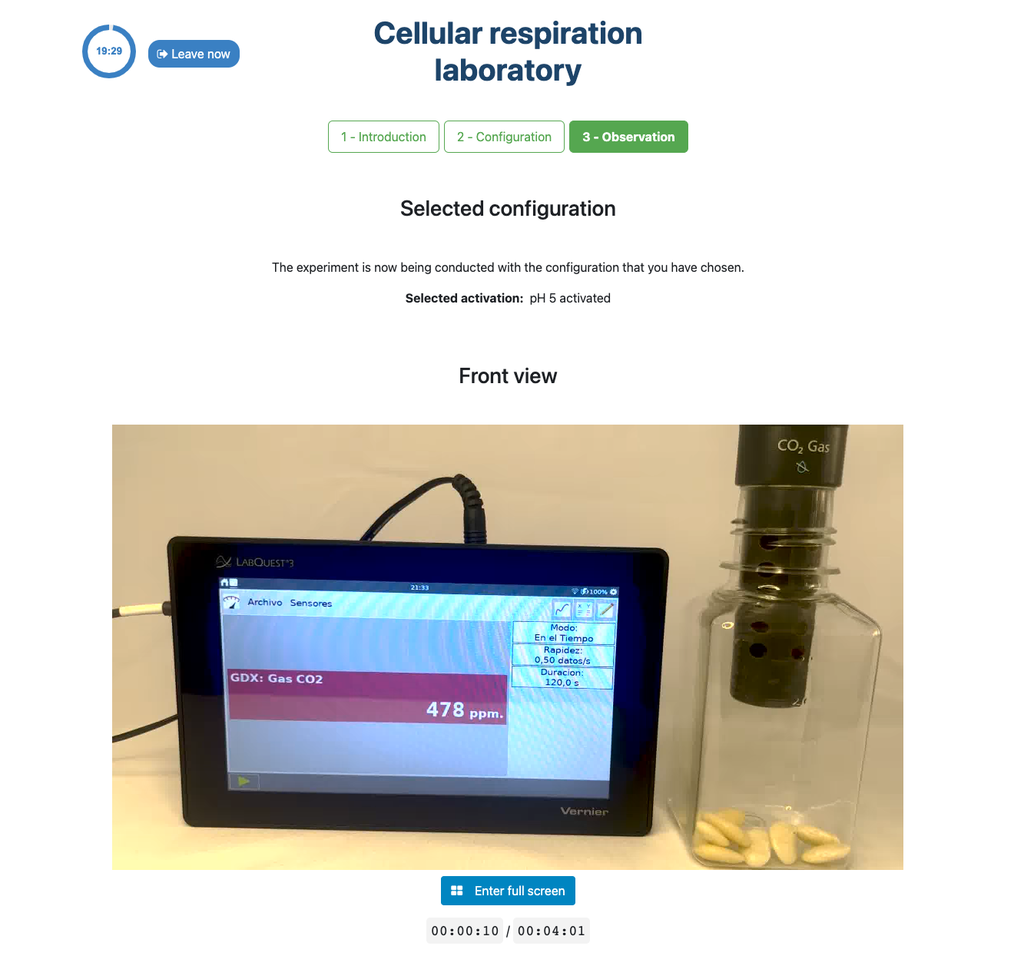
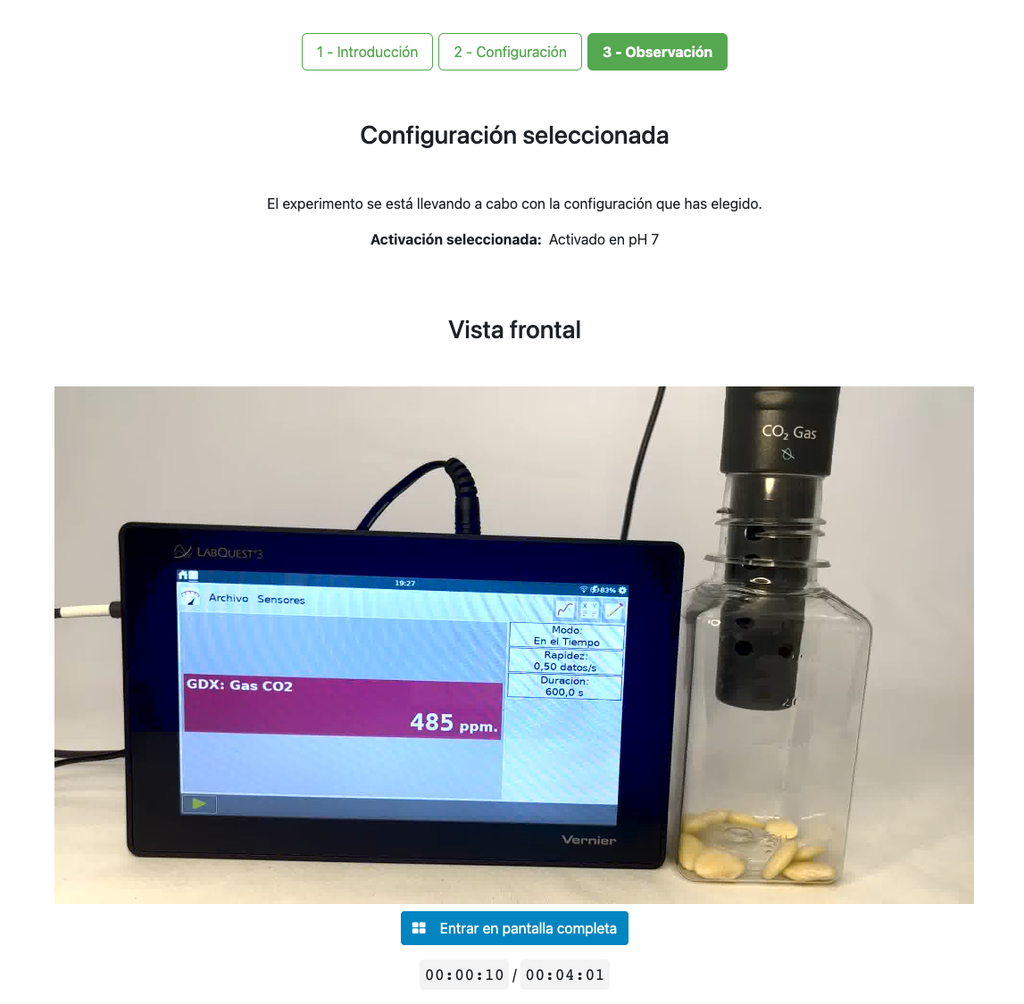
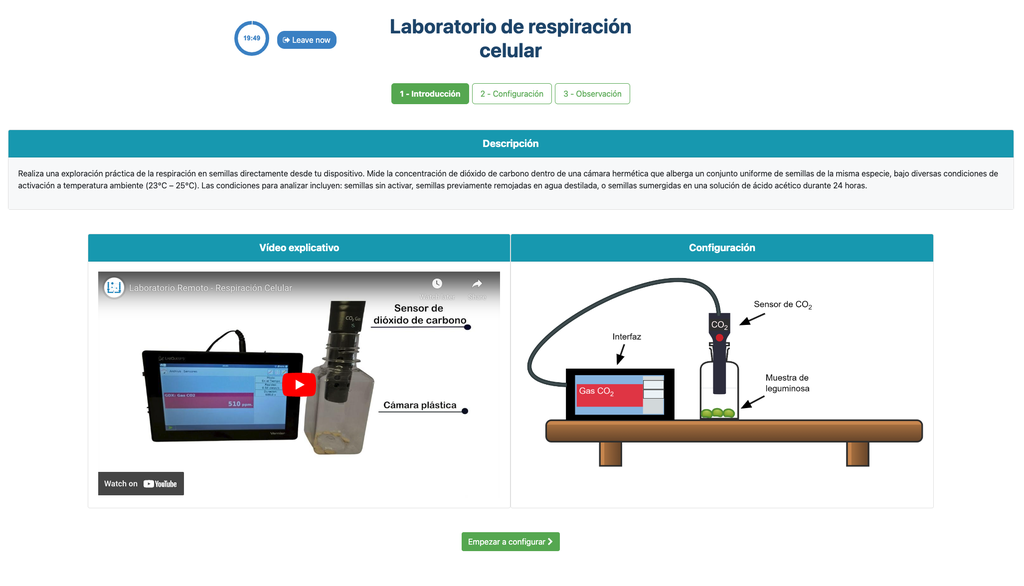
The experimental device is equipped with a gaseous carbon dioxide sensor and a hermetic chamber. Students have the option to select from the three previously detailed seed activation experimental conditions.
In all experiments, seeds of the same species with similar sizes are used, which facilitates the comparison of results.
Learning Objectives
- Understand the scientific endeavor through the development of a controlled experiment and the interpretation of data related to biological processes.
- Relate the release of carbon dioxide under different experimental conditions to cellular respiration, differentiating the levels of organization of matter.
- Identify cellular respiration as an essential characteristic of living beings and understand the importance of the energy transformations it entails.
Cellular Respiration (with plot)
Summary
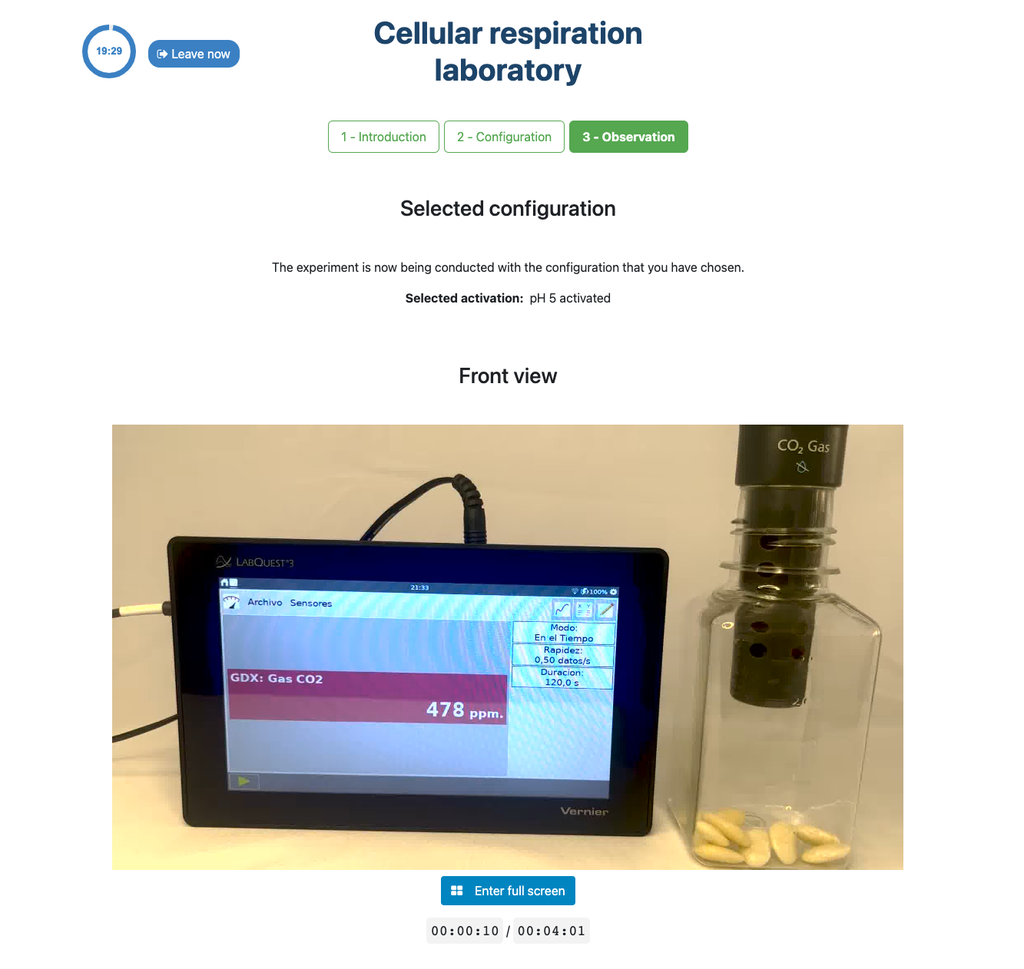
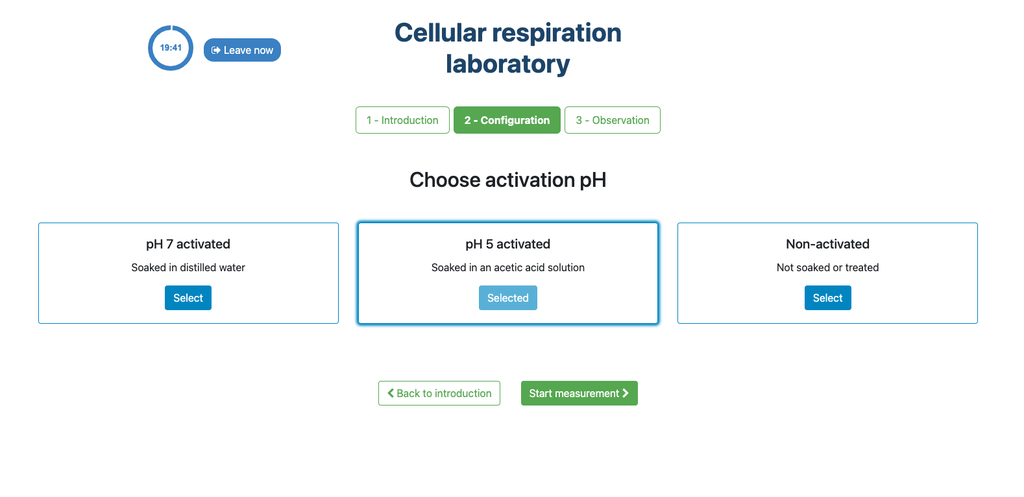
This laboratory setup allows students to measure the concentration of carbon dioxide inside a sealed chamber containing seeds of similar size to each other. Students can choose between different experimental conditions: seeds previously soaked in distilled water or in an acetic acid solution at room temperature (24 ± 1)°C, or unsoaked seeds (not activated).
Versions of this laboratory
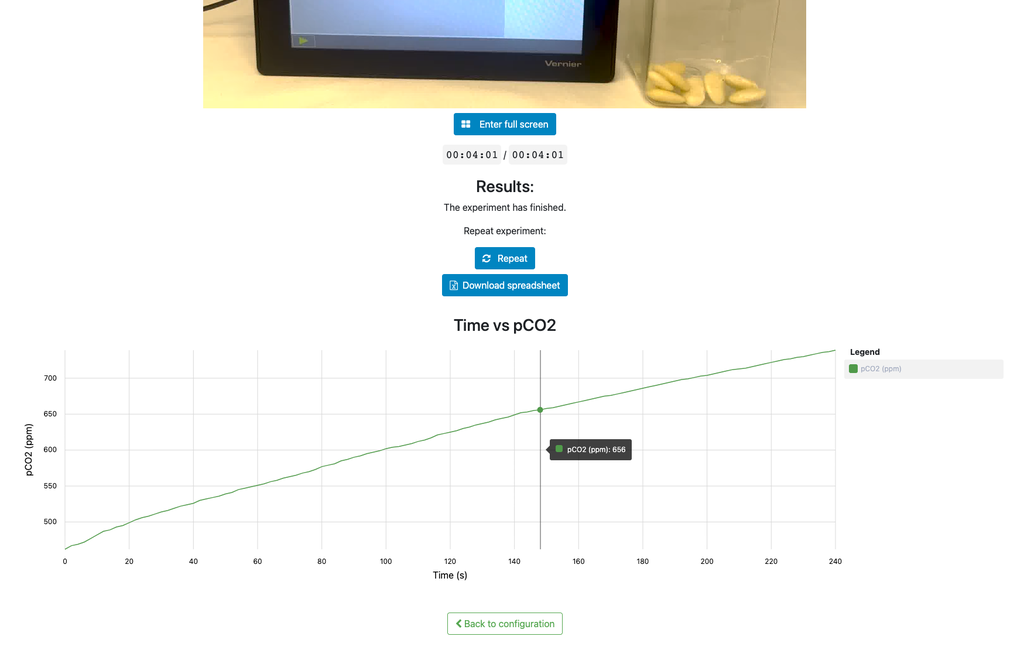
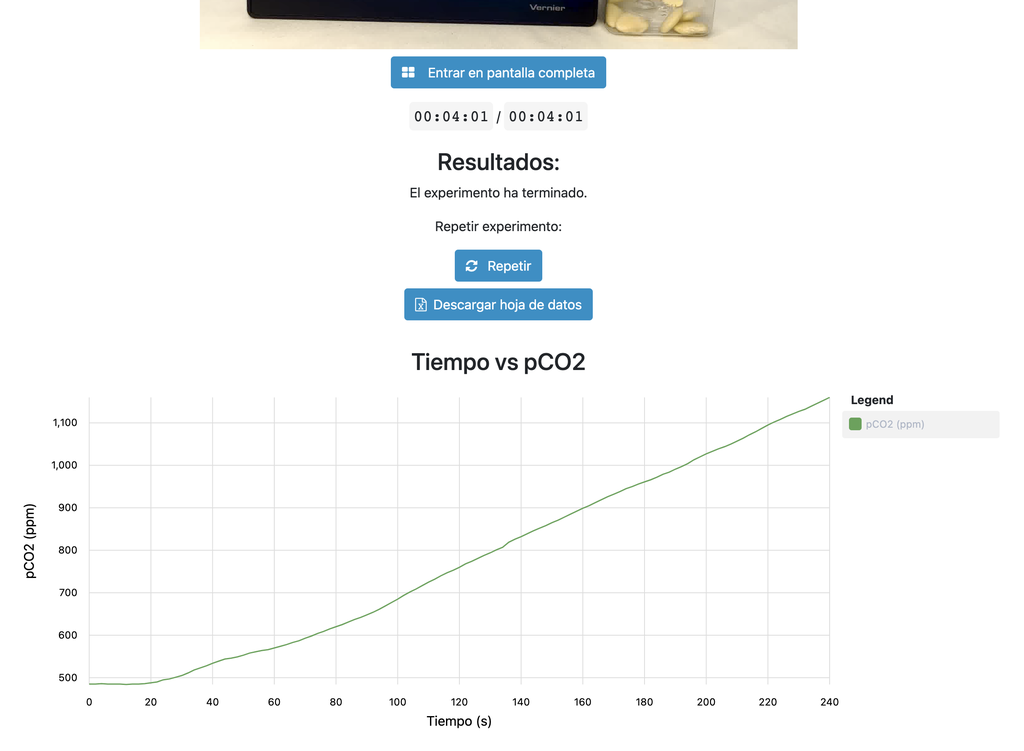
This version of the laboratory displays a plot at the end of each experiment and allows students to download the data in a spreadsheet. This allows students to analyze the results without needing to gather and plot the data themselves.
An alternative version of the lab exists (Cellular Respiration) in which the plot and the data are not available. That way, in order to analyse the results and reach proper conclusions, students need to gather and plot the data themselves from the discrete sensor readings, similarly to how they would do so in a traditional hands-on lab.
Carbon dioxide release in plant respiration
Cellular respiration is one of the vital functions carried out by all cells, through which various organic compounds are broken down and the energy needed for other processes is released.
The exchange of gases at a macroscopic level is evidence of the energy transformation processes that occur in cells. In the presence of oxygen, carbon dioxide is released as a byproduct of cellular respiration. This emission of carbon dioxide is essential for understanding the metabolism of living beings and its consequences in ecosystems.
Seed Activation
The imbibition or absorption of water by seeds is an essential process for activating their metabolism and for breaking dormancy, thus preparing the seed for germination. This phenomenon occurs by immersing the seeds in water or aqueous solutions for a specified period, such as soaking in distilled water or acetic acid. The duration and conditions of imbibition directly influence the metabolic activation of the seed, which is reflected in the rate of carbon dioxide release during the cellular respiration process. The metabolic rate can vary depending on the species and chosen imbibition conditions.
Experiments & Setup
The experimental device is equipped with a gaseous carbon dioxide sensor and a hermetic chamber. Students have the option to select from the three previously detailed seed activation experimental conditions.
In all experiments, seeds of the same species with similar sizes are used, which facilitates the comparison of results.
Learning Objectives
- Understand the scientific endeavor through the development of a controlled experiment and the interpretation of data related to biological processes.
- Relate the release of carbon dioxide under different experimental conditions to cellular respiration, differentiating the levels of organization of matter.
- Identify cellular respiration as an essential characteristic of living beings and understand the importance of the energy transformations it entails.

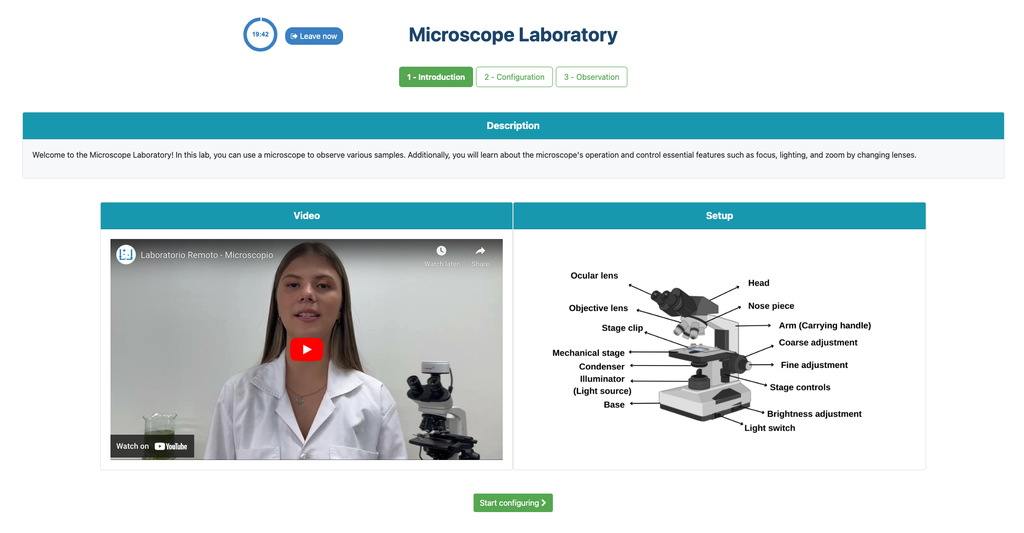
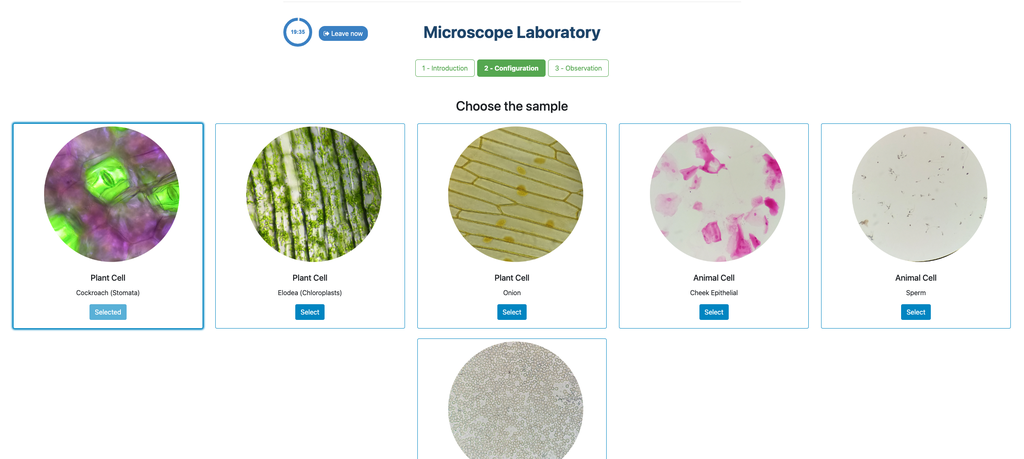
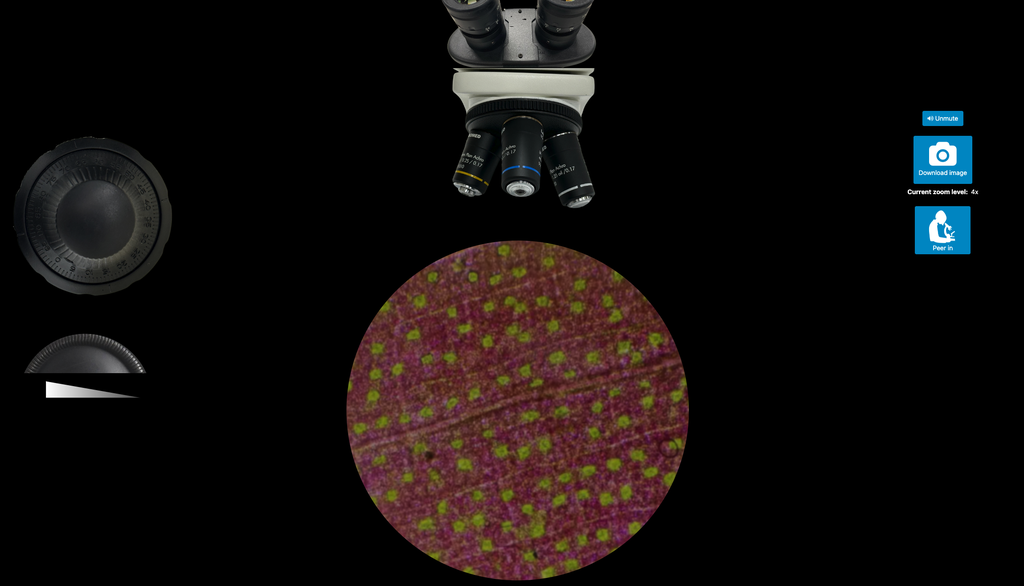
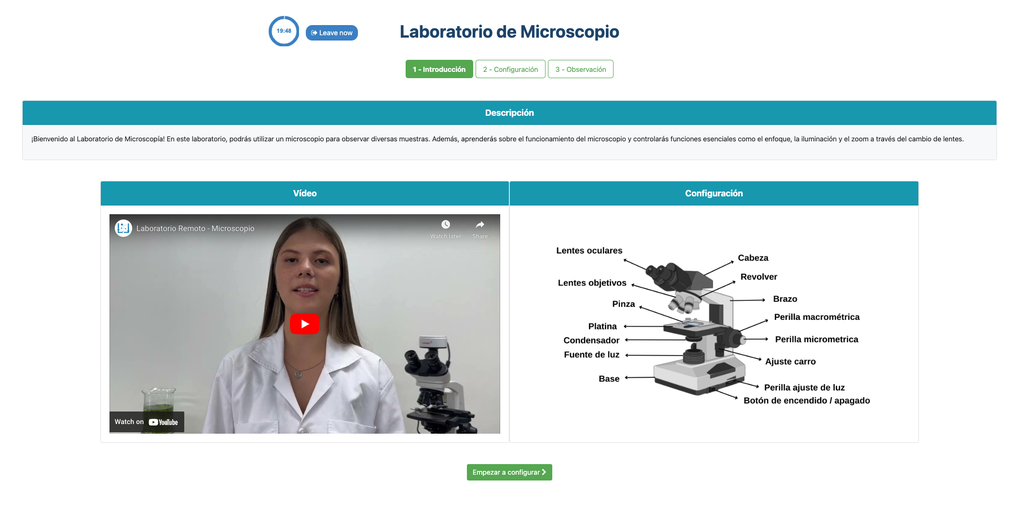
Microscope (Direct)
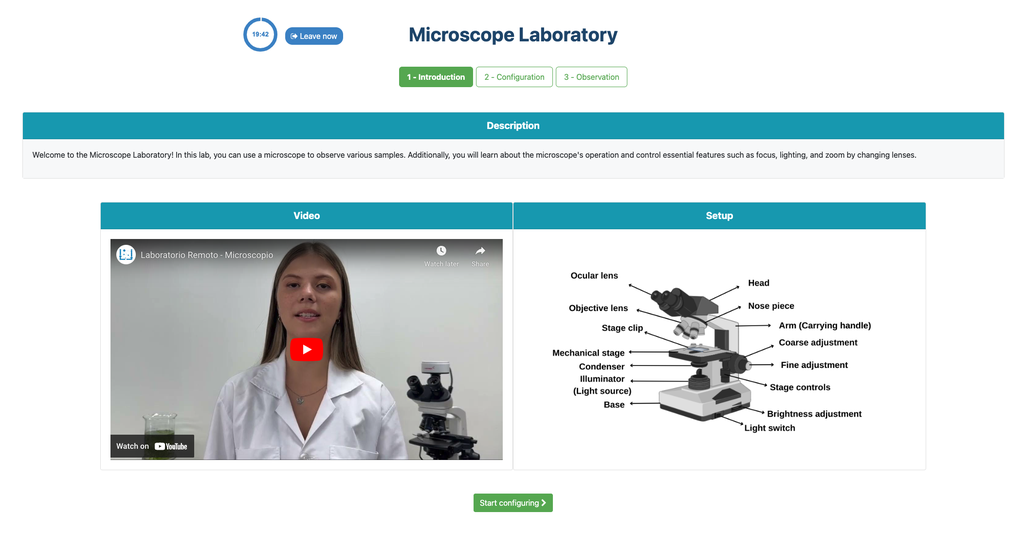
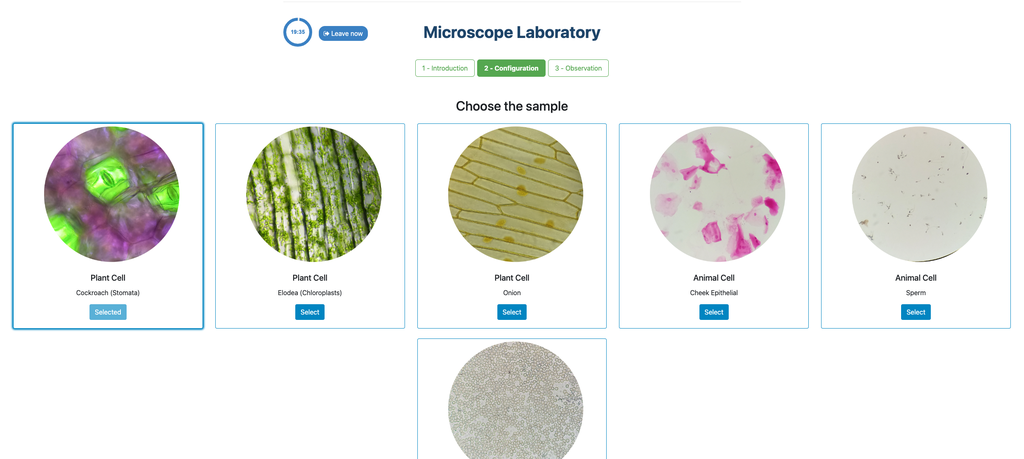
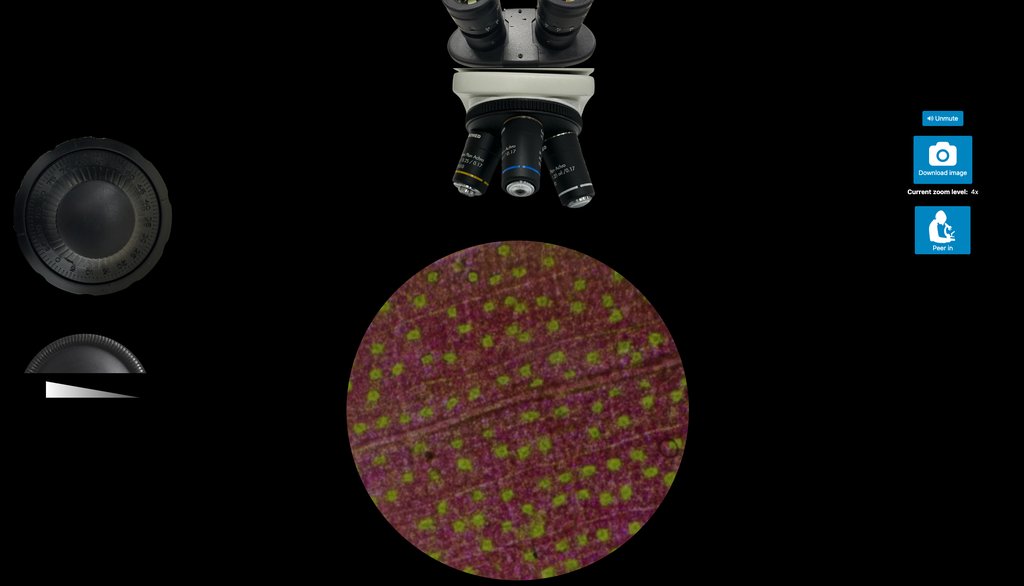
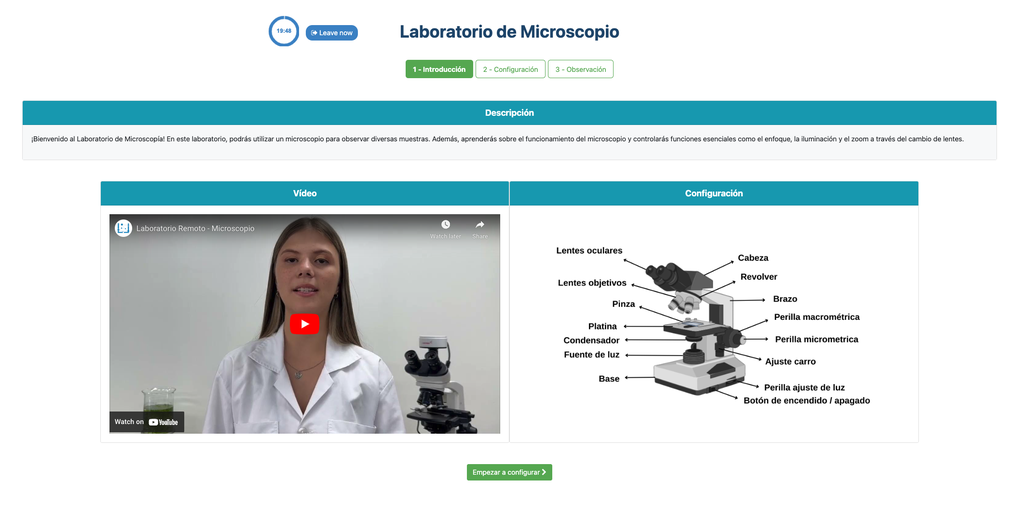
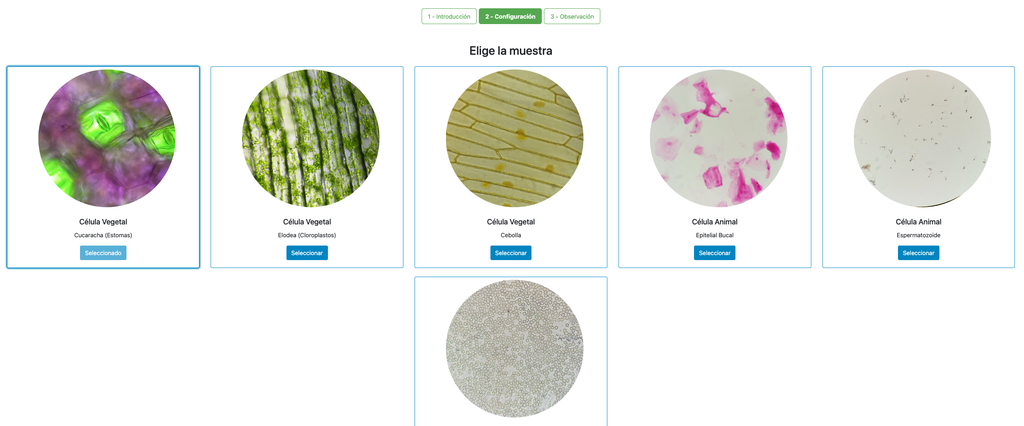
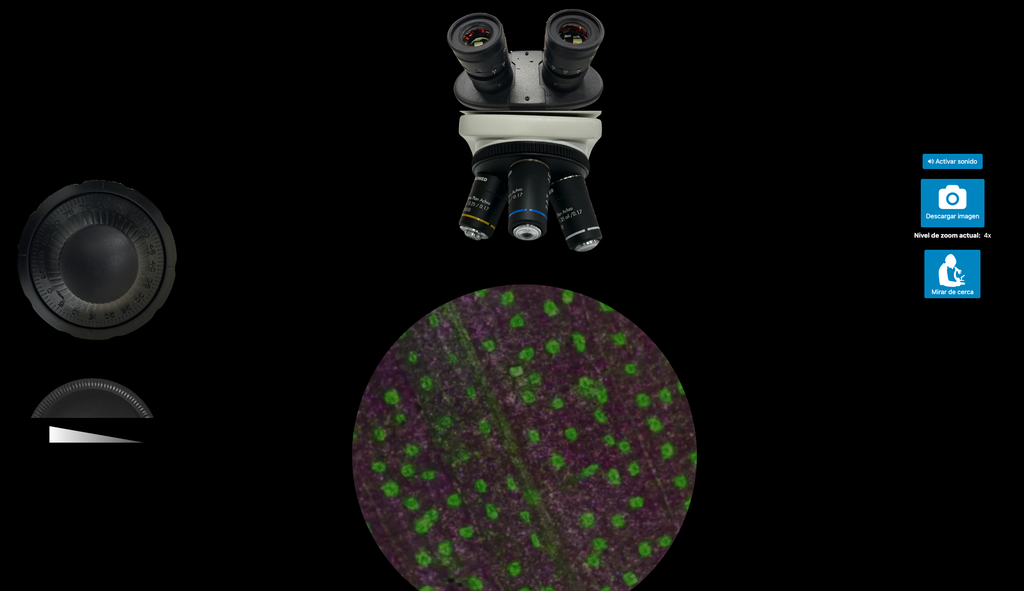
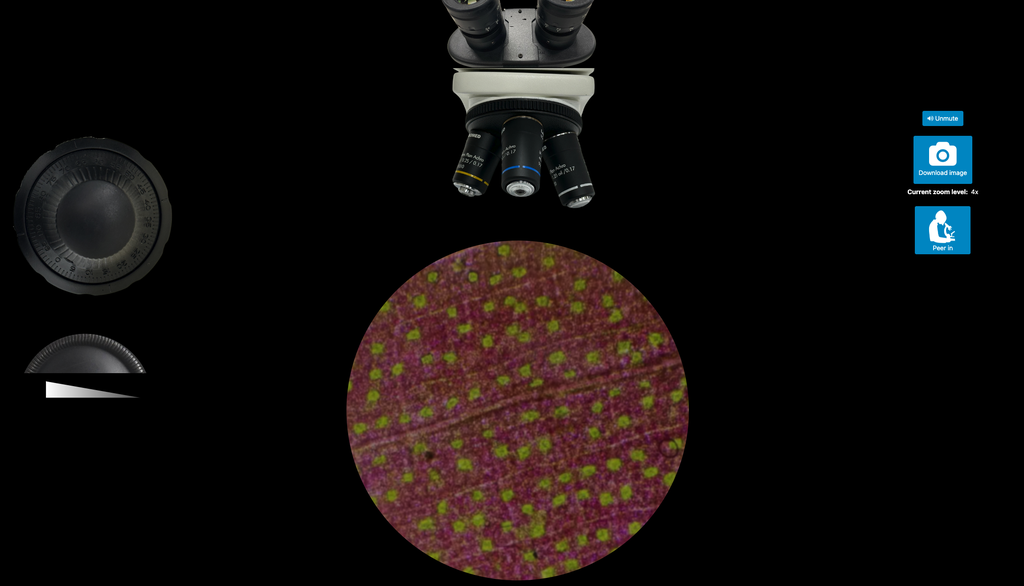
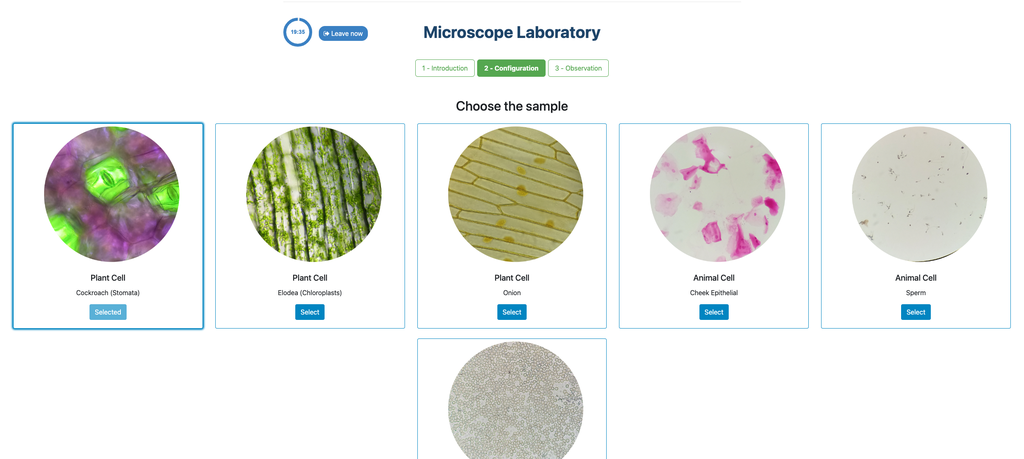
In the Microscope Laboratory, you can explore a variety of samples using basic microscopy techniques. Learn how to operate the microscope, including adjusting focus, managing lighting, and changing lenses to control zoom levels. Observe different plant and animal tissue samples, gain hands-on experience with essential microscopy features, and deepen your understanding of how microscopes work. This version of the lab includes a preparation phase but it is optional and can be skipped.
Microscope (Prep)
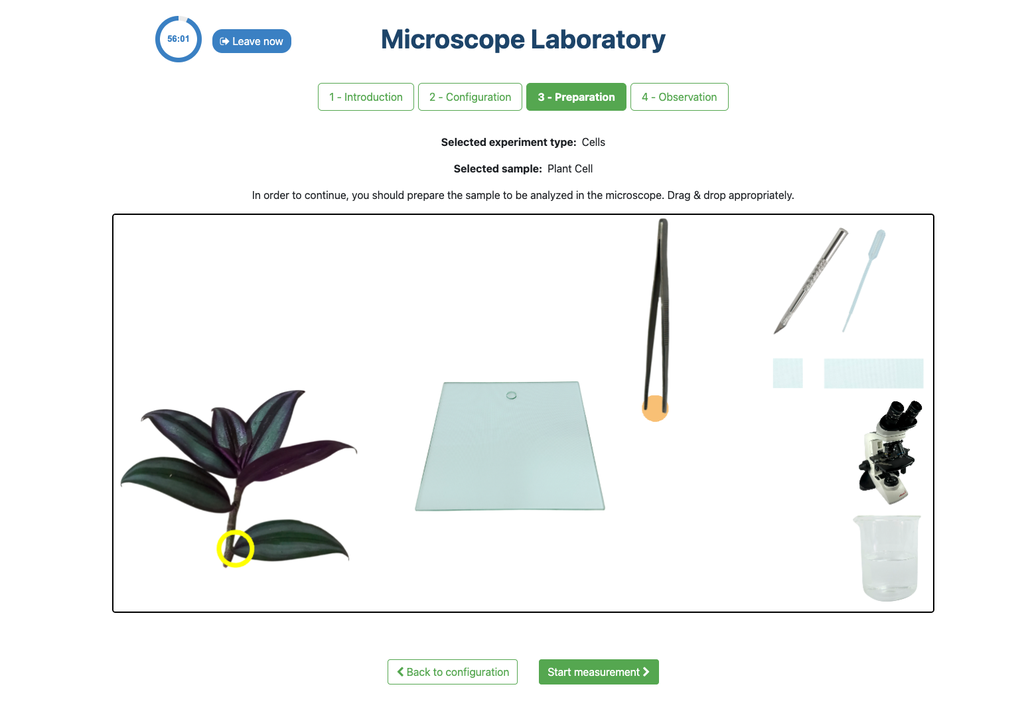
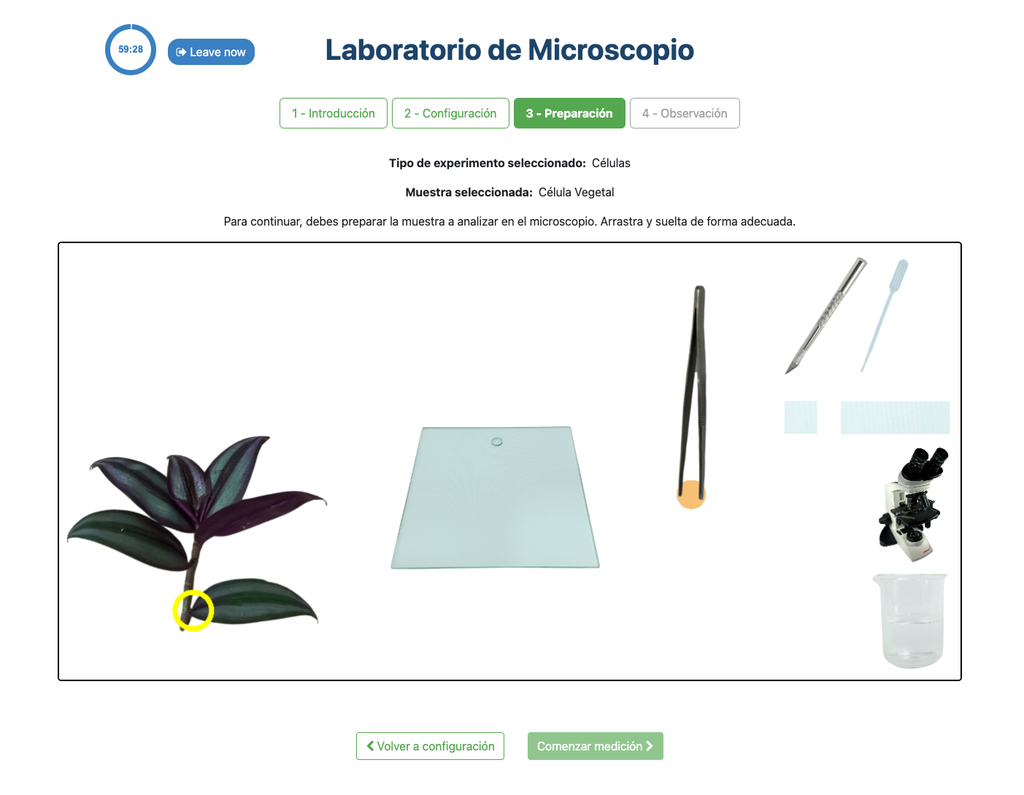
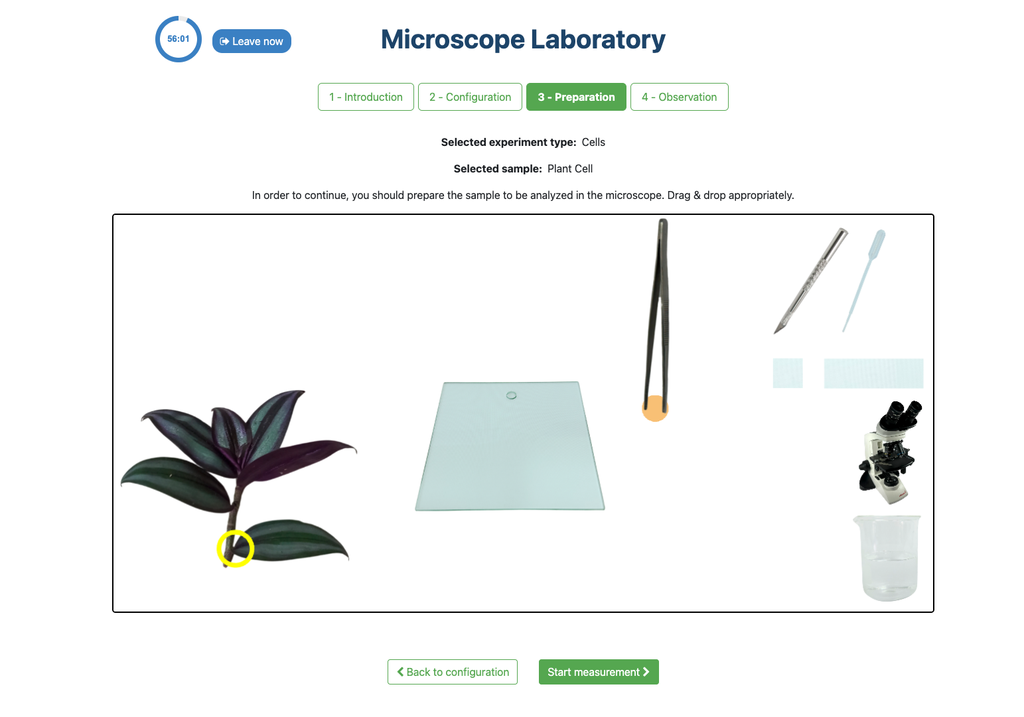
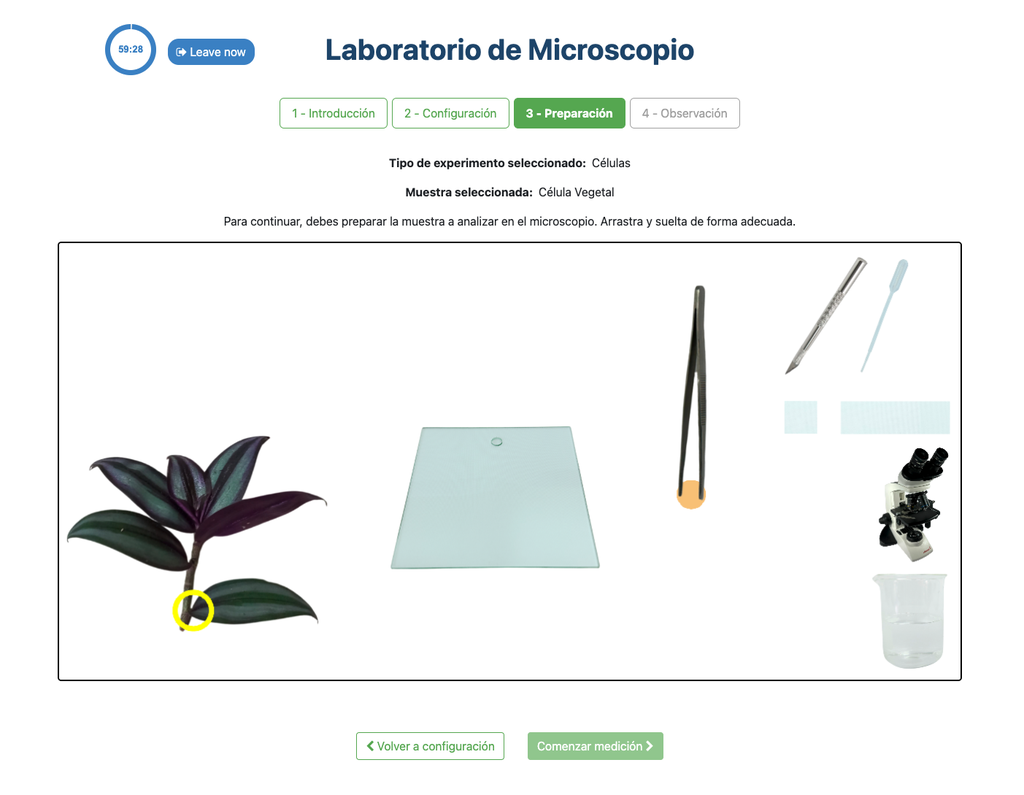
In the Microscope Laboratory, you can explore a variety of samples using basic microscopy techniques. Learn how to operate the microscope, including adjusting focus, managing lighting, and changing lenses to control zoom levels. Observe different plant and animal tissue samples, gain hands-on experience with essential microscopy features, and deepen your understanding of how microscopes work. In this version of the Microscope lab, successfully preparing the sample is mandatory before controlling the microscope itself.
Planarians
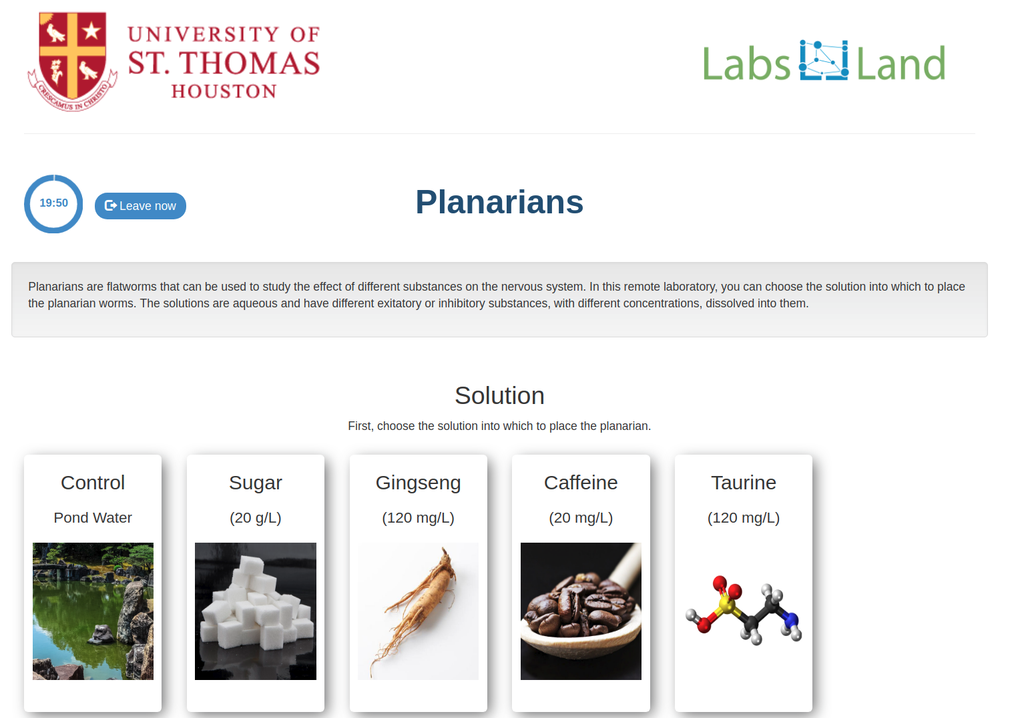
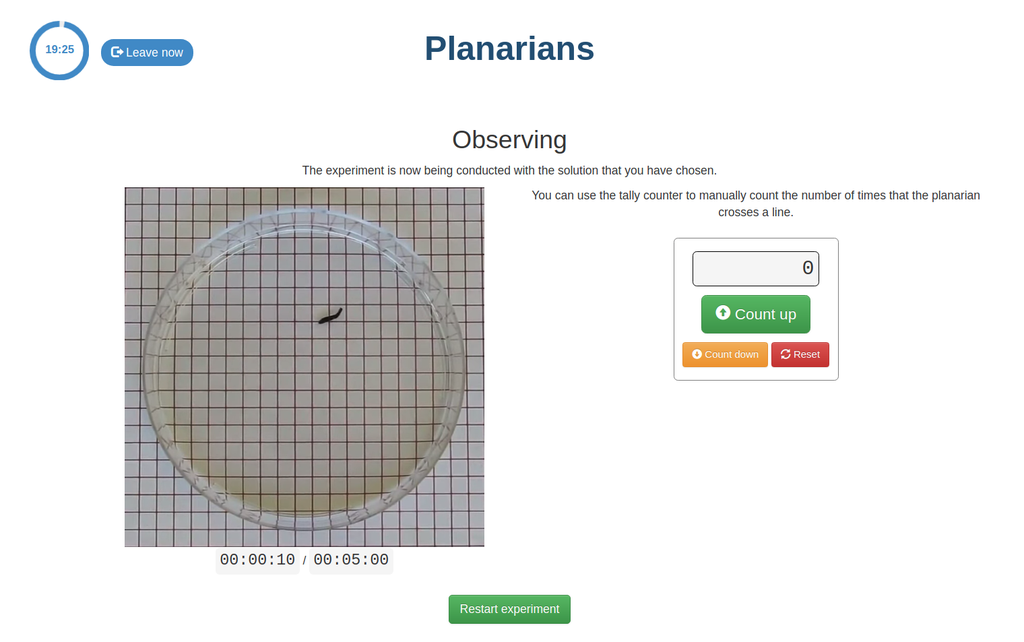
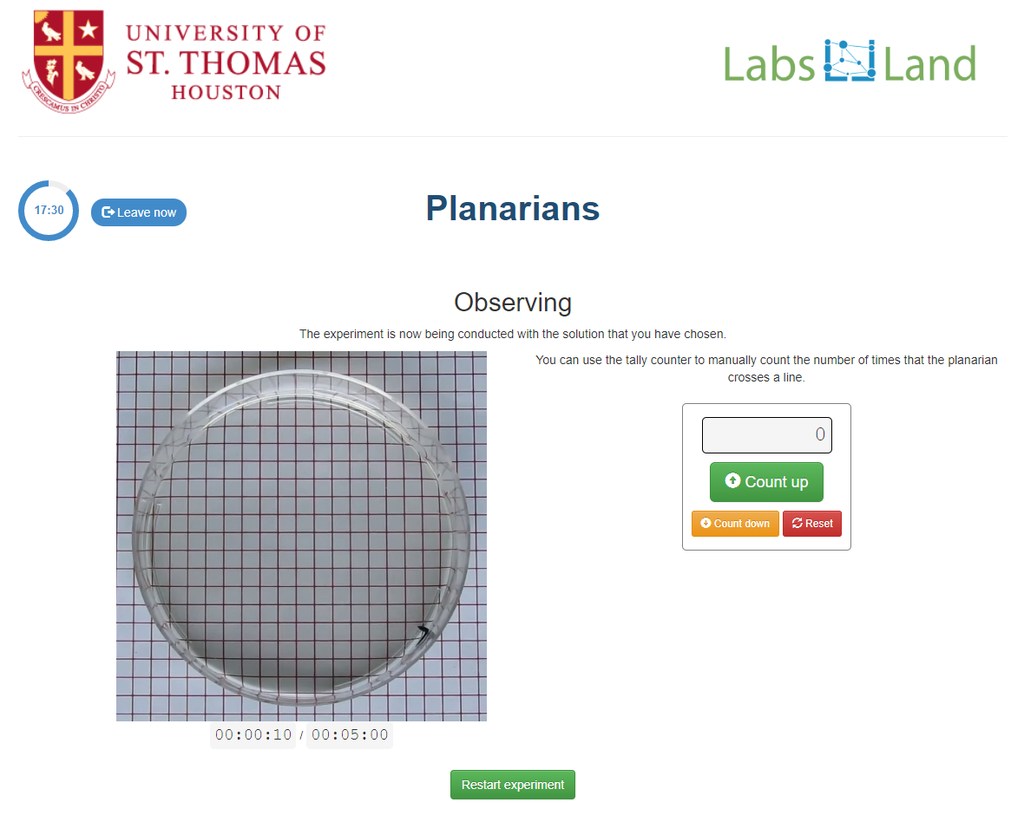
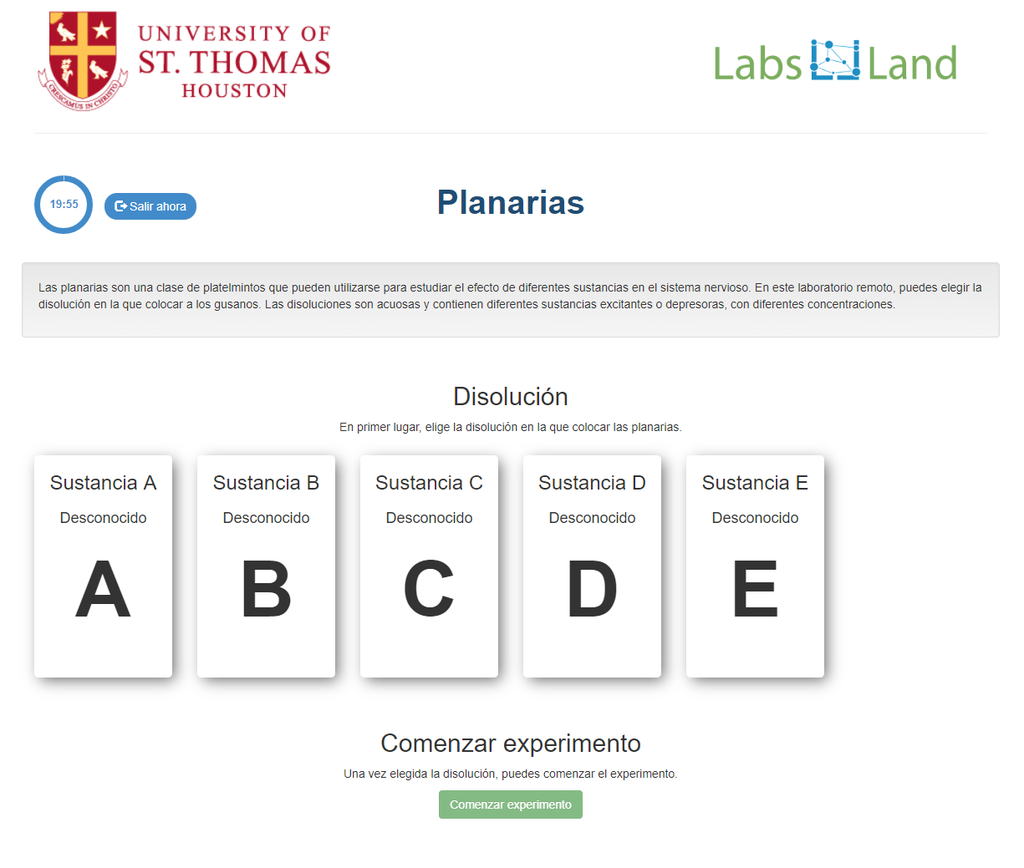
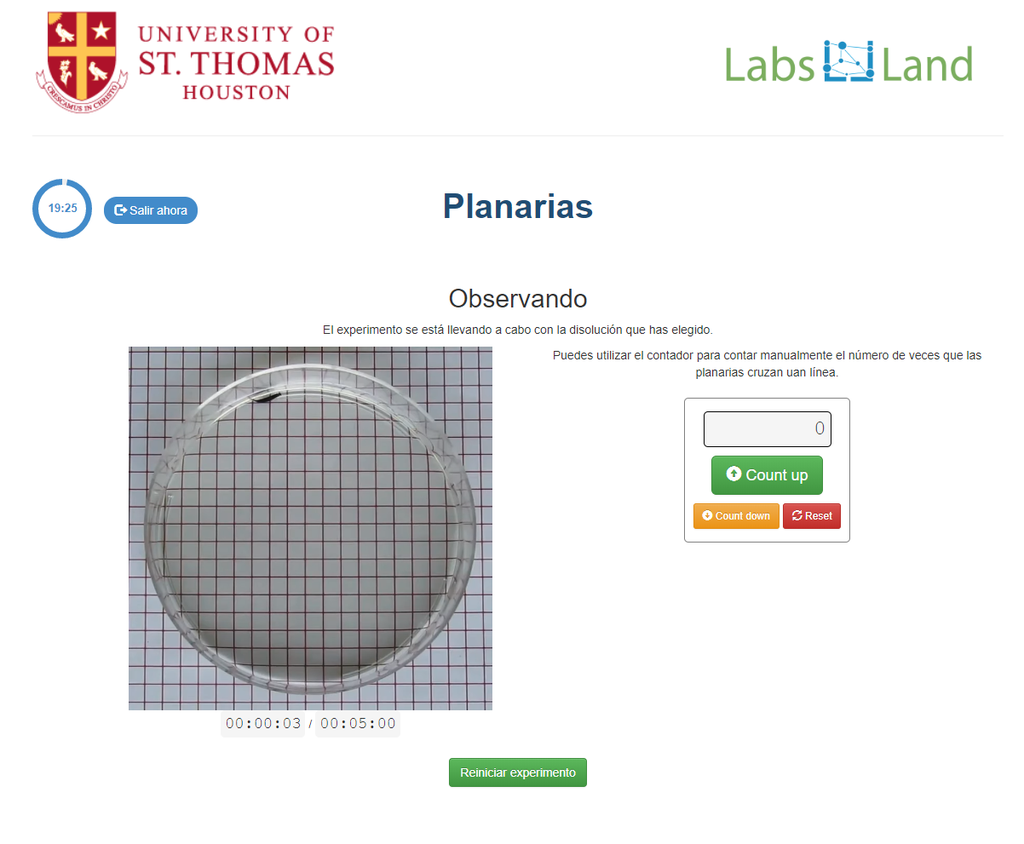
Planarians are flatworms that can be used to study the effect of different substances on the nervous system. In this remote laboratory, you can choose the solution into which to place the planarian worms. The solutions are aqueous and have different exitatory or inhibitory substances, with different concentrations, dissolved into them.
In this version of the planarians laboratory there is a manual tally counter that students can use to count the number of times the planarians cross a line (to estimate their activity level).
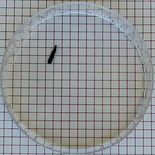
Planarians (automatic)
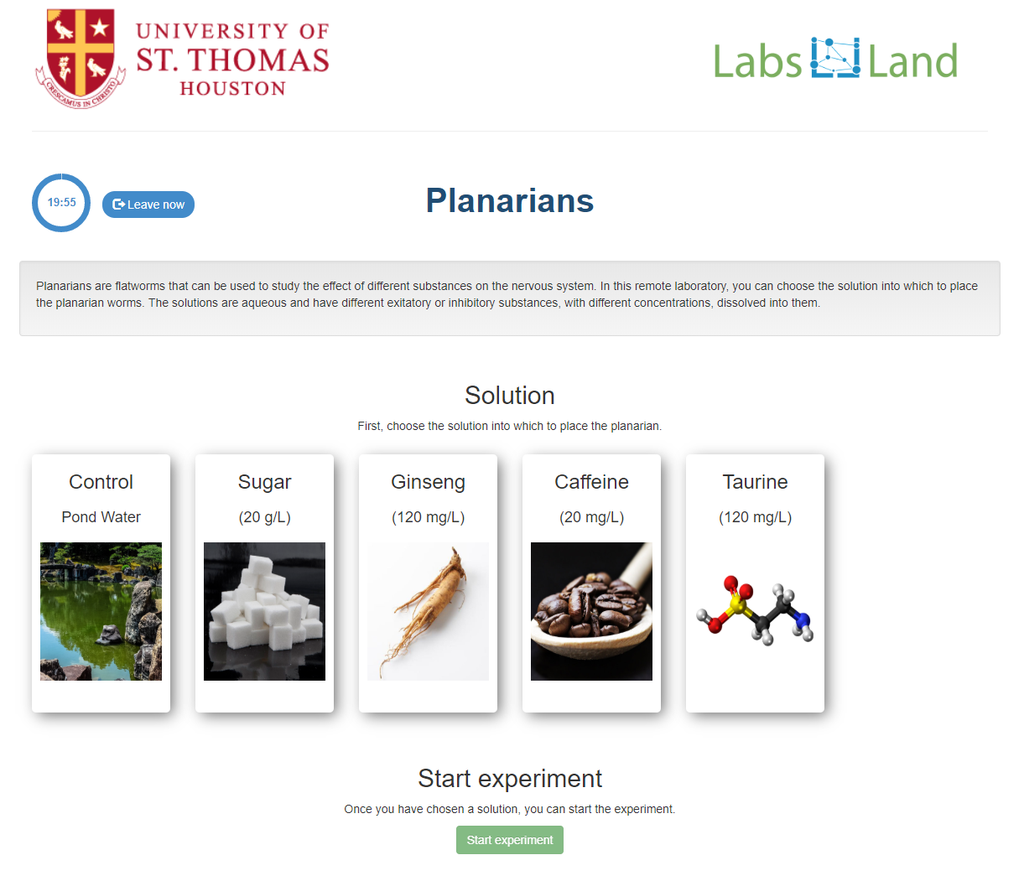
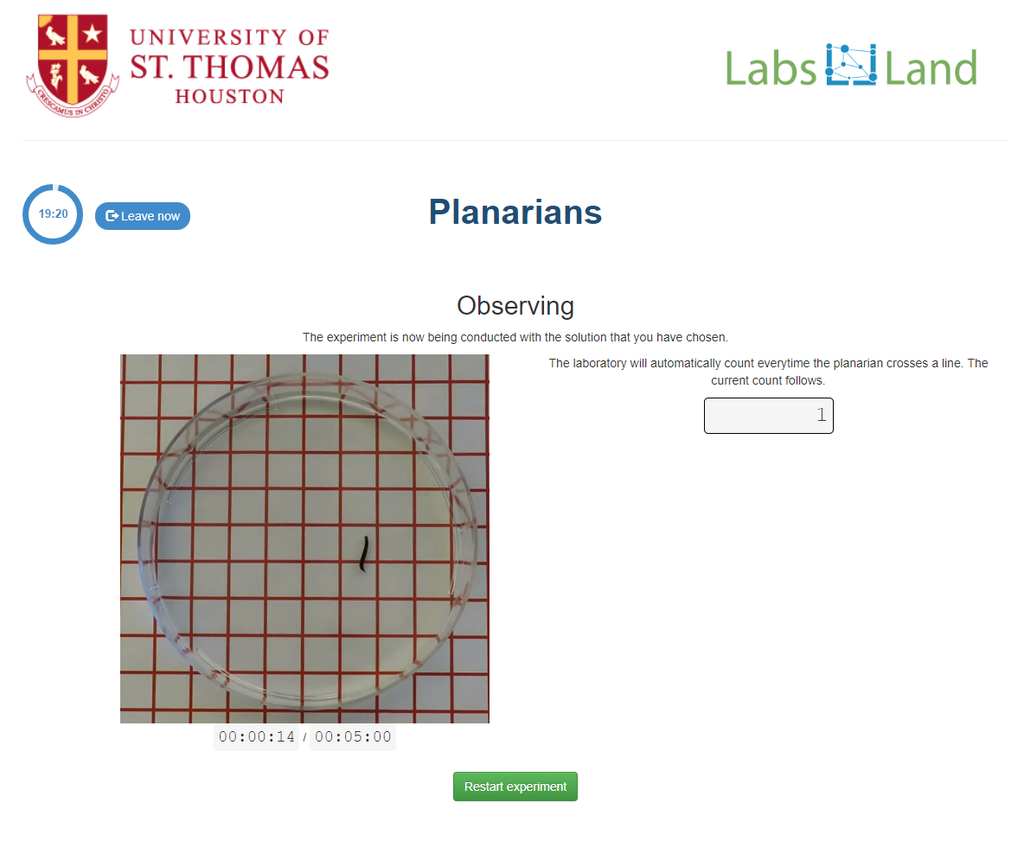
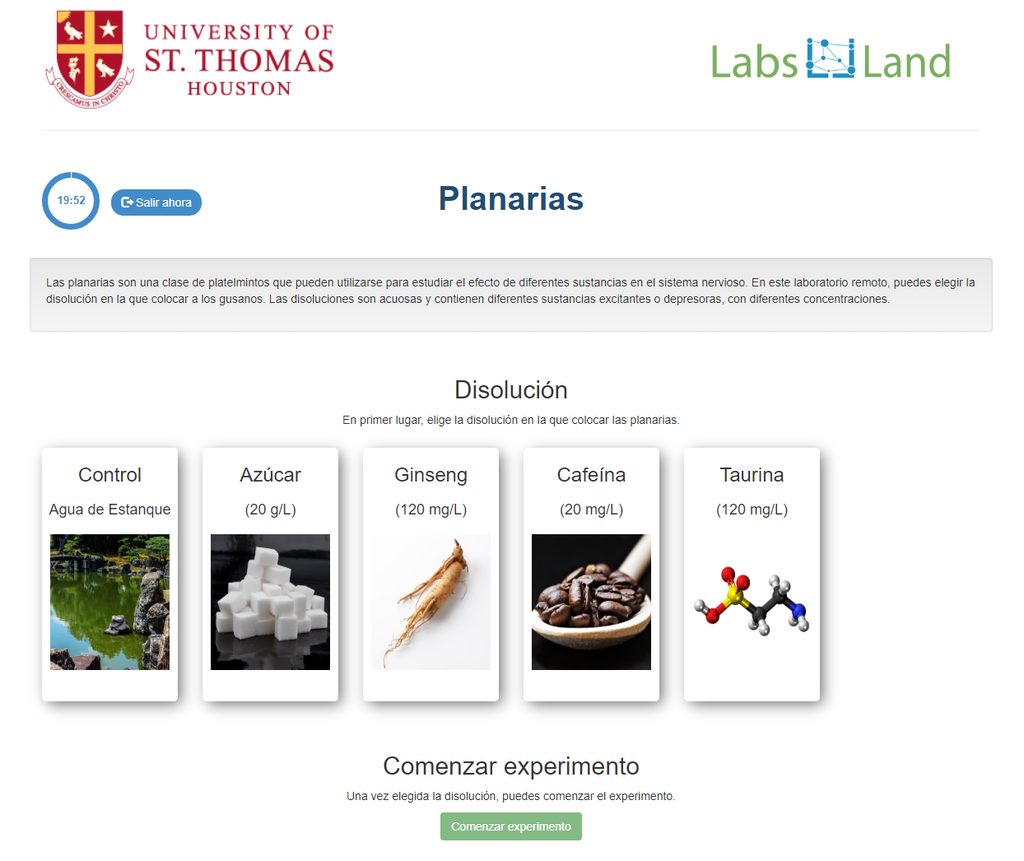
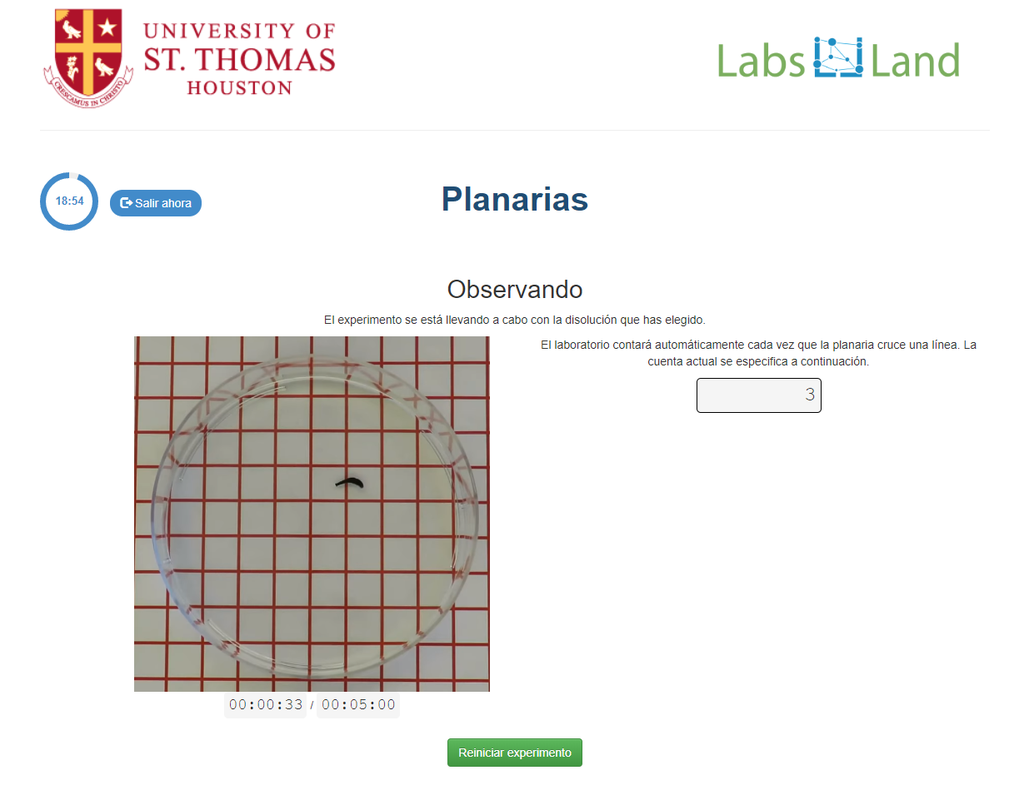
Planarians are flatworms that can be used to study the effect of different substances on the nervous system. In this remote laboratory, you can choose the solution into which to place the planarian worms. The solutions are aqueous and have different exitatory or inhibitory substances, with different concentrations, dissolved into them.
In this version of the planarians laboratory, the number of times the planarian worms cross the lines is counted automatically.
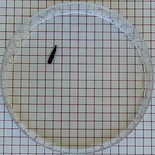
Planarians (guess)
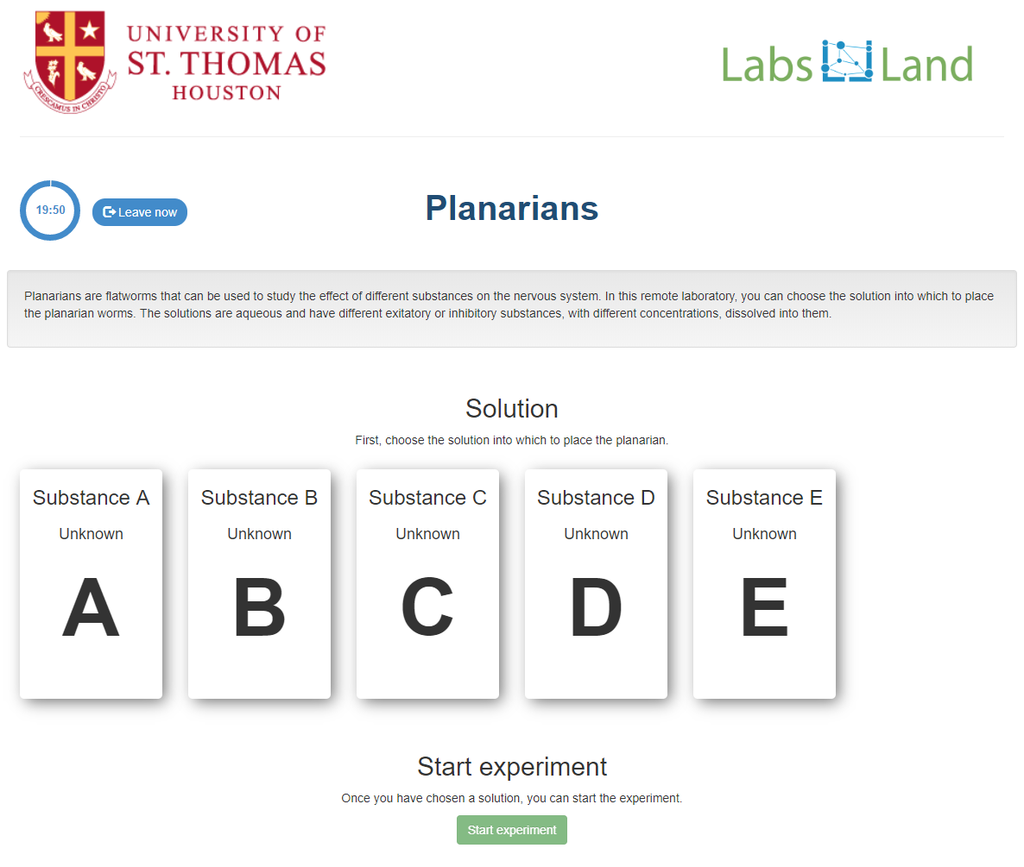
Planarians are flatworms that can be used to study the effect of different substances on the nervous system. In this remote laboratory, you can choose the solution into which to place the planarian worms. The solutions are aqueous and have different exitatory or inhibitory substances, with different concentrations, dissolved into them.
In this version of the laboratory, the names of the substances are not displayed. The challenge can thus be to determine which substance is which, by measuring the activity level of the planarians in each unknown substance.
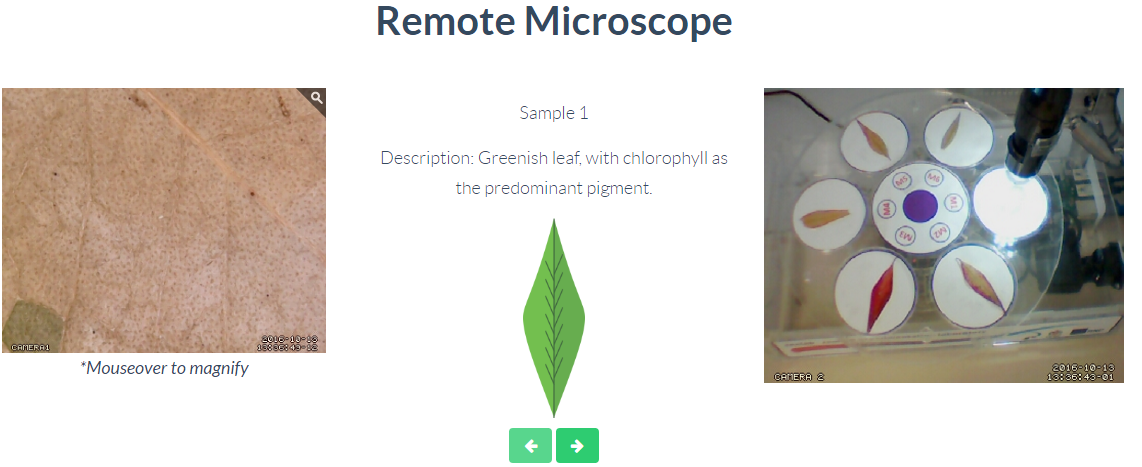
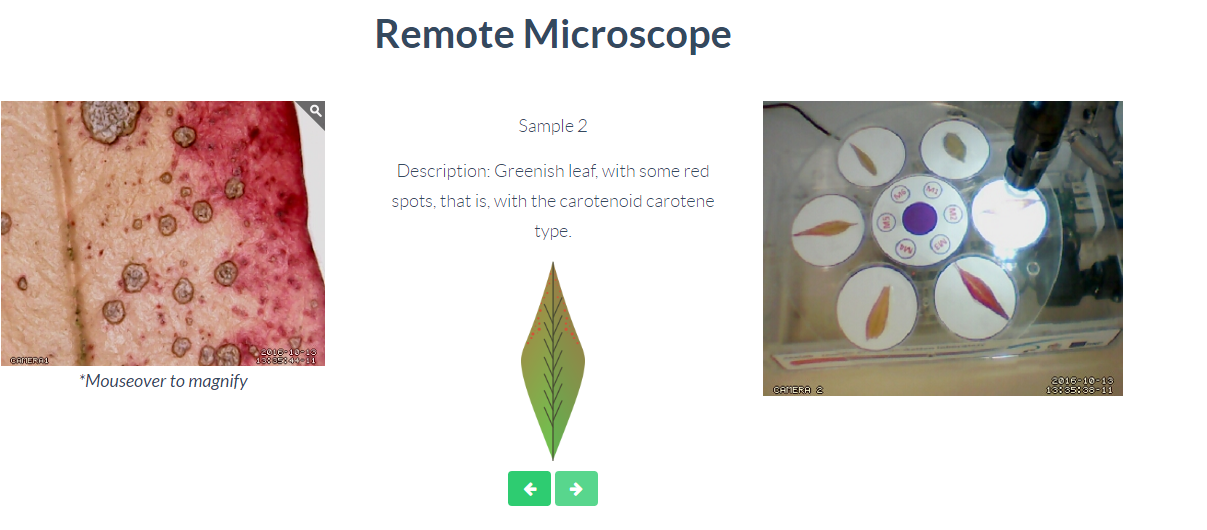
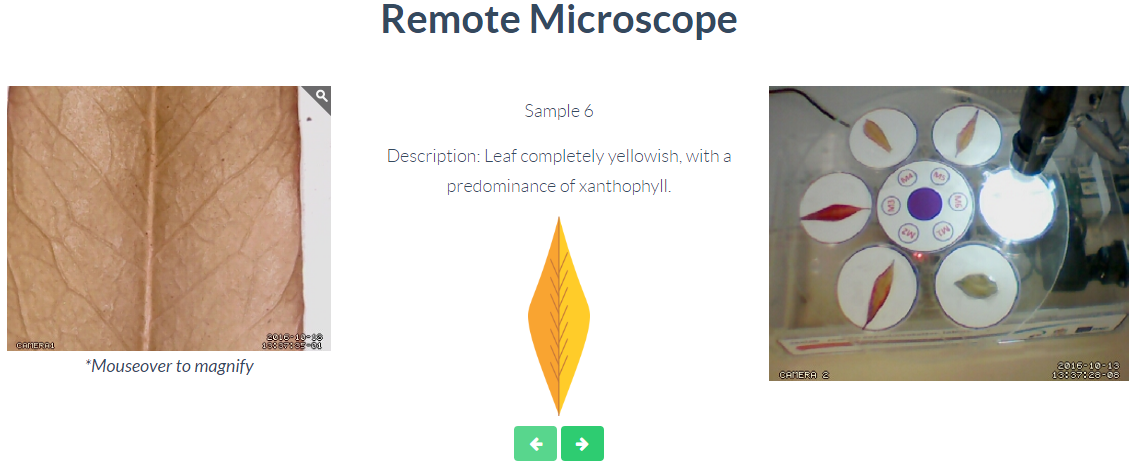
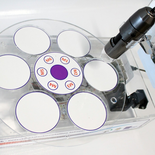
Tree Leaves
Through this remote laboratory you can control the samples under observation of a microscope. The available samples allow to analyze 6 different samples of leaves, comparing their different pigments and colorations